
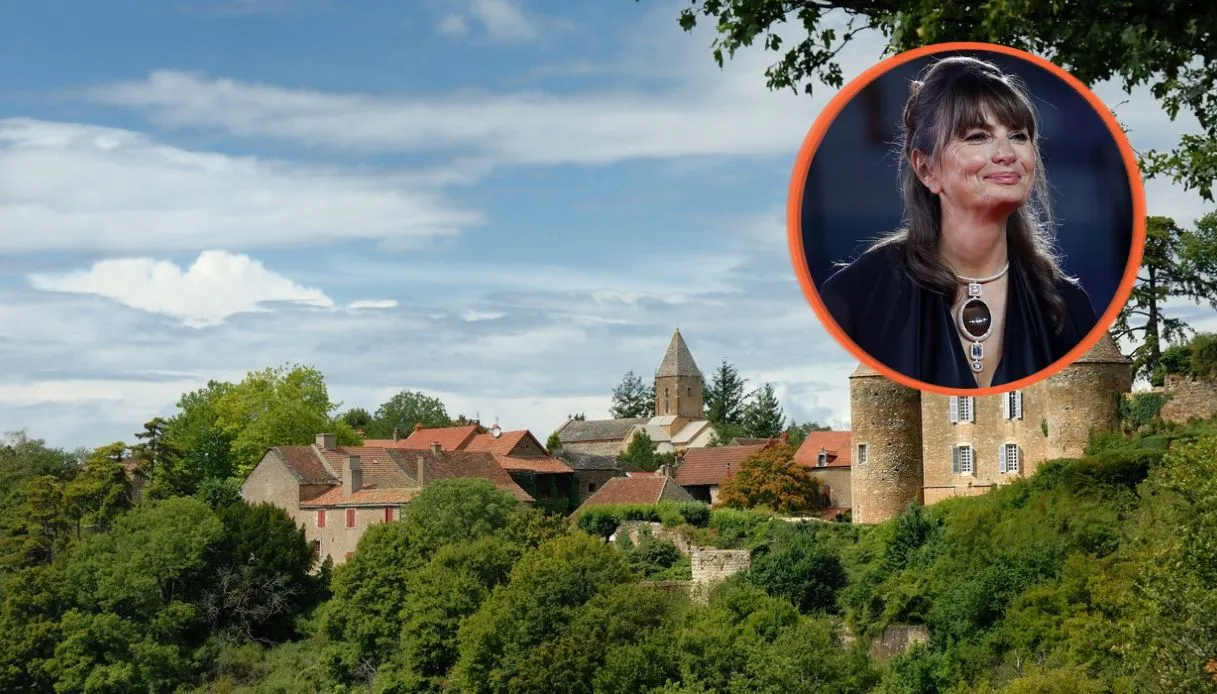
Soon we will see it make its big-screen debut, a development that comes as no surprise given that Valerie Perrin’s novel Changing the Water to Flowers has become a true publishing phenomenon.
published by Edizioni e/o, this novel takes us to a small Burgundy town alongside Violette Toussaint, the protagonist, who among other things works as a cemetery caretaker. The result is a story that touches the deepest chords of the heart, destined to be kept among the most beloved books.
And so we set off with Violette toward that Burgundy (France) which provides the backdrop for the events told in Changing the Water to Flowers by Valerie Perrin.
Burgundy, a place of history and beauty
It is a quiet, almost muffled place where the protagonist of Changing the Water to Flowers moves. Yet Burgundy, the region of France in the east-central part, is above all a land made of beauty, flavors that leave a mark, a nature that fills the gaze and a history that echoes at every step.
There are numerous spots to explore, just think of the castles that pepper the area, the vineyards that characterize its landscape (here some of France’s most famous wines are born, such as Pinot Noir and Chardonnay), and the cities and villages all waiting to be discovered.
In the novel the action revolves around the cemetery where the protagonist carries out her duties, but through those pages we can explore this beautiful region. Perhaps starting right from Dijon, the capital, a UNESCO World Heritage site within the Climats of the Burgundy wine region, where flavors mingle with history. Here it is worth admiring the Palace of the Dukes of Burgundy, which began to rise in the 14th century and overlooks a spectacular square, the half-timbered houses of the old town, or letting oneself be captivated by the covered market’s architecture, not forgetting to admire the religious buildings.
Obviously Dijon is not the only stop; the places to include in your very own personal tour could include – for example – Cluny, with its wonderful medieval center and an abbey built before the year 1000, or Autun which allows us to take a step back into the more distant past since it was founded in Roman times, during the era of Emperor Augustus. And this is reflected in the remnants of that era that we can still admire today. These are just some of the places, because Burgundy must be explored in full, taking all the time it deserves.
Brancion, the medieval village to discover
Changing the Water to Flowers is set in a Burgundy town, more precisely in Brancion-en-Chalon where the protagonist tends the cemetery. In Burgundy there exists a place bearing a similar name: Brancion, a medieval village that offers many wonders. A walk through its narrow lanes gives the sensation of stepping into the past, soaking in the soul of an extraordinary place.
Not to be missed is the castle, whose construction began in the 10th century: from there, among other things, one enjoys an unforgettable view. Also on the list of must-see spots is the Romanesque church of Saint-Pierre, which dates back to the 12th century.
Brancion is a place of great beauty, a perfect starting point from which to explore Burgundy, perhaps alongside Valerie Perrin’s Changing the Water to Flowers: a travel guide that will make the discovery even more special and unforgettable.