
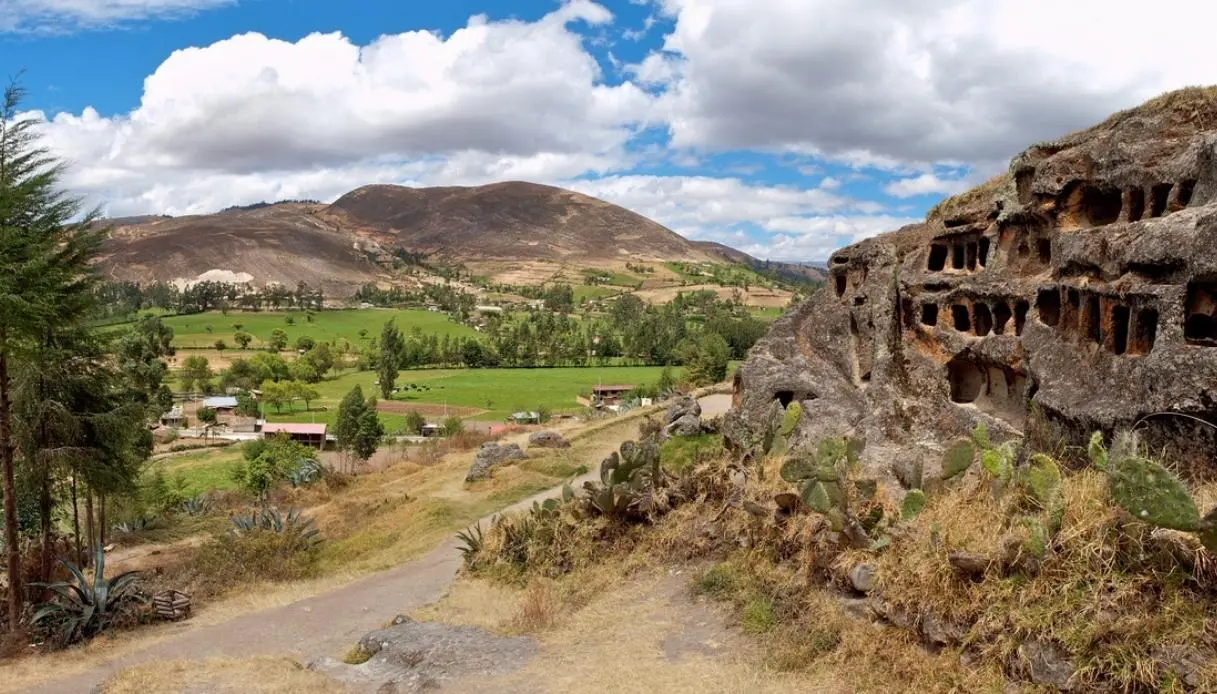
After an initial study conducted in the 1980s, an official archaeological campaign in the Andes has officially begun: at 3,400 meters above sea level, a team of archaeologists started researching in the Peruvian region of Cajamarca, adding valuable information on daily life, technologies, and Inca customs.
At the Wancasanga site, in the Huaman Orco area, which many call Chauchabamba, archaeologists identified a set of buildings that could have been used to store provisions and other goods destined for state administration. A precious clue for understanding how the Incas organized life and resources in one of the most extreme environments of the Andes.
The Engineering Discovery of the Inca Empire in the Andes
The Wancasanga Archaeological Research Project, the first systematic campaign that follows the reconnaissance of the 1980s, has already yielded great results. The excavations have made it possible to document the architectural structures and observe some technical measures that have added important information to the historical reconstruction.
Among the most interesting elements is, in fact, a ventilation system realized through ducts built in stone. A seemingly simple solution, but fundamental in buildings intended for the conservation of foods and materials, especially in a region characterized by strong thermal swings, humidity, and frequent winds.
In the Sector C the archaeologists identified twelve circular-plan constructions, arranged on the ground in a curved layout, almost forming a crescent. Their organization and architectural features have suggested to researchers a possible function related to the storage of products.
Particularly significant is the structure identified in a nearby excavation area. The building presents two conduits designed to allow air to pass. The channels were built using ashlar blocks and large stone slabs laid as a cover.
The location of the spaces seems to reinforce the hypothesis of intentional design. The structures rise in a zone of the site highly exposed to air currents. The ancient builders could have consciously exploited the winds to keep the interiors drier and more ventilated, improving the conditions necessary for the preservation of resources.
Also the materials recovered during the excavation provide important indications about the chronology of the complex. Among the finds are fragments belonging to an aríbalo, the characteristic ceramic vessel used in the Inca world, often associated with the transport and preservation of liquids and foodstuffs.
The Importance of the Discovery
The discovery of Wancasanga in the Andes concerns not only the structures brought to light. The site offers a more concrete look at how the Inca managed resources and supplies even in territories where climate and geographical features complicated every activity.
Among the most interesting elements are some buildings that could have been used as storerooms. If this interpretation is confirmed, the Peruvian archaeological site could yield new information about the Empire’s provisioning system. The warehouses indeed played a central role: they were used to preserve foods, textiles, and other goods destined for the population, for the armies, or for the officials.
Then there is the incredible innovation in ventilation. Certain characteristics of the structures suggest a deliberate use of natural currents to favor the preservation of products. A detail not secondary. It shows how the designer of these buildings knew the local conditions well and knew how to adapt the constructions to the environment.
Wancasanga, therefore, could tell not only how the Incas built, but also how they organized daily life and resources in one of the most complex areas of their territory.