
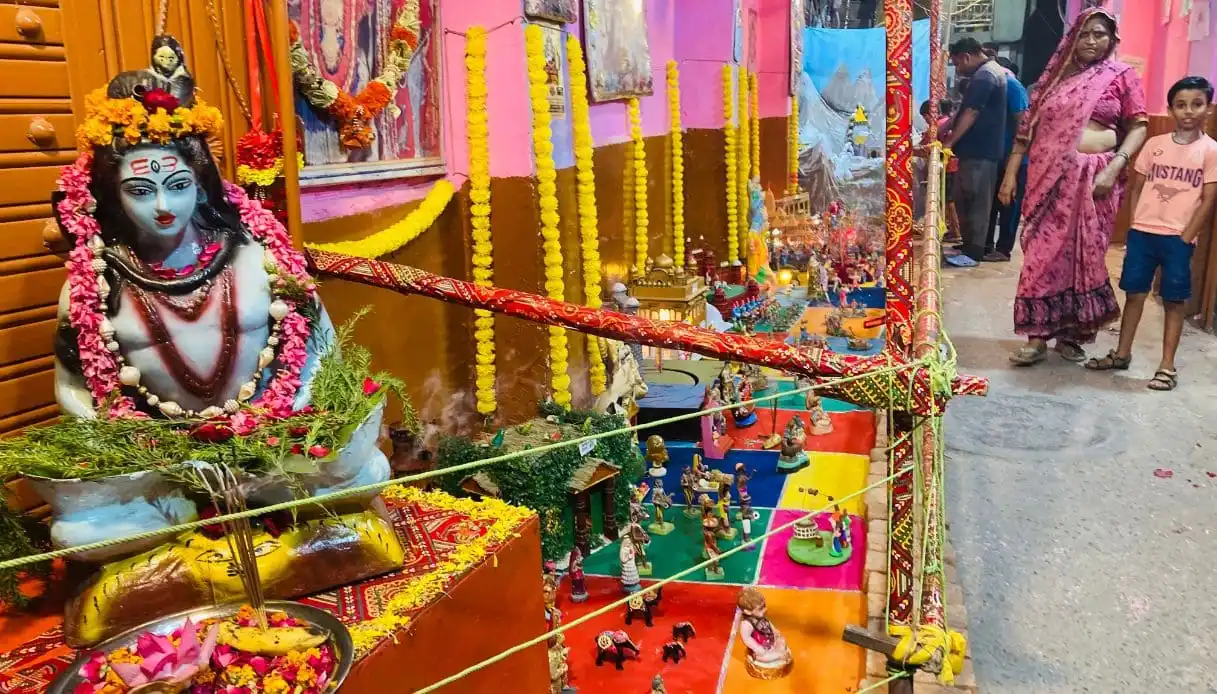
Traveling to India (or to other countries where Hinduism is practiced) cannot skip a visit to a Hindu temple: the colors call, the scent of incense lingers, and the devoted crowd performing rituals of great charm invites you to enter. But they are sacred places that require respect and awareness. Temples are not just tourist attractions: they are spaces of prayer, spirituality and daily life for millions of devotees. For this reason, it is important to know the fundamental rules of conduct to observe. Here is a practical guide to know what to do – and what to avoid – when entering a Hindu temple.
Can you enter with shoes on?
No, shoes must be removed at the entrance. In almost all Hindu temples it is mandatory to enter barefoot or, in some cases, with socks. The act of taking off your shoes is a sign of respect and humility, to symbolically leave out the dirt and impurities from both the footwear and the soul. Some temples provide guarded areas to leave them, often for a fee or in exchange for an offering.
Is it necessary to cover the shoulders and legs?
In general, yes: it is important to wear modest and respectful clothes, avoiding shorts, tank tops or tight-fitting garments. However, in temples in southern India, men may be asked to enter bare-chested, without shirts or T-shirts. Locals wear only a mundu or a dhoti (the typical male traditional garment), but this is not required for tourists. Women, on the other hand, should cover their shoulders, legs and sometimes even the head with a scarf. Rules can vary from temple to temple, so it is always advisable to inform yourself before the visit or observe the locals’ behavior and imitate it.
Are there specific rules for women?
Yes, in some temples access may be restricted to women during menstruation. It is a rule based on ancient beliefs tied to ritual purity. In general, women are also asked to wear modest clothing and, at times, to cover their head. Rules can vary from temple to temple.
Can you photograph inside the temple?
Depends on the temple. In many cases, photography is not allowed, especially selfies and particularly in the sanctum sanctorum (the heart of the temple where the deity’s statue is located). In other places, photos may be allowed only in certain exterior areas. It is always best to ask for permission before taking pictures, and look for no-photography signs.
What is the proper conduct during puja?
During a puja (prayer ceremony), it is essential to maintain silence and reverence. It is wise to observe without disturbing, not obstructing the flow of devotees, and not touching sacred objects. Tourists may often witness it, but it’s important not to distract those who are praying.
May I touch the statues or sacred objects?
No. The deity statues and ritual objects should not be touched by visitors. Only priests have permission to handle these sacred symbols. Touching your forehead with hands in prayer after receiving the prasad (blessed food) or sacred water, however, is often part of the ritual.
Do I have to follow a specific path inside the temple?
Yes. In many Hindu temples you follow a clockwise route, circling around the main shrine. This gesture symbolizes respect and worship toward the deity. At the entrance there may be a bell to ring: the sound serves to announce your presence to the deity, to wake the spiritual energy, and to clear the mind of distractions before prayer. As with the rest, it’s best to follow what the devotees do and, in case of doubt, go with the flow.
Are offerings allowed?
Yes, it is customary to make offerings of money, flowers, fruit or incense; they are usually sold right in front of the entrance. Temples have dedicated areas to leave the offering, sometimes in dedicated altars, baskets or urns. Offerings should be made with respect, without ostentation. Often you can also receive a blessing from the priest.
Can I sit anywhere inside the temple?
No, some areas are reserved for the faithful, and in certain cases entry is forbidden to non-practitioners. If you want to sit, better choose a side corner or a space where you won’t obstruct the passage. Avoid sitting with your feet directed toward the deity’s statue.
Is there a traditional greeting to use?
Yes, the most common is “Namasté”, accompanied by the gesture of hands joined together at the chest. It is a respectful form of greeting that is suitable both between people and toward the deity. In some temples you may also see the gesture of prostration or touching the ground with the forehead.
Can I enter all temples, anywhere?
Not always. Some temples are reserved for Hindus only, especially in southern India. Others welcome visitors of all faiths. It is important to check in advance and respect any access restrictions. Forcing entry in these cases is a serious sign of irreverence.
Do I need to watch what I say or do in the temple?
Absolutely. Temples are places of utmost respect, and inappropriate behaviors (laughing, offhand comments, disrespectful gestures) are poorly tolerated. Body language matters as well: never point with your feet, nor touch someone on the head.
What does receiving a tilaka or a mark on the forehead mean?
Often, at the exit or during the visit, the priest may place a colored mark on visitors’ foreheads. This is a blessing and protection gesture. The color and shape vary depending on the deity venerated and the temple type. The tilaka or bindi can be made with various substances: sacred ash (vibhuti), sandalwood powder, turmeric or kumkum (bright red). Each substance carries meaning: for example, kumkum represents feminine energy (shakti), sacred ash symbolizes purification, while sandalwood powder cools the mind. Receiving it respectfully is a way to share part of the rite.
Can children enter the temples?
Yes, but it is advisable that they be quiet and accompanied. Crying or shouting can disturb the prayers. Parents should supervise so they do not run or touch sacred objects. In general, on a family trip to India, children’s presence is well received, but always with respect for the place’s rules.
What to do if you don’t know the temple’s specific rules?
The best thing to do is watch carefully, follow the behavior of the devotees, and, if possible, ask politely. In many temples you will find signs with the main rules, often also in English. When in doubt, it is better to err on the side of prudence and respect.