
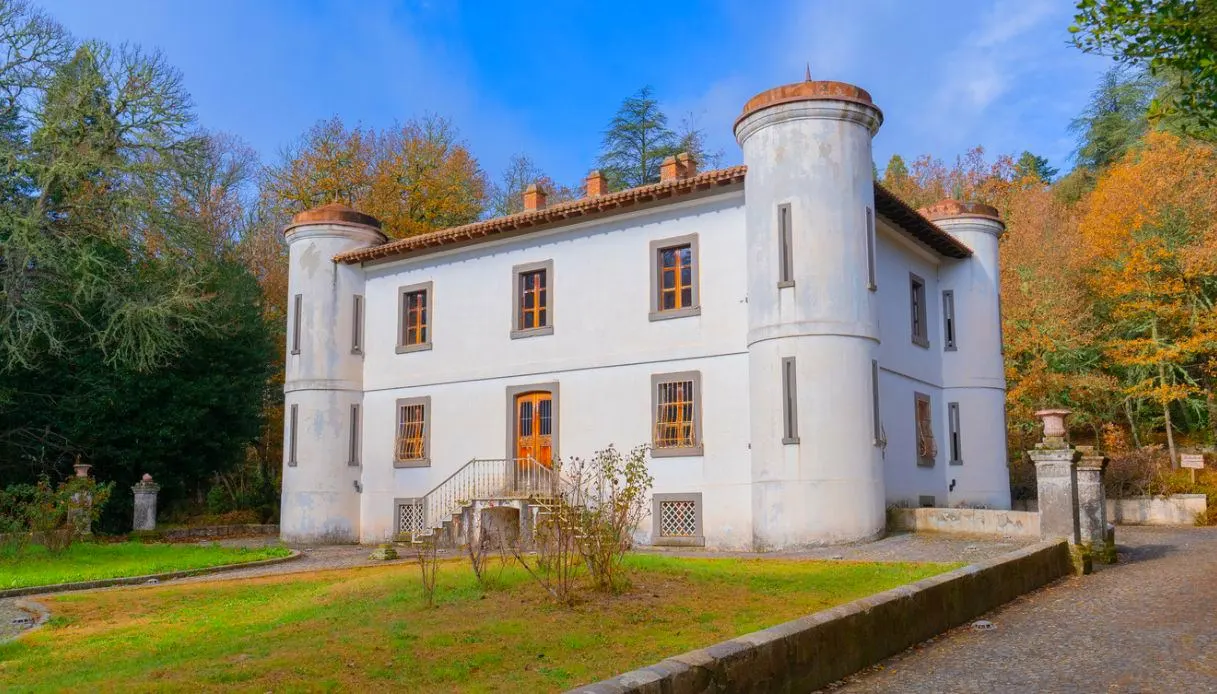
Villa Piercy whispers stories of a Sardinia of another time: an island not yet crossed by tourists, but already with its gaze turned toward a future that took the shape of a railway. And it is precisely on a train that, in 1921, D.H. Lawrence would travel along it, recounting its many facets and making it known to the world.
But let us take a step back, because when we speak of railways in Sardinia we must begin with the engineer who designed the main network and with a villa in English colonial style that today seems to have stepped out of a British period film.
The History of Villa Piercy
It all begins in 1863, when the Welsh engineer Benjamin Piercy arrives in Sardinia to design the island’s railway network, the Cagliari-Olbia and Chilivani-Porto Torres lines, on behalf of the Compagnia Reale delle Ferrovie Sarde. In return for the work he receives vast lands in the territory of Bolotana: these are the years when the old common lands, the ademprivi, pass into private hands.
Between 1879 and 1883, Piercy purchases the estates of Badde Salighes and Padru Mannu and transforms an old hunting lodge into the family villa where a little Victorian world comes to life, first Victorian and then Edwardian, filled with receptions, illustrious guests, English luxury, and tennis matches on the lawn.
After Benjamin’s death, in 1888, the villa remained in the family for generations. The last of the Piercys, Vera, owned it until 1966. In the second half of the twentieth century the villa and its park fell into disuse, until the 2010 restoration allowed the public to enter and discover its beauty.
The Villa and Its Botanical Garden
Villa Piercy recalls a small castle, with its square plan and the four circular turrets at the corners. It is by no accident that Benjamin Piercy shaped his private residence this way, giving a nod to a distinctly English taste that loved to disguise country houses as tiny castles.
In reality, it is a country house spread over three levels, one of which is a basement. Above the doorway a rampant lion recalls Wales, the homeland of the house’s owner, while on the ground floor the vaulted ceilings still preserve some paintings.
Not only the villa, but also the garden is another protagonist of the Villa Piercy experience, splendid all year round, but especially when bathed in autumn colors. A lane of ancient calocedras leads to the side entrance, not far from a spectacular boxwood gallery; behind the house, a stone staircase climbs into the forest, among holm oaks, hollies and yews so old that four people would be needed to embrace its trunk. Beside them grow trees brought from far away: the Himalayan cedar, the Lawson cypress, the California calocedron and the Spanish fir.
They are the trees of a distinctly Victorian fashion. In Queen Victoria’s England, plant hunters roamed the world in search of species never seen before, and owners of estates competed to display them. Today, that garden houses about a third of Sardinia’s botanical species, and strolling through it is a bit like leafing through the travel album of a Victorian gentleman.
Where It Is and How to Visit
Villa Piercy is located in Badde Salighes, in the Bolotana area, in the province of Nuoro, among the Marghine woods. It is open on Saturdays and Sundays from 10:00 to 18:00 and no reservation is required; the entrance ticket to the villa costs €10 and guided tours are offered.