
I Nature travel sparks dreams and even beats those who choose the sea and cities: the chance to see up close, without disturbing, animals we know only from films and documentaries such as leopards, gorillas, and penguins is an emotion that many travelers do not want to forego. From this very idea, the Wildlife Experience Index was born, a ranking devised by the Bailey Robinson travel company to line up some of the world’s most extraordinary wildlife experiences. After analyzing 30 activities, the top 10 was drawn up… here are the most cherished places.
How the Wildlife Experience Index works
To build the ranking, scores were assigned to each experience based on the rarity of the species, geographic isolation, importance for conservation, the exclusivity of access, ease of reach, and the chance to observe the animal. The result inevitably rewards places where encounters with wildlife still retain an element of unpredictability. Eight of the ten top experiences in the ranking also involve threatened species. Asia and Africa occupy a large share of the leading spots.
The 10 best destinations to see wildlife
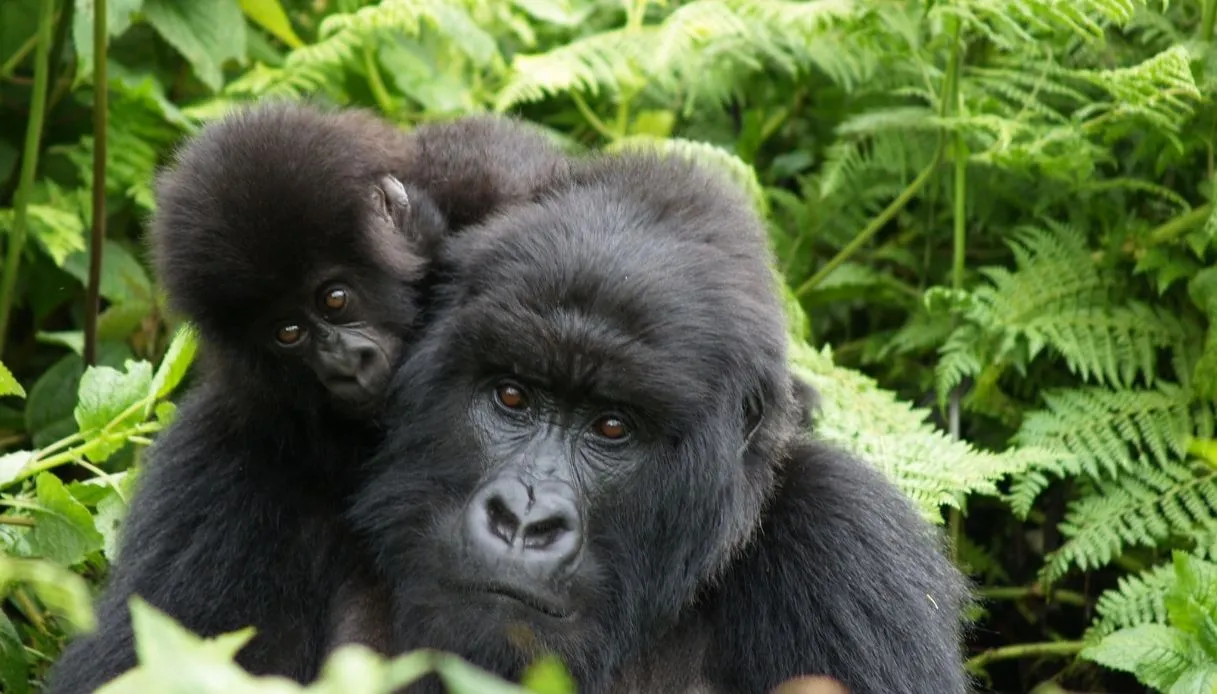
Rwanda and Uganda open the ranking with one of Africa’s most celebrated wildlife encounters. In Rwanda, the landmark is the Volcanoes National Park, located in the Virunga Mountains. In Uganda, the name to remember is Bwindi Impenetrable National Park: a dense forest, steep slopes, and trails that do not always offer an easy hike. When a gorilla family finally emerges from the vegetation, however, the distance traveled quickly fades into the background.
Second place goes much further south: Antarctica, 88.5 points. Expeditions dedicated to observing emperor penguins have earned the maximum marks for isolation and exclusivity. And it is easy to understand why. Reaching the colonies of this species does not simply mean alighting along the Antarctic Peninsula, on routes that have become relatively frequented by cruises. Some emperor penguin settlements are found in remote areas, constrained by ice and narrow weather windows.
Third place belongs to Kazakhstan, where the protagonist is the saiga, the antelope with the distinctive curved snout roaming the vast Central Asian steppes. The species has long been the focus of international conservation and coordinated management programs, including under the Convention on Migratory Species.
In fourth place we move to the mountains. Ladakh and the Himalaya are identified as privileged territories for tracking the snow leopard, one of the great felines hardest to observe in the wild. It lives in rocky environments, often at high altitude, and its coat makes it nearly invisible in the landscape. Seeing the animal is never taken for granted.
Fifth place belongs to Indonesia, with the Java rhinoceros. A more delicate encounter, given the extreme rarity of the species and the concentration of the remaining population in the Ujung Kulon area, at the western tip of the island of Java.
With 84.5 points follow the black rhinos of Namibia and Kenya, while in seventh place appear Svalbard, the Norwegian Arctic archipelago. Here, however, a clarification is in order: there are no organized safaris aimed at chasing or deliberately seeking polar bears. From 2025, mandatory minimum distances from bears will also be introduced to ensure traveler safety, prevent disturbance to the animals, and avoid dangerous approaches.
Eighth place goes to Borneo and the orangutans, in a completely different setting: tropical rainforest, heat, rivers, and towering trees. The island, politically divided among Indonesia, Malaysia, and Brunei, remains one of the emblematic places for observing and protecting these primates.
The ranking then returns to Africa. In the Democratic Republic of the Congo, visitors search for eastern lowland gorillas, while the last position of the top ten is occupied by safaris dedicated to the hyena in Botswana or Tanzania. A social, lightning-fast predator, less famous than lions and leopards but by no means less fascinating. And definitely harder to find.
The Wildlife Experience Index top 10
- Trekking to observe mountain gorillas, Rwanda or Uganda (90/100);
- Expedition to observe emperor penguins, Antarctica (88.5/100);
- Expedition to observe saiga antelope, Kazakhstan (87/100);
- Wildlife sighting of the snow leopard, Ladakh or the Himalaya, India/Himalayan region (85.5/100);
- Wildlife sighting of the Java rhinoceros, Indonesia (85/100);
- Wildlife sighting of the black rhino, Namibia or Kenya (84.5/100);
- Expedition to observe polar bears, Svalbard, Norway (84/100);
- Wildlife sighting of orangutans of Borneo, Borneo (84/100);
- Expedition to observe eastern lowland gorillas, Democratic Republic of the Congo (81.5/100);
- Safari to observe African hyenas, Botswana or Tanzania (81/100).