
Riding a bicycle is one of the most enjoyable ways to discover a city, especially when bike lanes, green spaces and dedicated routes allow you to move comfortably without the noise and traffic of cars. But which cities are truly easier for cycling?
To compile the list of the world’s best cities for cycling in 2026 was Time Out, which gathered the views of more than 24,000 people living in the various destinations analyzed. This year there is a surprise: the first place is not claimed by the most famous Copenhagen. Not only that: Italy is the big omission from the global top 20.
The world’s best city for cycling
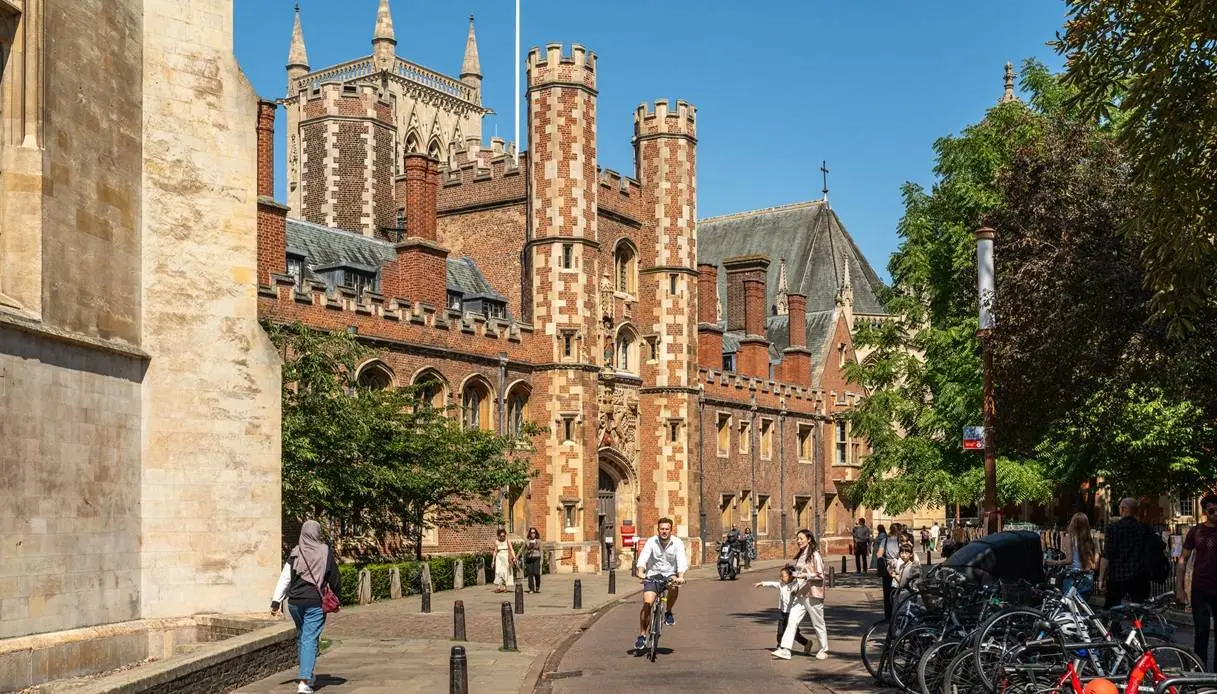
It is Cambridge, in the United Kingdom, the city that in 2026 takes the first place among destinations best suited to be explored on two wheels according to Time Out, with an 83.2% of positive opinions from residents.
The English university city seems to have all the characteristics that make cycling pleasant: it is relatively compact, predominantly flat, and features a network of infrastructures designed specifically for cyclists. Added to this is a particular focus on cycling mobility, with the so-called “cycle streets,” streets designed to promote bicycle traffic, and a large multi-storey bike parking facility at the railway station.
It is therefore no accident that around a third of trips in Cambridge are made by bike. The city thus manages to surpass even some destinations that in common imagination have always been regarded as the world capitals of two-wheeled mobility, such as Copenhagen.
The complete ranking
In second place we have Montreal, Canada, with a score of 82.5%. Despite the chilly climate and some hilly sections, the city has invested heavily in cycling mobility. Consider that in 2023 as many as 25% of residents used BIXI, the city’s main bike-sharing system. Making the cycling network even more widespread is the ambitious Express Bicycle Network, or EBN, which plans to extend protected bike lanes to up to 171 kilometers. The routes are also cleared of snow during the winter months, so they remain accessible year-round.
Only third is Copenhagen, in Denmark, with 79.2%. The Danish capital remains one of the cities most associated with cycling, and each day its residents collectively cover about 1.44 million kilometers on two wheels. What makes the difference are decades of urban planning and a dense network of bike lanes, together with ingenious measures to slow traffic. In the city, in fact, there are signs that limit speed to 20 kilometers per hour, but also roads with anti-slip paving and narrow lanes, solutions that effectively encourage caution and make the city a much more pleasant place to explore by bicycle.
Just a hair away from the podium is Shanghai, China, with 78% of favorable votes. A gem for cycling enthusiasts? the Pudong Riverside Greenway, a pedestrian-bicycle path that winds for 24 kilometers along the Huangpu riverbank offering breathtaking views of the city.
In the top 10 we also find Vienna, Austria, where there are about 1,800 kilometers of cycling routes, Warsaw, Marrakech, Taipei, Stockholm and Seville. Seville, in particular, is the Spanish city most appreciated by its residents for biking, thanks to about 180 kilometers of bike lanes and a network that allows reaching some of its most famous attractions.
The ranking was built by considering the cities with the highest percentage of residents who defined the ease of getting around by bike as “good” or “incredible.” To make the ranking more globally representative, Time Out also included only one city per country.
Here is the complete ranking of the 20 cities Time Out selected:
- Cambridge (United Kingdom): 83.2%;
- Montreal (Canada): 82.5%;
- Copenhagen (Denmark): 79.2%;
- Shanghai (China): 78%;
- Vienna (Austria): 77.7%;
- Warsaw (Poland): 76.6%;
- Marrakech (Morocco): 75%;
- Stockholm (Sweden): 73.7%;
- Seville (Spain): 72.3%;
- Seoul (South Korea): 72.2%;
- Medellín (Colombia): 71%;
- Rotterdam (Netherlands): 69.3%;
- Helsinki (Finland): 69.3%;
- Abu Dhabi (United Arab Emirates): 69.2%;
- Orlando (United States): 68.7%;
- Frankfurt (Germany): 65.3%;
- Luxembourg (Luxembourg): 64.7%;
- Ljubljana (Slovenia): 64.4%;
- Brasília (Brazil): 64.4%.