
There are places in Italy that have become the protagonists of millions of photographs, and others that, despite their undeniable charm, seem to have fallen off the radar of the web. Historic villages, stone alleys, historic palaces and stunning viewpoints that, however, appear only rarely on the main photography platforms and are searched even less on Google.
They were identified by a new study from MPB, a platform specialized in buying and selling used photographic and video equipment, carried out on the occasion of Cortona On The Move 2026 with the theme “Beautiful Country.” The study analyzed 381 locations belonging to the circuit of the Most Beautiful Villages of Italy, comparing online searches and photographic presence on Wikimedia Commons and Flickr. Thus, 15 little treasures of the Bel Paese were selected that are still underrepresented online, giving rise to a new curious ranking.
The village with the least online presence
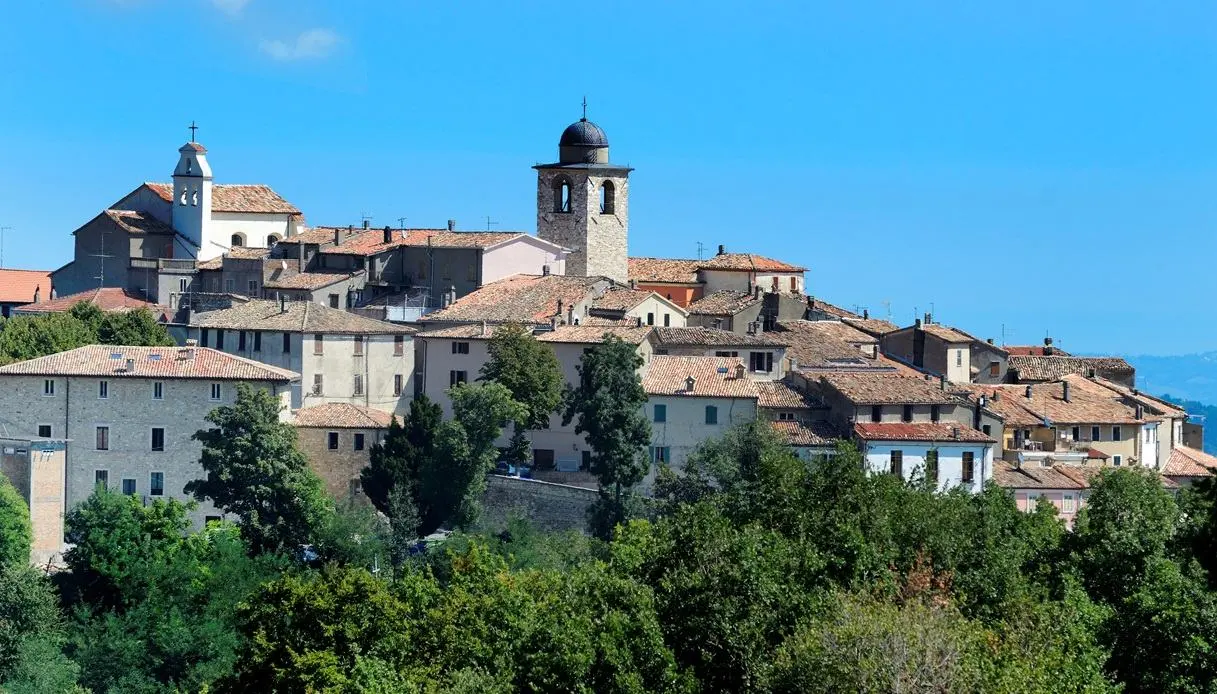
At the top of the ranking is Monte Grimano Terme, a small village in the Marche region immersed in the Montefeltro landscape. In the study it obtains a score of 79.5 out of 100 (a higher value corresponds to lower digital visibility).
The numbers explain the lead: within a radius of 2 kilometers there are no geolocated images on Wikimedia Commons nor photographs detected on Flickr, while the overall monthly search volume on Google is estimated at just 100 searches. But the town, which sits at about 600 meters above sea level, is a gem known mainly for its thermal waters and for its historic center nestled among ancient architectures and views typical of the central-northern Apennines. It is precisely the contrast between the local heritage and its limited digital presence that makes it one of the most interesting examples that emerged from the study.
The Complete Ranking
Right behind Monte Grimano Terme are, in a tie, Aiello Calabro in Calabria and Castelponzone in Lombardy: both towns reach 79.2 points.
Castelponzone, in particular, is a fortified village in the Po Valley that stands out with its historic streets and rural architectures, but remains almost entirely absent from the major open photography platforms.
Followed by Mel di Borgo Valbelluna, in Veneto, and three places tied for fifth: Monteverde, Capranica Prenestina and Macerata Feltria.
The Calabria, Lazio and Apulia are the regions most represented, with three locations each in the top 15. For Lazio we find Capranica Prenestina, tied for fifth, Boville Ernica in ninth place and Orvinio in thirteenth. In Apulia, instead, the entries are Bovino, Presicce-Acquarica and Alberona, occupying the tenth, twelfth and fourteenth positions respectively.
There is also room for Sicily, represented by San Marco D’Alunzio, eleventh. Perched on the Nebrodi mountains with a view toward the Tyrrhenian coast, the village preserves a rich historical heritage and numerous churches, but on Wikimedia Commons it lists only 10 geolocated images: very few compared to the beauties it holds.
Here is the complete ranking:
- Monte Grimano Terme (Pesaro and Urbino, Marche);
- Aiello Calabro (Cosenza, Calabria);
- Castelponzone (Cremona, Lombardy);
- Mel di Borgo Valbelluna (Belluno, Veneto);
- Monteverde (Avellino, Campania);
- Capranica Prenestina (Rome, Lazio);
- Macerata Feltria (Pesaro and Urbino, Marche);
- Caccuri (Crotone, Calabria);
- Furore (Salerno, Campania);
- Pietramontecorvino (Foggia, Apulia);
- Rocca Imperiale (Cosenza, Calabria);
- Specchia (Lecce, Apulia);
- Vico del Gargano (Foggia, Apulia);
- Castel del Monte (L’Aquila, Abruzzo);
- San Donato Val di Comino (Frosinone, Lazio).