
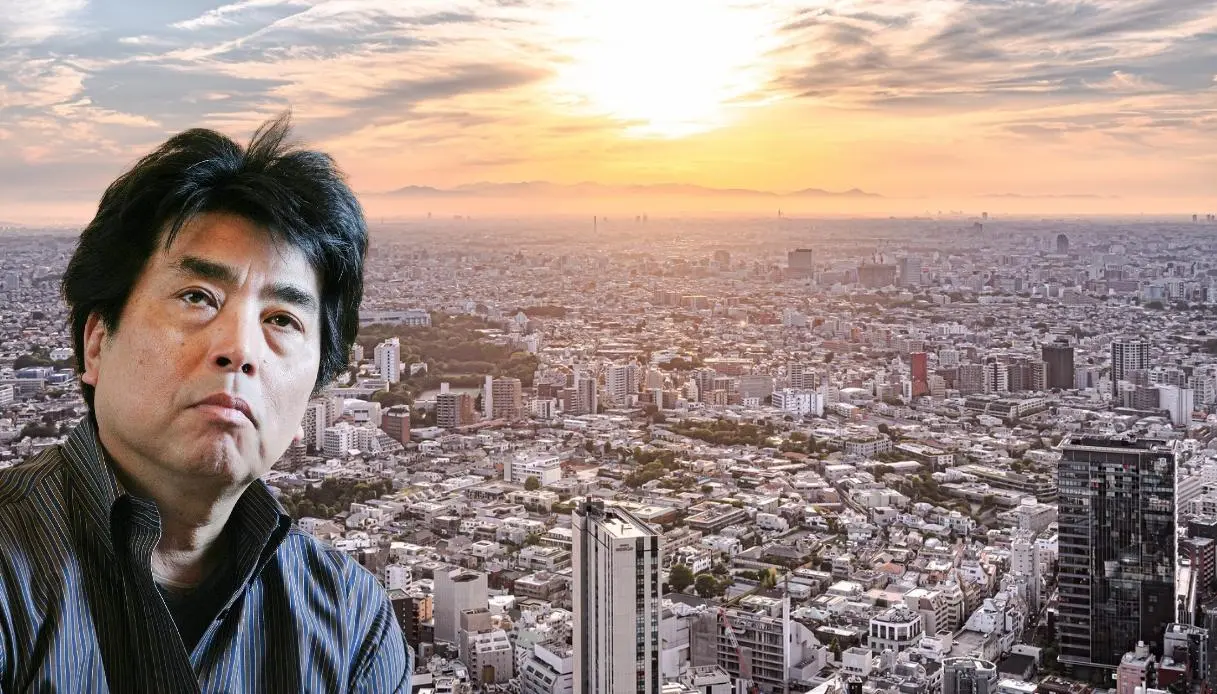
The author Ryu Murakami has passed away on October 17, 2026; the news shared by the Gentosha publishing house only on October 23 has circulated around the world, redirecting attention to what is the story of Tokyo through the pages of one of the most acclaimed writers in recent years in the field of essays. The author, deceased at 74, demonstrated the courage to depict a city few people know, revealing a universe of contradictions where luxury and degradation coexist.
Through works such as Tokyo Decadence, Tokyo Soup and Blue Almost Transparent, Murakami built a literary geography made up of red-light districts, exclusive hotels, crowded streets and suburbs marked by the American presence. His writing, raw, cinematic and provocative, blends sex, violence, music and social critique. To discover his heartlands, understood above all as symbolic places within his imagination, one must explore a Tokyo distant from temples and the most traditional tourist itineraries.
Roppongi: the luxury and solitude of Tokyo Decadence
Roppongi, famed for its clubs, international restaurants and exclusive hotels, is an ideal stop to approach the atmospheres of Tokyo Decadence, linked to the Topaz story and to the film directed by Murakami himself in the early nineties. At the center of the tale is Ai, a young sex worker who encounters wealthy men, often unable to form genuine relationships. Behind the refined interiors and the clients’ fantasies emerges a portrait of a consumerist society where even feelings become commodities. To rediscover this contrast, one can wander the nightlife streets of Roppongi and ascend toward Roppongi Hills, a symbolic complex of contemporary Tokyo.
Fussa: the outskirts of Blue Almost Transparent
To uncover Murakami’s literary origins, one must move away from the city center and reach Fussa, in the western part of Tokyo near the American Yokota military base. This is the landscape tied to Blue Almost Transparent, his debut novel from 1976, winner of the prestigious Akutagawa Prize. The story centers on a group of young people who spend their days amid drugs, sex and rock music, in a reality shaped by American influence. The narrative unfolds through fragmented imagery and physical sensations, almost devoid of a traditional plot. To grasp its atmosphere, one can stroll along Fussa Base Side Street, along Route 16, between vintage shops, American signs and venues that preserve traces of 1970s culture.
Kabukichō and Shinjuku: the nocturnal atmospheres of Tokyo Soup
The Kabukichō and Shinjuku districts are among Murakami’s most representative realms and are the ones that stand out most within Tokyo Soup. The novel follows the adventures of Kenji, a young man who escorts tourists to red-light establishments, and Frank, an American client, revealing a facet of the city that few know—the symbol of Japan.
With neon signs, karaoke, nightlife venues and hotels, it becomes a labyrinth where everything seems purchasable, even love. Today it is worth crossing Kabukichō Ichibangai, recognizable by its famous illuminated entrance, strolling along Godzilla Road and discovering the tiny lanes of Golden Gai, with its small bars exuding a retro atmosphere.
Shibuya: youths, consumerism and Love & Pop
Murakami’s Tokyo is also the world of teenagers and trends, where the obsessive quest for money features prominently in Love & Pop. The cinematic adaptation was not missing and amplified the title’s fame. Shibuya sits at the center of it all, with shops, music and an overwhelming wave of advertising that feeds FOMO.
