Puglia never stops being in the international spotlight, especially during the summer, but this time at the end of the season it returns not for praise of its crystal-clear sea, but for its gastronomy. What seduces the Guardian is the table, the most authentic one still deeply tied to the Puglian land. In a feature devoted to the Italian region, the British daily leads readers to discover northern Puglia, among burrata, freshly caught fish, extra-virgin olive oil, pizzas, artisanal cheeses, and recipes built around local ingredients.
At the center of the journey lies the province of Barletta-Andria-Trani, a corner of Puglia often less visited by international tourism than the Valle d’Itria or Salento, yet capable of offering a surprisingly rich gastronomic heritage.
Andria Burrata and the Most Authentic Flavors
The Guardian’s journey almost inevitably begins with burrata, one of the most recognizable symbols of Puglian cuisine and a specialty born near Andria. According to tradition, its origins date back about a century, when the farmer Lorenzo Bianchino, stranded by snow and unable to bring milk to the market, reportedly used a preservation technique inspired by butter. From there emerged the idea of enclosing cream and stracciatella inside a shell of stretched curd.
In Andria the Guardian enters the workshop of the Caseificio Olanda, where mozzarella production becomes almost a theatrical performance. The curd is worked with water nearly at boiling, pulled and shaped until achieving the smooth, glossy texture that precedes transformation into mozzarella, little balls, braids and finally burrata. A handmade process that returns to gastronomy its most artisanal side. The reportage also extols the quality of the products: mozzarella and burrata are described for their elastic, juicy texture and bold flavor, while alongside the dairy products appear caciocavallo, fresh ricotta and other traditional dairy goods from the area.
And the gastronomic journey continues far beyond Andria. In Barletta, a city still relatively distant from the main streams of foreign tourism, one discovers a lively gastronomic and evening scene. From Portento, the pizza becomes a concentration of local produce, with toppings ranging from sausage to olives, from mushrooms to yellow tomatoes, up to eggplants and cacioricotta.
Puglia Tells Its Story Through Food
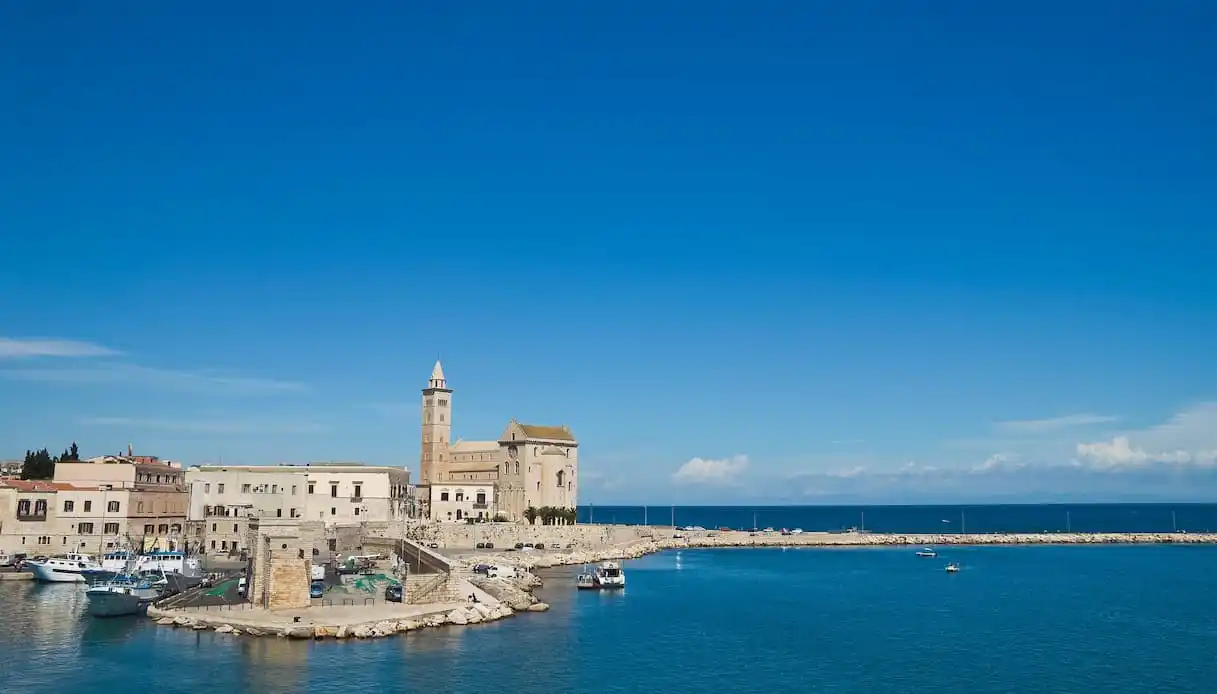
One of the most interesting aspects of the reportage is the way food becomes a key to understanding the territory. In Trani, for instance, the day begins at dawn, when the fishing boats return and the catch is sold directly to restaurateurs and merchants. Red mullet, octopuses, skates, monkfish and hake speak of a still-vibrant maritime tradition.
In Cerignola, instead, the Guardian stops at U’ Vulèsce, Rosario Didonna’s restaurant, which builds its cuisine through direct relationships with fishermen, small farmers and wine producers. On the table arrive local olives, goat ham, shrimp tartare, spaghetti with crab, and octopus with bean cream: a cuisine that looks to tradition without sacrificing creativity.
Another story is that of Masseria Barbera, in the Parco Nazionale dell’Alta Murgia. Here around 90% of the ingredients used by the restaurant come directly from the farm. Orchards, olive groves, vineyards and even wild herbs become part of a cuisine deeply connected to the land. Completing the picture are extra-virgin olive oils produced by producers such as Muraglia and Sabino Leone, the historic pastry shops of Barletta, the gelaterias of Canosa and a constellation of small restaurants that reinterpret local ingredients and recipes.