
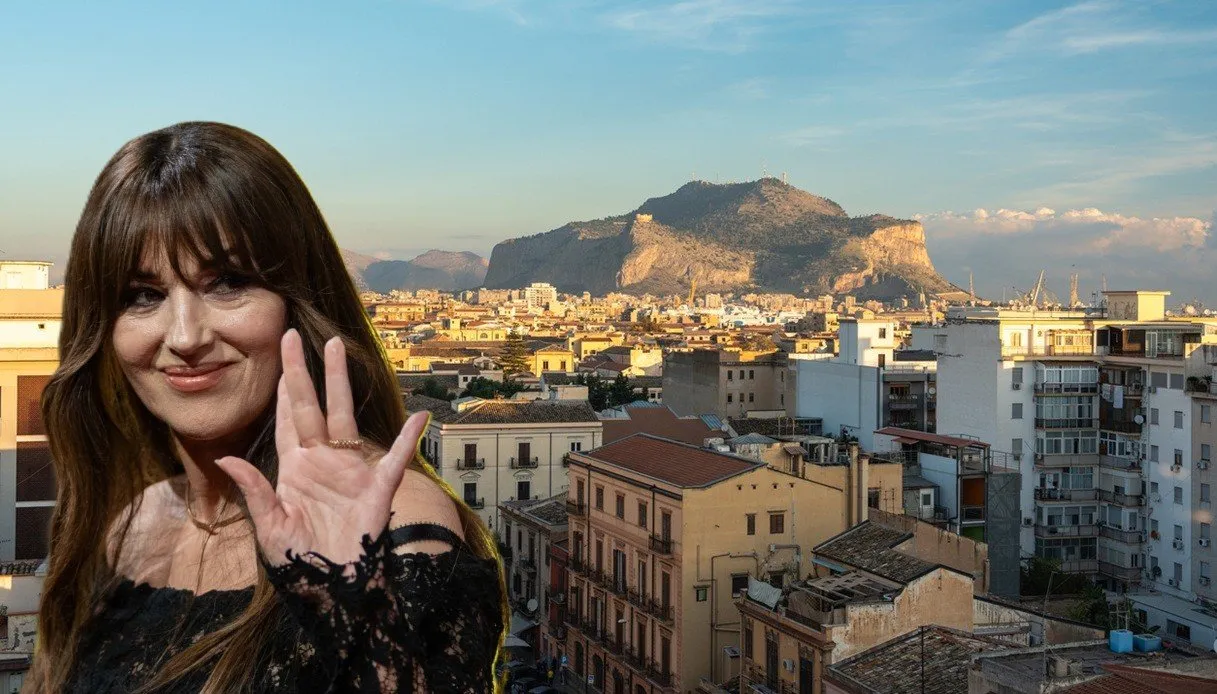
What was Palermo like fifteen years ago, as Berlusconism was drawing to a close, taking with it the fading dreams of glory of a certain bourgeoisie, and especially before the city endured the extreme touristification we see today? This is the question that Giovanni Tortorici’s new film seeks to answer, in theaters from September 3, 2026.
The locations of Ketticè – this is the film’s title, a midway between a teen drama and a coming-of-age tale, which features the exceptional appearance of Monica Bellucci – help to tell Palermo’s truest essence, ranging from central squares and streets that Palermo locals frequent for shopping and nightlife to residential neighborhoods where growing up means facing scarce prospects and opportunities that are never quite what one hopes for.
What it’s about
It’s 2012, Giulio (Salvatore Gallina) is sixteen and spends his days between school, scooter rides with friends, first loves, and Facebook. With his parents — the mother is an uneasy aristocrat and somewhat bored, played by Monica Bellucci — dialogue is almost entirely absent, just as with the rest of the grown-ups around him who seem to speak a language completely different from his.
Everything changes when Giulio meets Ketty (Rachele Testagrossa): an unpredictable adolescent who lives without constraints, with whom a strong friendship will form. With Ketticè, the nickname he gives her, Giulio spends an intense school year that will bring him ever closer to the adult he wants to become.
Where the film was shot
The locations of Ketticè, as already hinted and as the director reiterated to the press, have the task of telling Palermo in a way that anyone who grew up in the city in the early 2000s will recognize without difficulty.
The center of Palermo
In some sequences, Via Catania appears: one of the city’s most important central streets, near the better-known Via Libertà, where fashionable shops and boutiques line the area and venues where, especially in the evenings, Palermo’s young people gather for the nightlife.
Among the places where Giovanni Tortorici’s film was shot is also Piazza Casa Professa. Closer to Via Maqueda, another central street heavily frequented by Palermo’s tourists, it is famed for housing the Church of the Jesus (also known as Casa Professa): one of the most notable examples of Sicilian Baroque thanks to interiors clad in variegated marbles, stuccoes, and sculptures.
Other central locations for Ketticè include the eighteenth-century Villa Trabia and Villa Sperlinga, among Palermo’s most interesting public gardens.
Residential neighborhoods and outskirts of Palermo
In the long afternoons spent riding around the city on a scooter with friends, Giulio, the protagonist, mostly frequents the boulevards on the city’s outskirts where large residential complexes and modern school buildings — mostly private — are basically all there is to see, or nearly so.
«I retraced all the places of my adolescence, which aren’t the most famous ones. A Palermo native will recognize this Palermo far more than someone who only visited on vacation, and who understandably didn’t go to certain residential areas, or to the little football pitches, or, not to mention, to the shantytowns» said the director in an interview with PalermoToday.
Mondello
If Mondello has always represented, for every Palermo teenager, since the early warm months, a promised escape from the city and summer adventures, the film could not have skipped some scenes shot in this seaside district that comes alive in the summer with sunbeds, parasols, and gelato kiosks.
Its postcard-perfect corner is the Art Nouveau-style pavilion out at sea: an old seaside resort building that has more recently been transformed into a restaurant.