
November holds exciting prospects for those who love watching the sky. The month will bring the first Supermoon of the year, the Taurid and Leonid meteor showers, and several close encounters between planets and the Moon.
Here are the events to mark on your calendar.
The Sun Nears Winter
In November the days will continue to shorten, guiding us gradually toward the winter solstice on December 21. At the latitudes of central Italy, the length of the day will decrease by about 59 minutes over the course of the month. In Rome, the Sun will rise at 6:42 and set at 17:04 on November 1, while on November 30, dawn will be at 7:16 and sunset at 16:40. During the month, the Sun will pass through the zodiac sign Libra, enter Scorpio in the second half of the month, and subsequently move into Ophiuchus.
The Beaver Moon
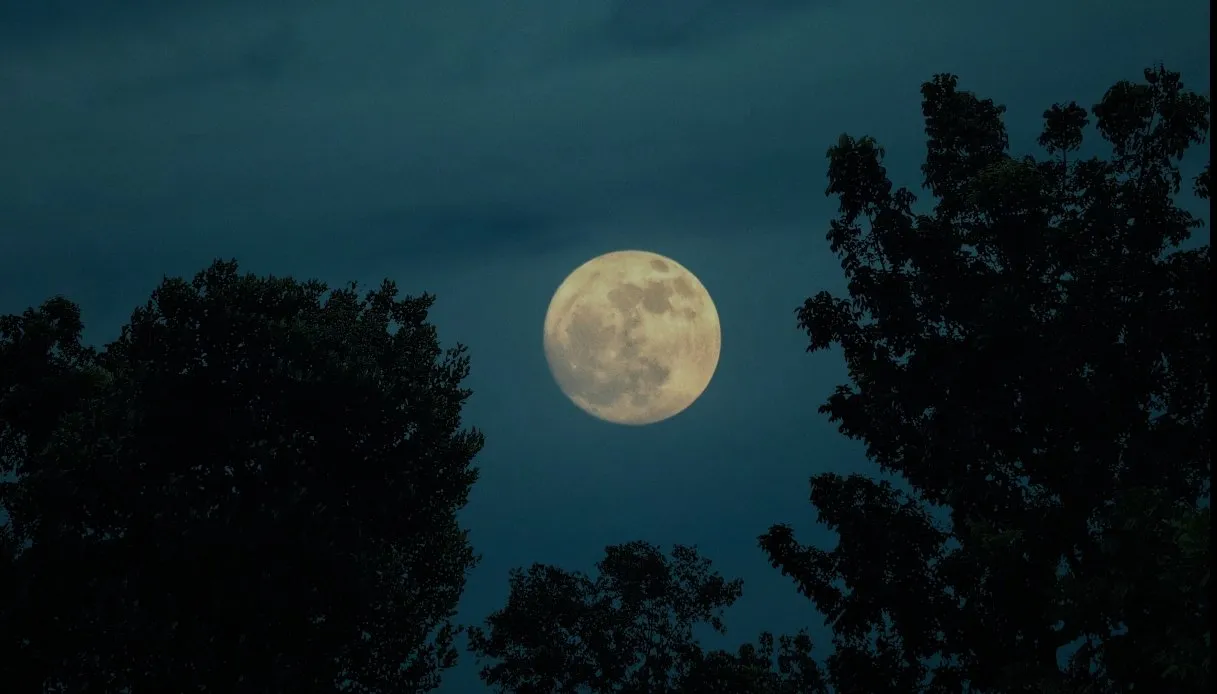
The month’s most anticipated event will be the Beaver Moon (a name derived from North American folklore) expected on November 24, 2026 at 15:54. This is the first Supermoon of the year: the full Moon will occur near perigee, the point in its orbit where the Moon is closest to Earth. As a result, the lunar disk will appear slightly larger and brighter than a typical full Moon.
Taurids and Leonids
The autumn sky will offer several opportunities to admire shooting stars. The first to take the spotlight will be the Southern Taurids, peaking around November 5. The Northern Taurids will reach their peak around November 12.
The main event will be the Leonids, on the night between November 17 and 18. Born from the debris of comet 55P/Tempel-Tuttle, these meteors are famous for their high speed, about 71 kilometers per second. Also notable are the Alpha Monocerotids, active in the second half of the month, with a maximum around November 22.
Mars and Jupiter Converge
On November 16 it will be possible to observe a striking apparent encounter between Mars and Jupiter. The two planets, in the constellation Leo, will appear separated by just over one degree and will be visible in the hours before dawn, toward the southeast and south.
Also to watch is the Moon–Mars–Jupiter conjunction on November 2, again before dawn, and the pairing of Venus and Spica on November 9 and 10.
The Other Planets in the Spotlight
On November 25 Uranus will reach opposition, placing it in the most favorable position to be observed throughout the year. It will be visible all night in the constellation Taurus, near the Pleiades.
Venus will again make itself known in the eastern sky before dawn. Saturn will continue to be observable in the early part of the night, while Mercury will reach its greatest western elongation on November 20–21.
Where to Watch the Celestial Shows in Italy
To observe these celestial spectacles, the best approach is to reach places far from artificial lights, preferably with a wide horizon and a clear sky. The Apennine mountains, from the more remote areas of the Sibillini to the Gran Sasso, offer numerous vantage points suitable for night-time observations.
Among the destinations to consider are the Campo Imperatore plateau in Abruzzo, and the mountain zones of the Gran Sasso and Monti della Laga National Park. For those who prefer the sea, stretches of coastline away from populated areas can provide a striking sky, especially along the horizon.
An alternative is to visit an astronomical observatory, where you can participate in guided evenings and telescope observations.