
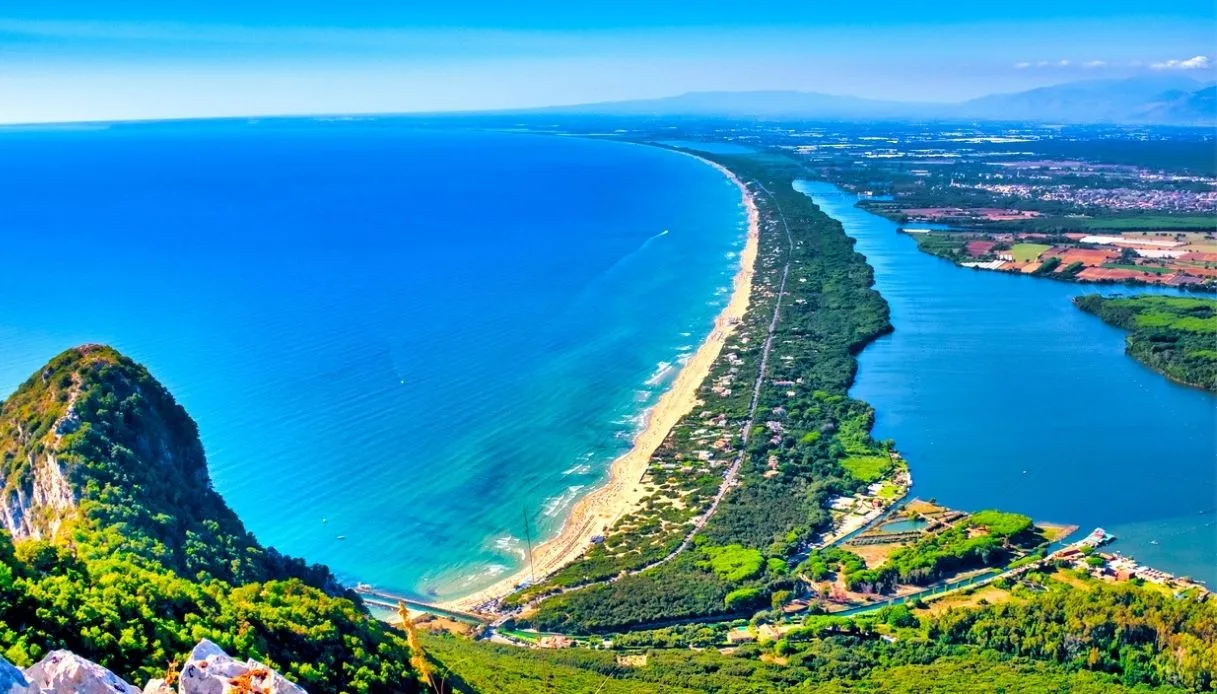
That Italy continues to fascinate tourists and travelers from around the world is clear, but there are corners far from the classic art cities that deserve to be discovered, and among them is the Lazio coast, a slice of paradise where the myths of the gods come back to life, as Forbes in its tribute notes. The ruins overlooking the sea, the mysterious caves and the legends continue to cross the centuries while the Tyrrhenian Sea caresses the shores of the whitewashed villages. Between history and myth, here are the places along the Lazio coast that Forbes highlighted.
The Lazio Coast Honored by Forbes
Not far from Rome, Forbes reminds us of the wonder of this place in a dedicated article, underscoring the appeal of the route that connects San Felice Circeo to Gaeta, recalling the adventures of Odysseus and the traces of a medieval era still visible.
Da these parts, in fact, myth is not merely something to read in books. It takes shape in the promontory linked to the witch Circe, in the ancient imperial residences and in the sanctuaries that dominate the landscape from above. The American publication proposes a two-day itinerary that starts from the Garden of Ninfa, in the Pontine hinterland, and traverses some of the most evocative locations of the Odysseus Riviera.
What to See Along the Lazio Coast
The journey can begin far from the beach, in a place that seems to belong to another world. The Garden of Ninfa, at the foot of the Monti Lepini, is a weave of streams, footbridges, flowers, and ancient medieval ruins wrapped in greenery. The name invokes the deities of spring waters, venerated in an ancient sanctuary of the area. And strolling among the remains of churches and the lush plants, it isn’t hard to imagine the nymphs hiding among the reflections of the water.
We then move toward the sea where one can encounter some of the most fascinating legends of Greek mythology; in San Felice Circeo the silhouette of the promontory evokes the figure of the sorceress Circe, protagonist of the Odyssey. The village, with its irresistible Mediterranean charm, invites you to slow down and explore the trails around the town. Another indispensable stop is Terracina, where the remains of the temple of Jupiter Anxur lie. The grand arches of the ancient Roman sanctuary frame a panorama that embraces the coast and, on clear days, reaches the Isole Pontine. Below, the city stretches between the historic center and the sandy beaches. A wonderful contrast: on one side the grandeur of ancient Rome, on the other the lightness of a day at the sea.
Milk-white houses, stairways that chase one another and the blue of the sea that suddenly appears between the alleys. Sperlonga has all the charm of Mediterranean towns that make you want to extend your vacation. Yet behind this postcard beauty lies a surprising history. Emperor Tiberius chose this stretch of coast for one of his residences, enriched by a natural grotto decorated with monumental sculptures inspired by the adventures of Odysseus. Today the sculptural groups, including those dedicated to Polyphemus and Scylla, are preserved in the National Archaeological Museum of Sperlonga.
The final stop carries the scent of salt, history and la dolce vita. Gaeta welcomes travelers with its harbor, the streets of the historic center and the imposing Angioino-Aragonese Castle that dominates the landscape. Even the city’s name is steeped in legend: according to Virgil’s tale, it would be linked to Caieta, the nurse of Aeneas. Not far away, on Monte Orlando, the tomb of Lucius Munatius Plancus recalls the city’s Roman past. But Gaeta can also be simply romantic. Just follow the coastline’s profile, discover the coves hidden among the rocks, and let yourself be surprised by the views over the gulf.
