
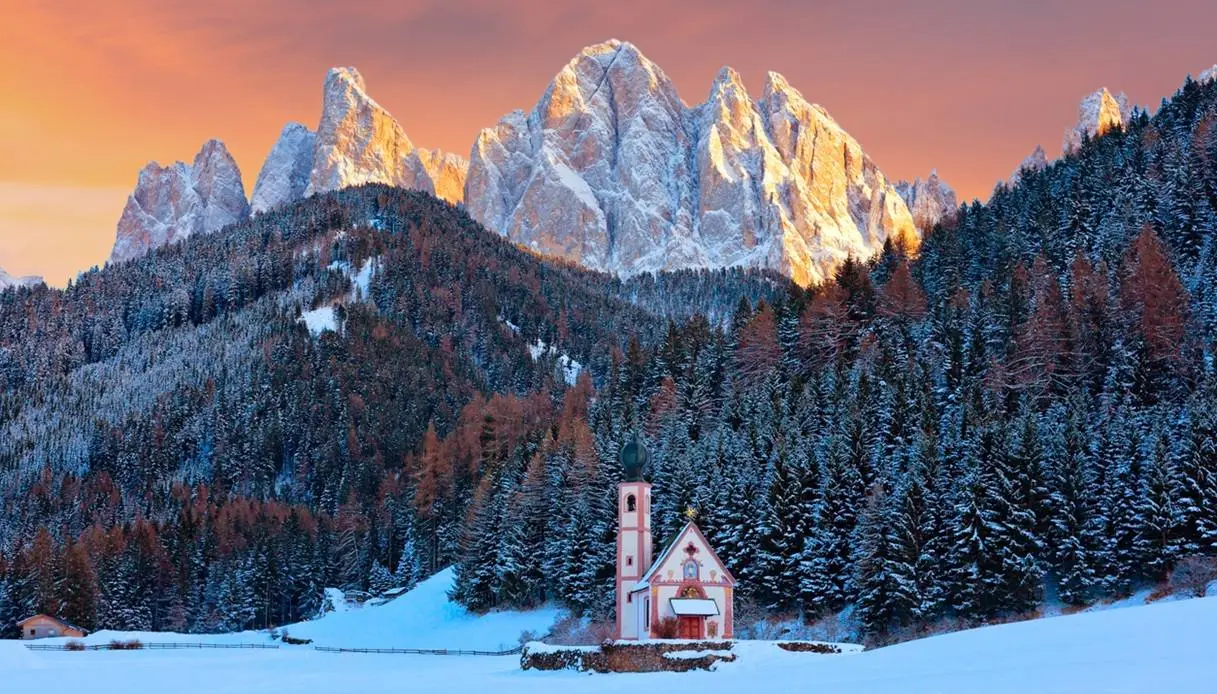
Snow-swept slopes traverse some of Europe’s most spectacular mountain landscapes, leading to refuges where you can sit down to a meal in front of steaming dishes; the Dolomites continue to win over snow-loving travelers (and more). This time, the celebration comes from Forbes, which devotes enthusiastic words to the Italian destination in an article by journalist Larry Olmsted, a travel and winter sports writer for about thirty years.
In his feature dedicated to winter-season destinations, Olmsted leaves no doubt: the Dolomites are among the world’s best places to ski. But there’s more: this magical destination, beyond offering a vast ski area, is enhanced by beautiful mountain villages and a culinary tradition that makes a day on the slopes unforgettable.
The Dolomites Win Forbes: Here’s Why
It isn’t the first time the Dolomites have attracted Forbes’ attention. The American publication had already spotlighted these mountains during the Milano-Cortina 2026 Winter Olympics, when the Italian alpine scenery was on the world stage. It now returns to celebrate them in view of the 2026-2027 winter season, presenting them as a destination capable of winning over mountain enthusiasts with spectacular landscapes, renowned towns, and an offering that goes far beyond the ski slopes.
One of the Dolomites’ strengths is the breadth of its skiing options. The region comprises numerous interconnected areas, allowing you to cross different valleys and discover ever-new landscapes even within the same day.
Forbes specifically cites Cortina d’Ampezzo, Alta Badia and Val Gardena, three of the locations that make the Dolomites a reference destination for ski lovers. Their strength also lies in the possibility of exploring different areas within a vast interconnected ski system, moving from one valley to another and continually changing the scenery without sacrificing the variety of runs.
What makes the experience even more engaging are the modern lifts, panoramic slopes, and the views of the most famous peaks, including the Sassolungo and the group of the Sella. Here there is something for both skiers who love spending entire days on the slopes and those who prefer to alternate descendings with breaks in refuges and moments of rest at high altitude.
Refuges, Villages and Gourmet Cuisine: What Makes the Dolomites Special
But Forbes’ recognition does not stop at the slopes. Among the elements that make the Dolomites so unique are the numerous alpine refuges scattered among the peaks: many host restaurants and, in some cases, even offer overnight accommodations.
Here a day on the snow can become an itinerary through flavors and traditions: you can stop for lunch at altitude, reach a refuge after a panoramic descent, or alternate hours on the slopes with visits to the villages that dot the valleys. The Dolomites actually offer a wide range of small towns to discover, and the accommodations and restaurants are often characterized by family-run hospitality.
Those who want to mix skiing with exploring the area can also plan a stroll among the Dolomiti’s villages. We suggest some of the most beautiful: Ortisei, with its pedestrian streets and craft shops; Corvara and San Cassiano, in the heart of Alta Badia, where you can breathe in the atmosphere of the alpine valleys; , in the Val di Funes, with its houses gathered at the foot of the dolomitic peaks, from which you can reach the famous church of San Giovanni in Ranui, framed by the imposing peaks of the Odle; and finally Sottoguda, a small village with traditional architecture at the foot of the Marmolada.
In the Dolomites, snow is only the beginning of an adventure to be experienced at least once in a lifetime: among spectacular slopes, gourmet refuges, and postcard-perfect villages, Forbes reminds us that a ski vacation here can become an experience to savor from start to finish.