
This year again, on 26 and 27 September 2026, the European Heritage Days return, promoted for about twenty years by the European Commission and the Council of Europe. The aim is to offer opportunities for both adults and children to rediscover museums, monuments and historic sites in a way different from the usual through themed visits, dedicated events, extended hours and reduced admission.
Countless events planned across Italy share the theme of the 2026 edition, namely “Protecting the heritage. Renew, resist, reinvent.”
Here we recommend some of the most interesting appointments, but you can consult the full program on the official site of the Ministry of Culture.
The museums of Turin: GAM, MAO and Palazzo Madama
In Turin, the Fondazione Torino Musei participates with reduced admission for everyone to the GAM, the MAO and Palazzo Madama. Beyond the permanent collections, in the three museums you can visit the current exhibitions, a journey that traverses very different eras and cultures.
The weekend is then enriched by theme-guided tours. On Saturday the MAO takes the public to the Japan of Hiroshige and his 53 stations of the Tōkaidō, while Palazzo Madama tells of the two Royal Madames who transformed the ancient castle into a fashionable residence.
On Sunday GAM reveals the works on paper of Another Twentieth Century, from Boccioni and Balla to Rauschenberg and Penone. Also at Palazzo Madama, an unusual route invites you to discover historical textiles through touch, from taffetas to lace. The visits incur an additional fee and must be booked.
Piedmont, a weekend between Savoy castles and Roman ruins
Across Piedmont, national museums participate with a calendar spanning from royal residences to archaeological sites. On Saturday evening several places stay open late with a symbolic admission of 1 euro.
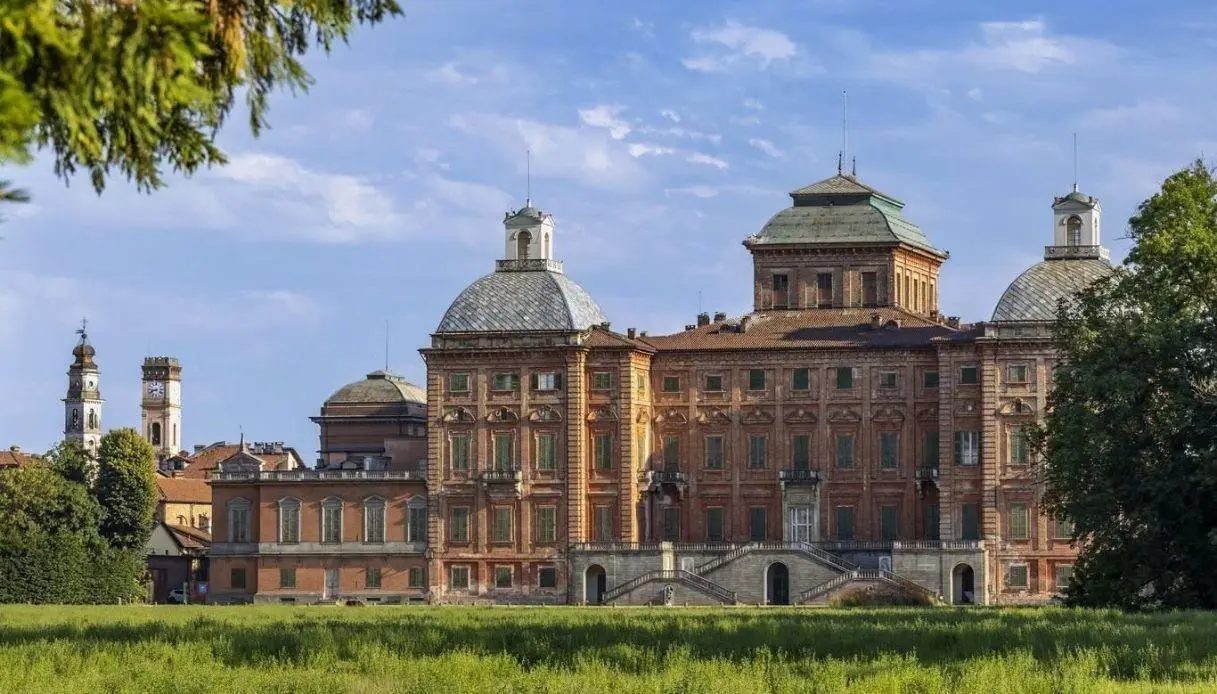
At Palazzo Carignano, in Turin, you can visit the Midday Apartments and the Guariniano Staircase. At the Castle of Racconigi the first noble floor opens unusually, where the Chinese apartment hosts the exhibition Mirrors of Japan by Stefano Faravelli.
At the Castle of Moncalieri, instead, Vittorio Emanuele II’s rooms come alive with short theatrical scenes devoted to the king’s loves. At the Castle of Agliè there is a jazz concert with music generated from the bio-signals of plants, while at Villa della Regina people toast at sunset among the vineyard rows. Finally, at Libarna the Roman ruins serve as the stage for Aterballetto’s MicroDances.
Crespi d’Adda, the UNESCO workers’ village
In Lombardy, Saturday 26 September, the Crespi d’Adda workers’ village, in the province of Bergamo, hosts the study day Heritage at Risk: revitalizing, resisting, reimagining. The theme is especially timely: between tourist pressure and changes in visitor flows, UNESCO sites risk remaining fixed in their historical image and the gathering asks how to transform them into living and sustainable places.
The morning is devoted to the exchange between experts, cultural operators and local communities. In the afternoon we move to practice, with a guided visit of the village that combines live exploration with virtual reality headsets, digital reconstructions and artificial intelligence tools. Listed on the World Heritage List for 31 years, Crespi d’Adda is today the second most visited industrial site in Italy. Participation is free, with online registration.
Bormio reveals its hidden treasures
We remain in Lombardy, where on the occasion of the European Heritage Days, Bormio has chosen to show a side different from the town’s ski resort image, tied to its centuries of history.
Throughout the weekend you can follow an autonomous walking route of about two hours through the historic center, with stops that are very different from one another. The route passes from the four- to five-hundred-year-old frescoes of the Church of Santo Spirito to the Alberti Tower, which hosted Ludovico il Moro. You then encounter the cellars where the Braulio amaro ages and the trompe-l’œil painted dome of the Church of Sant’Ignazio.
The finale takes place in the Combo district, the most rural part of the village, among peasant houses and the legend of Gaudenzio’s ghost. At the Civic Museum there is also a small exhibition My Wunderkammer.
Treviso and the cultural treasures of the Marca Trevigiana
In Veneto, the Marca Trevigiana participates with a program spread across ten municipalities, including walled towns, villages, villas and museums. In Treviso, for example, museums, palaces and churches open their doors with guided tours, concerts and exhibitions. The weekend also marks the start of celebrations for the 700th anniversary of the birth of Tomaso da Modena.
In Maser, instead, you can visit Villa Barbaro, Palladio’s masterpiece frescoed by Veronese, with a final tasting of the estate’s wines. Not far away stands the Tempietto Barbaro, the last work of the architect. Among lesser-known places we mention the ancient church of Cappella Maggiore, of Lombard origin, which houses a rare Last Supper from the late 13th century.
Special tours in Rome
In Rome, the Special Superintendency opens to the public 15 sites scattered throughout the city, from the Gianicolo and Testaccio to the Via Casilina and Ostia, with visits and evening openings as well.
The most awaited novelty is the reopening of the Villa di Livia, on the Via Flaminia, after works financed by the PNRR. Not far away, Sunday marks the debut of the Grottarossa Archaeological Area, with its two mausolea and the remains of a large monumental fountain, told also through videos and reconstructions. On Saturday evening you can visit the Thermae of Caracalla and, on both evenings, the Basilica of Saint Peter in Chains, where Michelangelo’s famous Moses is housed.
The cultural heritage of Naples
In Naples, the Superintendency opens to the public some lesser-known sites, from the Roman baths of Via Terracina in Fuorigrotta to the Roman Villa of Ponticelli, up to the Pompeian Rooms of the Royal Palace.
Sunday morning the most original appointment is at the Church of Santa Maria dell’Incoronata, in Via Medina, where Trame Mediterranee will take place, an embroidery workshop born from the collaboration between the Superintendency, the Mondragone Foundation, custodian of an important textile collection, and the Museo Madre, which hosts an exhibition dedicated to Maria Lai.
The starting point is the trousseau of Pietro d’Aragona, restored by the Superintendency. From here one reflects on an idea of protection that concerns not only old textiles but also the know-how of the embroiderers who still pass it on today. Access to the church is free, while for the workshop, with limited seats, reservation is required.
Sassari between archaeology and history
Finally, we recommend discovering the city of Sassari, in the north of Sardinia. Here, the European Heritage Days allow visiting the prehistoric altar of Monte d’Accoddi together with an archaeologist and the Museo Sanna, which will tell about the conservation of museum artifacts (and more) during World War II.
During this period, indeed, as part of precautionary measures to protect artistic and archaeological heritage from bombing risks, the museum’s direction decided to wrap and evacuate the collections. The rest will be discovered during the visit!
On Saturday, moreover, you’ll be able to discover eight centuries of history linked to the city’s old defensive walls that once surrounded it.