
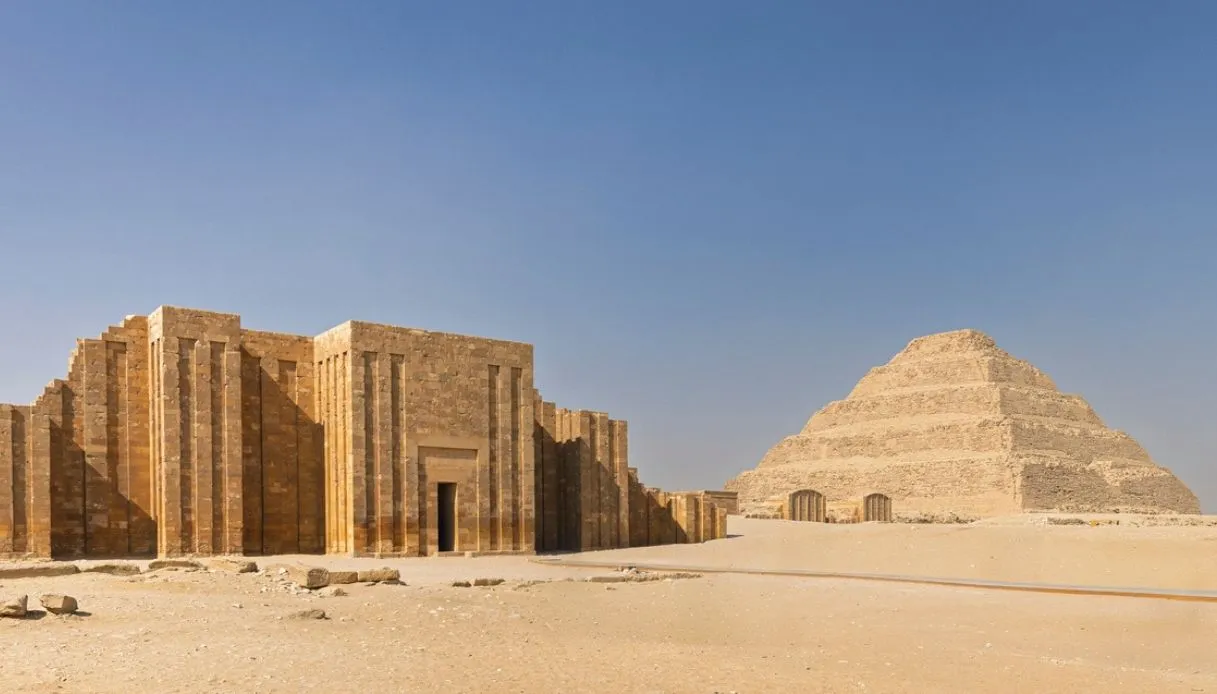
The story keeps speaking for itself; in Egypt at Saqqara, an archaeological expedition has just made a precious discovery: from the digs the tomb of Weni has resurfaced, a high official of the Old Kingdom closely linked to the pharaoh. The prestigious find, nestled among burial chambers and artifacts, offers the opportunity to delve into several topics tied to such an influential man.
The Saqqara discovery of Weni’s tomb
A new discovery comes from the Saqqara necropolis, a short distance from the pyramid of Pharaoh Merenre. Archaeologists in Egypt have unearthed a mastaba, a crude-brick tomb historically reserved for high-ranking figures. And this time the name is one that matters: Weni. The find occurred during excavations conducted by an Egyptian mission under the coordination of the Supreme Council of Antiquities.
Inside the structure, several burial shafts were identified. One leads directly to the burial chamber of Weni, where the decorations and inscriptions on the walls have survived well enough to allow experts to reconstruct part of his identity. Weni is described as a mayor, a sem priest, supervisor of the royal apartments, treasurer of the Northern House, and the sovereign’s sole companion. Among his titles is also lord of the city of Kab. He was therefore not merely an administrator: he was a figure woven into the levers of power, with responsibilities spanning state governance and the religious sphere.
The most intriguing part of the discovery, however, lies just above the burial chamber. The archaeologists located a vaulted chamber containing several artifacts, among them two small wooden statues depicted in an unusual posture of worship. A rare presence, especially because of the distinctive stance of the figures, which could help illuminate the meaning of the objects placed in the tombs of officials.
In the burial shaft were recovered some bronze tools that may have been used in a medical context; such items are rather unusual in burial contexts and, for now, there is no definitive explanation for their presence. Throughout the excavation there were surprises: a false door belonging to Sekhet-Nebty, a woman bearing religious titles, including priestess of Hathor. But what are false doors? In Egyptian funerary architecture they carried a symbolic meaning, representing a direct point of communication between the living and the dead.
Why this discovery matters
A tomb belonging to a high official is already a precious source for Egyptologists. When it yields legible inscriptions, rare objects and human remains that are still open to study, its value grows considerably. In Weni’s case, what stands out are especially the initial anthropological analyses. According to scholars, the man would have died after surpassing fifty years of age, a detail placing him in a relatively advanced stage of life. The remains also show serious dental problems and alterations of the tissues surrounding the teeth, signs compatible with advanced oral pathologies.
