
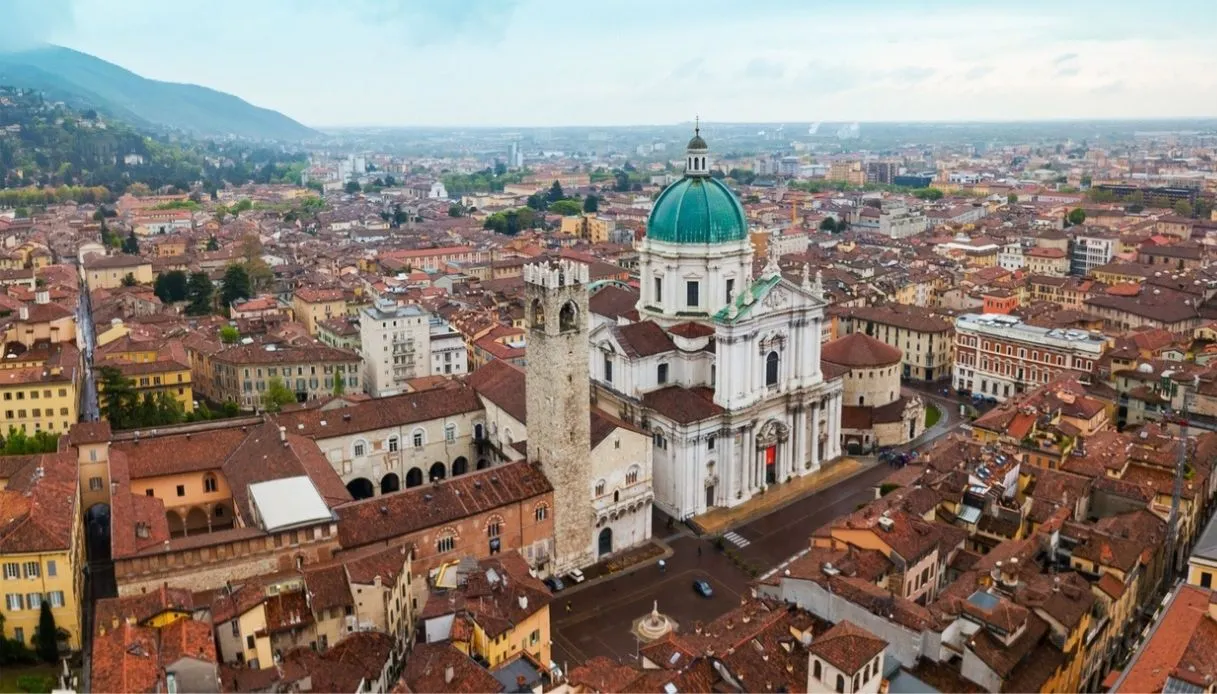
Brescia returns to the spotlight of the international press. This time, it is The Guardian who falls in love with the city, which in a long travel report portrays a destination still distant from the main tourist flows, yet capable of concentrating history, art, cuisine, wine, and atmospheres that are authentically Italian. The British daily presents it as a kind of treasure left off the radar for far too long, often sped through by travelers heading toward Milan, Verona, Lake Garda, or the Dolomites. An error, according to The Guardian’s account, because right here you can find, all in one place, “what one can desire from Italy.”
The Guardian praises an authentic Brescia
The charm described by The Guardian originates mainly from the city’s identity. Brescia is depicted through its neighborhoods, the people who live there, and that particular mix of past and present that emerges as you stroll through the city center.
Among the first surprises there is the Carmine, a district once deemed difficult and today one of the city’s liveliest spots, with bars, restaurants, graffiti, and Bohemian-spirited streets. It is precisely this contrast that strikes: Brescia does not seem built for the tourist, but it preserves the character of a city lived daily by its residents.
And it is not the first time Brescia has captivated foreign media. The Times had already dedicated praise to the city, helping to reinforce the image of an Italian destination that remains surprising and relatively little explored by international tourism.
What to see and visit in Brescia according to The Guardian
Among the stops that emerge most strongly is Piazza della Loggia, with the famous Clock Tower and its automata that mark the hours since the sixteenth century. One of the most recognizable images of the historic center and one of the city’s emblematic places. Then the Theatre Grande, regarded as one of Brescia’s cultural jewels. The Guardian recalls its long history and prestige, also dwelling on the link with Giacomo Puccini and the revived fortune of Madama Butterfly in the early twentieth century.
Among the most evocative surprises is the Church of San Cristo, nicknamed the “Sistine Chapel of Brescia” for the extraordinary wealth of frescoes that cover its interiors. Naturally, one cannot ignore Roman Brescia. The report guides readers to the archeological area of Brixia, one of the most important Roman testimonies in northern Italy, and to the nearby Museum of Santa Giulia, where monuments, artifacts, and architectural stratifications tell more than two thousand years of history.
But discovering the city also passes through its cuisine. The Guardian cites local specialties such as casoncelli, malfatti, and Bagòss, together with the indispensable pirlo, the emblematic Brescia aperitif. And not far from the capital, another excellence arrives: Franciacorta, with its vineyards and its sparkling wines.
The recommended trip does not stop at the city’s borders. From the center of Brescia, the story shifts toward Lake Iseo, Sulzano, and especially Monte Isola, where artisanal traditions, fishing nets, local products, and wooden boatyards complete the image of a territory rich and surprisingly varied.