What are the Italian cities where life is best in 2026? A new ranking dedicated to Italian smart cities answers this question by considering not only technology, but also how it contributes to the well-being of citizens. Mobility, environment, housing, economic opportunities, education, safety, and services are indeed among the elements that determine the livability of an urban center.
The study conducted by the Rome Business School analyzed regional capitals across six categories: economy, administrative capacity, traffic management, energy efficiency and attention to health, safety, and the culture of citizens. Surprisingly, the large metropolises do not occupy the top positions: what stands out are mainly smaller to mid-sized cities.
Trento, the Italian city where it’s smartest to live
At the top of the rankings of Italian smart cities is Trento, with an average score of 52.5 across the six categories considered. The capital of Trentino precedes Aosta, second with 51 points, and Bologna, third with 47.5.
The result for Trento does not depend on an absolute lead in a single category, but on the ability to maintain balanced performance without evident weaknesses. The city stands out particularly for energy efficiency and the management of urban mobility.
Another significant element is the presence of green spaces, which covers 46% of the municipal territory. The air quality also contributes to the result, while life expectancy reaches 85 years.
In terms of housing, Trento is not among the most affordable cities: average quotations range between 3,300 and 3,500 euros per square meter, with peaks of around 4,000 euros in central areas. Rents for a three-room apartment are around 1,000 euros per month.
Aosta, the surprise in second place
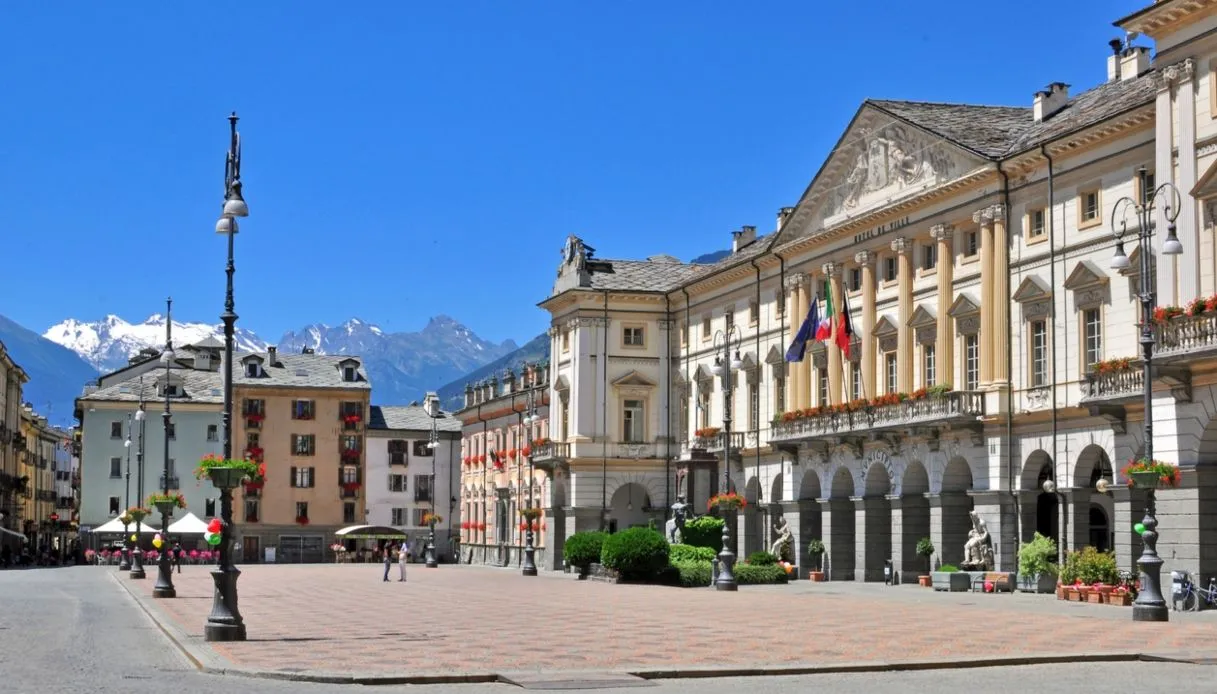
The real surprise of the ranking is Aosta, which clinches the second place with 51 points. The capital of the Aosta Valley shows how smaller sizes can represent an advantage when it comes to mobility, sustainability, and the quality of the urban environment.
Aosta is indeed first in the category of mobility: to cover ten kilometers in the city, it takes on average 13.5 minutes, while in Rome and Milan the time exceeds half an hour.
The capital of the Valle d’Aosta also takes first place for environmental sustainability. Green space covers about 50% of the municipal territory and PM2.5 levels stop at 10 mg, well below the limit indicated in the study. A data point that clearly distinguishes it from the big cities, where atmospheric pollution is higher.
Other cities in the ranking
In third place is Bologna, with 47.5 points. The Emilia-Romagna city excels especially in governance and education. About 60% of residents engage with the Public Administration through apps or web services, while almost 40% of the population holds post-diploma education. There are also 178 university students per thousand inhabitants.
The city of Genoa leads in the living category (quality of life).
Further from the podium are the large metropolises. Milan is ninth with 43.3 points and shines in the economic category, thanks to a total GDP exceeding 228 billion euros and a per capita GDP of around 52,800 euros. The city’s wealth, however, comes with high housing costs. Turin occupies the eleventh position, while Rome is thirteenth with 39 points. Naples is second-to-last.
The study thus highlights an interesting trend: smaller and mid-sized cities can achieve better results than metropolises, penalized by higher urban density, congestion, pollution, and housing costs.