
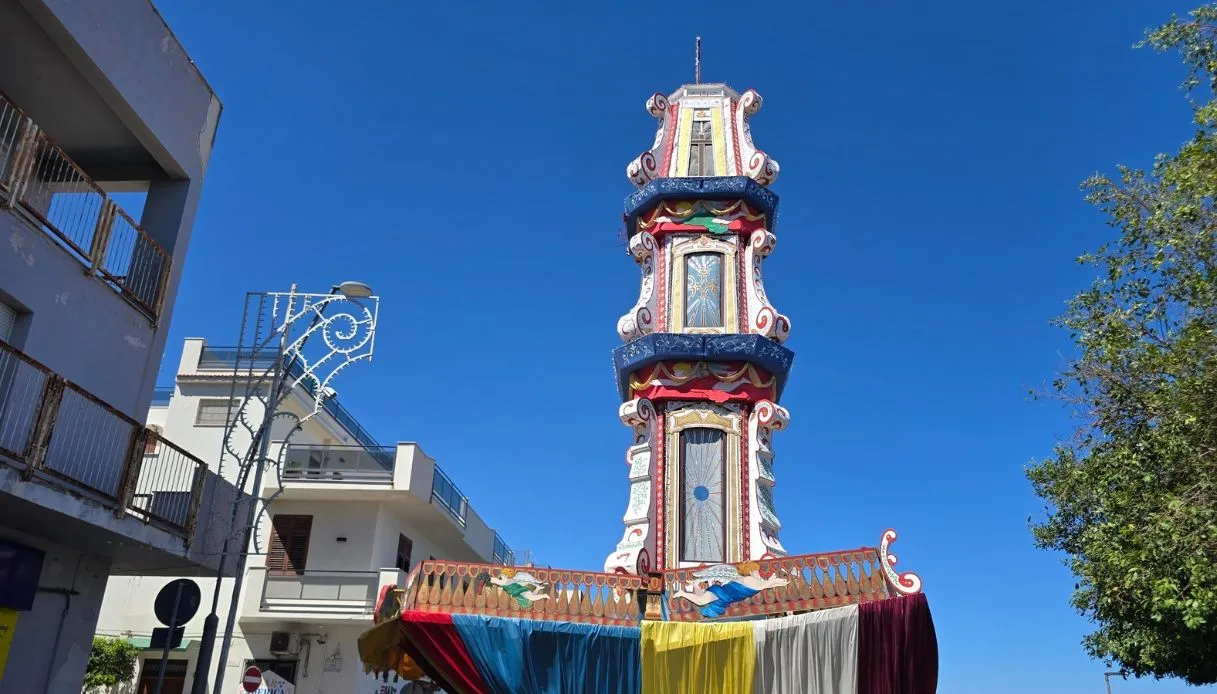
A roll of drums along the streets, the scent of grilled sausages wafting from the shops, lanterns lit above the crowd: in autumn, on the hill of Altavilla Milicia, folklore and prayer intertwine and carry everyone along, from children on their parents’ shoulders to grandparents leaning from balconies.
For a few days the village changes pace and becomes an open-air stage, with the sea in the background and an ancient tale of corsairs, oxen… and promises to keep. For those who live in this hamlet it is already familiar, but even newcomers understand it at once: this festival is lived with the mind, with the heart, with all senses in ecstasy.
A Norman Pearl Steeped in Prayer
Altavilla Milicia overlooks the Tyrrhenian Sea like a terrace, perched on a hill about twenty kilometers from Palermo. From the city you reach it via the A19 Palermo-Catania highway to the dedicated exit, or along the 113 highway toward Messina; those who prefer to travel without a car can rely on the train, with the station at the foot of the town. The name carries the echo of the Altavilla, the Norman dynasty that conquered Sicily in the 11th century, while the village took shape in the 17th century around a fortified baglio.
Each year, at the end of summer, Altavilla gathers around its patroness, the Madonna della Milicia. It is the most awaited appointment of the calendar, capable of drawing families, youngsters and pilgrims from Palermo and nearby towns. This year too the celebrations took place from September 5 to 10 and will return next year: it is worth getting to know them now, to mark the dates and arrive ready for one of the oldest festivals in western Sicily.
The Origins and Legend of the Patronal Festival
Everything begins with a painting and a ship. According to the story handed down in the town, before the Seicento a corsair vessel bound for Palermo could not double Cape Zafferano. The pirates blamed a board bearing the image of the Virgin, used aboard as a lid for a water barrel, and handed it to the few villagers who had gathered on the beach. Another version says the painting was hurled among the waves and arrived at the Milicia river mouth. In both cases, the Milicioti loaded it onto a cart pulled by oxen and carried it to the hill, where the Sanctuary would rise.
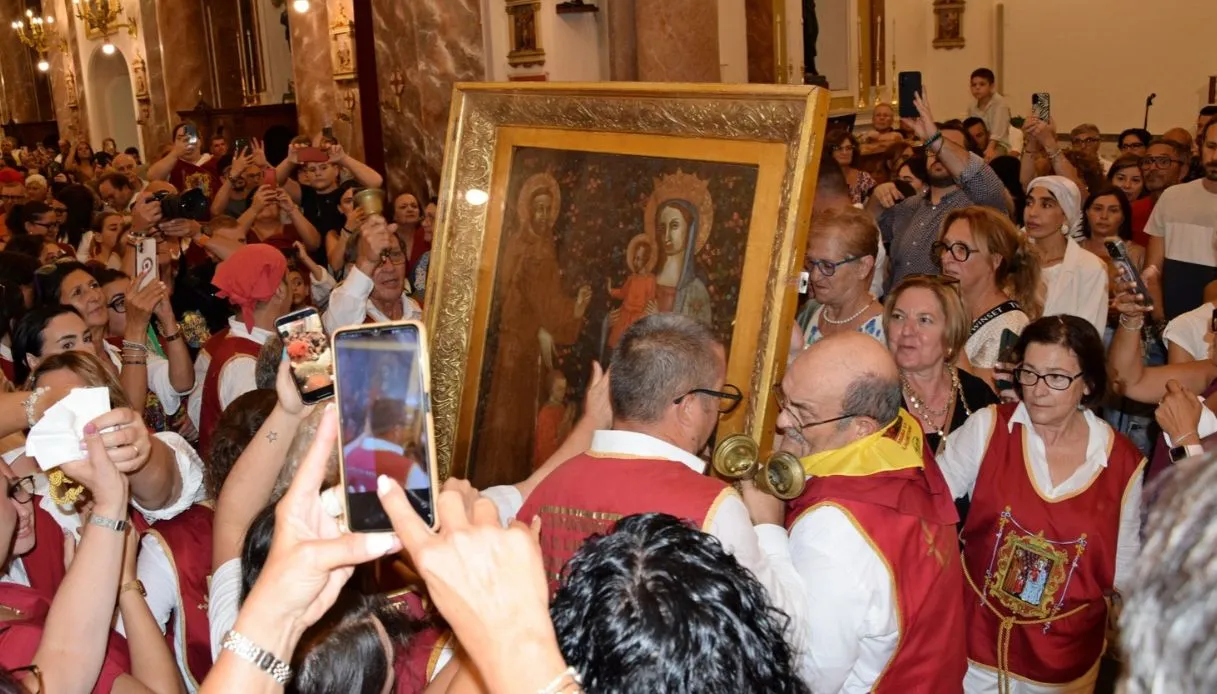
Beside the legend lies the history. On the night of July 14–15, 1636, corsairs landed on the coast and devastated the village; in Palermo, during the Santa Rosalia festival, the news caused the celebrations to pause and the city’s defense to be set in motion. Since then, Palermitans venerate the Madonna della Milicia as a protector, and on the back of the icon, a 14th-century panel from a Tuscan school bears the marks attributed to the scimitars.
The Festival Today: the Cart and the Angels’ Flight
The preparation for Altavilla Milicia’s patronal feast begins days earlier with the oitavario, when at midnight voice and accordion intone the novena through the streets. Then comes the dawn of the pilgrimage: at 5 a.m. the faithful gather at the station and climb toward the Sanctuary with lit torches, some barefoot, drawing a luminous trail along the road.
The protagonist is the triumphal cart, a wooden tower about 16 meters tall with a boat-shaped base, a reminder of pirate vessels, and the Madonna at the top. It is drawn by oxen together with children, who contest a place along the rope, among musical bands and lanterns, on the climbs (the acchianata) and on the final descent (the scinnuta). On September 8, the Nativity of Mary, at noon the procession of gifts passes: candles, torches and wax ex-votos brought by those who fulfill a promise, with women dressed in red.
At sunset the tableau is carried on the vara by the confreres, and along the route there unfolds the volata degli angeli: little girls dressed as angels, suspended from ropes stretched between balconies, reach the Madonna singing praises in Sicilian, among flowers and calia thrown by the crowd. Before returning, the statue turns toward Palermo as a sign of protection, and in the dead of night the cart descends lit by hundreds of bulbs.
Renewal and Devotion: a Festival that Changes
Whoever imagines a commemoration reserved for the elderly will be surprised: the program blends prayer and the square, with the idea that the festival belongs to the entire town, believers and less-practicing people alike. Between one rite and another the streets fill with drummers, flag-wavers, live music and concerts in Belvedere Square, up to the fireworks that light up the sky above the sea.
The youth are the engine of the festival: they animate one of the masses, pull the cart, dress as angels for the flight. Then there’s street food: in the tavoliddi, improvised banquets in front of butcher shops, one bites into bread and sausage just as pilgrims did in old times, among stalls of nougat and peanuts. The call of Milicia has crossed even the ocean, and the Altavillese community in Chicago celebrates each year its own version of the festival.
Altavilla All Year Round: a Wonder to Discover
When the lanterns go out, the village stays there waiting. The Sanctuary opens every day and keeps, at the bottom of a short staircase, a museum of ex-votos painted on the tin of sardine boxes, while from the Belvedere the sunset colors the gulf up to Capo Zafferano. Between Norman ruins, watchtowers, turquoise-water coves and a pasticciotto to enjoy at the bar, Altavilla Milicia has plenty to tell even far from the festival, and deserves a trip long before next September.