
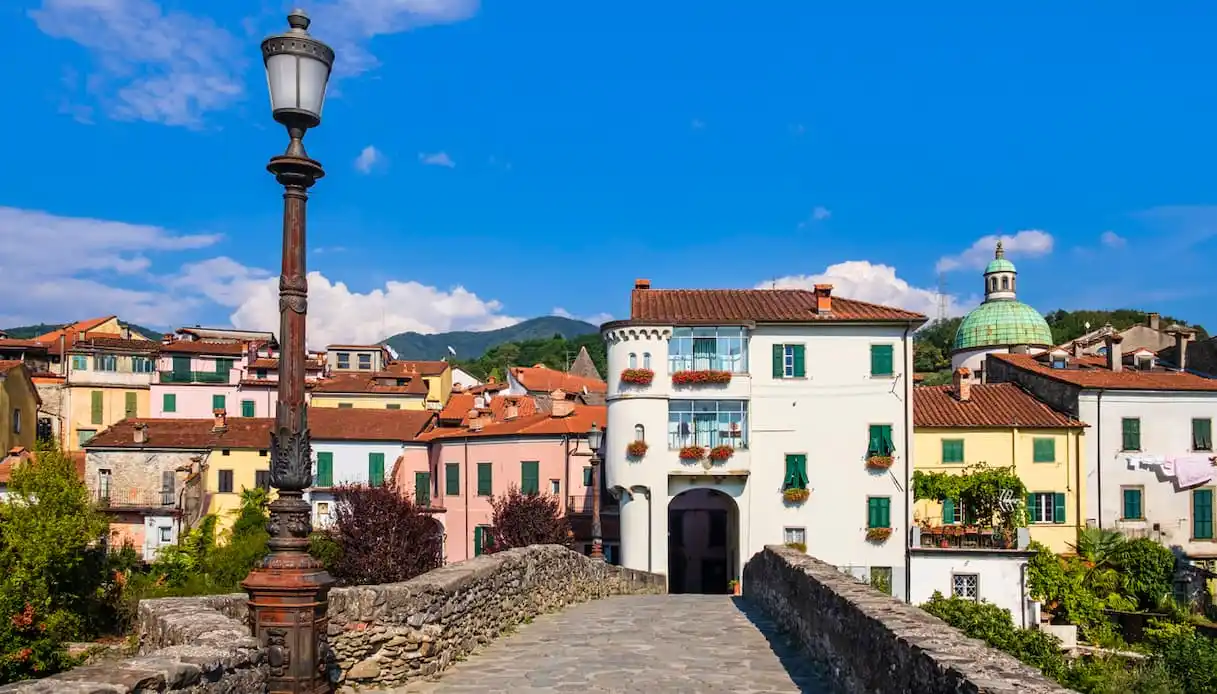
The story of Italy’s ghost villages typically begins with someone leaving for the big city. In mountain municipalities, in recent years, there are also cases of the reverse journey. Between 2019 and 2025, the number of people who moved their residence to mountain territories exceeded those who left by 174,274 more people.
In the mere two-year span of 2024-2025, the positive balance neared 73,000 people. This is what emerges from the Italian Mountains Reporta 2026, produced by Uncem with the Fondation Mountains Italy, whose national preview is scheduled for November 19 in Zocca, on the Modenese Apennines.
Where People Return to Live in the Mountains
The Northwest leads the shift with a net migration of 84,636 people between 2019 and 2025. It is followed by the Northeast, with 67,518, and the Center, with 38,370. In the same period, in the mountainous territories of the South departures exceeded arrivals by 16,250. The picture also varies from valley to valley, with signs of recovery in parts of the southern Apennines.
In Lombardy, the Valley Trompia recorded a positive balance of 1,489 people in the 2024-2025 biennium, and the Valley Sabbia 1,041. In Piedmont, the Valleys of Lanzo, Ceronda and Casternone stand out, with 982 net arrivals. In this last area the report also notes an overall population increase of 1.3% between 2021 and 2026.
In the Apennines, the Lunigiana emerges with a migration balance of 1,171 people in the biennium, and the Mugello with 972. Farther south, among areas that welcomed more people than those who left are the Alburni, in the province of Salerno, with a positive balance of 613, and the Monti Lattari, with 214. These are regions many know for a day hike or a weekend getaway. The report views them through a different lens, that of choosing to settle and establish residence.
Repopulating the Villages Also Requires Services
The migration balance captures shifts in residency. To understand whether the population is growing, one must also consider births and deaths. Between 2022 and 2025 the wholly mountainous municipalities lost a total of 59,462 residents, equal to 0.7% of the population, mainly because deaths outpaced births. In 2025 alone, in 309 mountainous municipalities, no child was born. New arrivals can thus slow the decline even where the population is still shrinking.
What makes daily life differ is also the time needed to access services. According to the report, 11% of residents take more than an hour to reach a hospital. For 18.1%, it takes more than an hour to reach a railway station. These are distances that weigh heavily when arranging a medical appointment, reaching a job outside the valley, or returning home after classes.
Tourism already plays a significant role in the economies of these places, with over 113 million overnight stays in 2024 across the mountain municipalities. For those who relocate to stay, Uncem calls for stable investments and policies for housing, work, and services. For a country of mountains, the ability to welcome new residents also hinges on tangible things, such as a nearby school and a reliable year-round link to the valley floor.
