
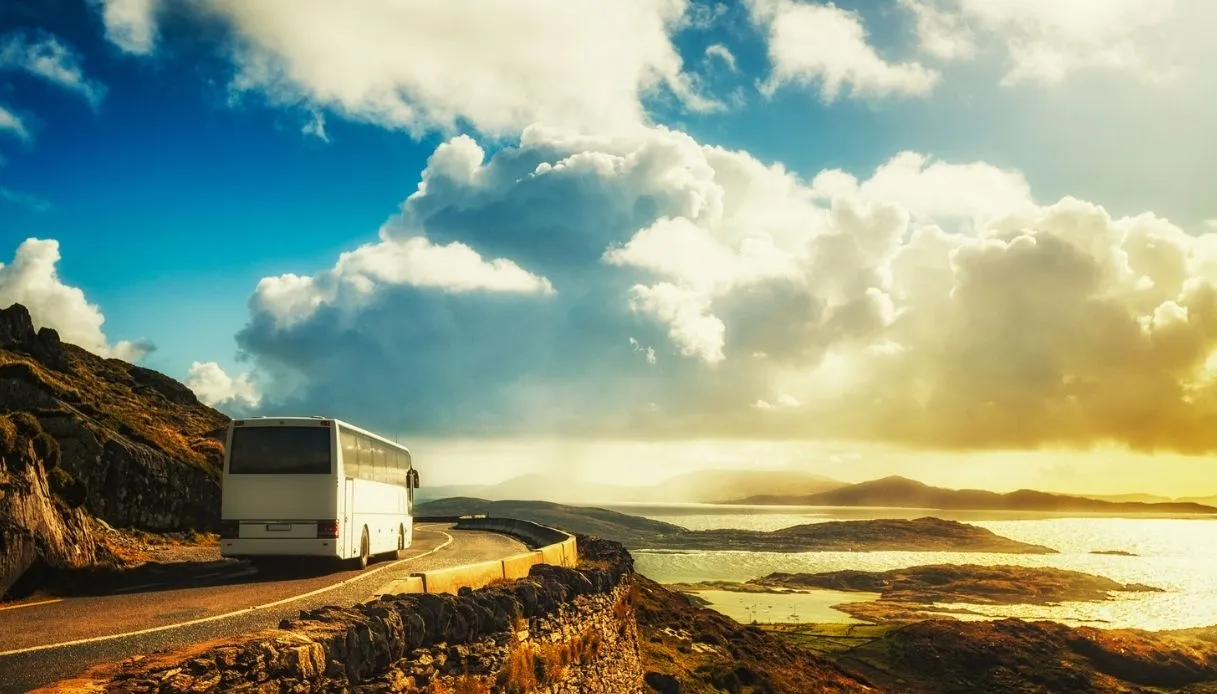
Among the most beautiful trips to take on the road in Europe, Ireland stands out, but between differences in driving rules, the sky‑high prices of car rentals, and strict regulations behind the wheel, some travelers have chosen to explore it in alternative ways, for example by using public transportation.
We experienced firsthand an Ireland on the road itinerary without a car, a 7‑day vacation to undertake without the stress of driving and by taking advantage of buses and trains that work very well with competitive fares. In 7 days in Ireland without a car you can start from Dublin, visit Kilkenny, Cork, Killarney, Galway and more. Here’s how to do it.
Day 1: Dublin
Perfect as a starting point for the many affordable flights and well‑connected services with Italy, Dublin deserves a full day to explore its most beautiful sights. After landing, you can easily reach the city center from the airport with the Dublin Express (lines 782 and 784) in about 30 minutes, with a frequency every 15 minutes during peak hours. Alternatively, there’s Aircoach, operating 24 hours a day with stops at various points around the city, including near some central hotels. What to see?
The wonderful Irish city reveals itself through Georgian facades, colorful shopfronts, and pubs that produce violin music even when it’s raining. Pass by Trinity College and visit the Book of Kells, among ancient manuscripts and film-like atmospheres. Then shift the scene: at Dublin Castle you’ll find courtyards and rooms tied to the island’s political history, while nearby Chester Beatty houses collections of books and works from diverse cultures. In the afternoon, cross the River Liffey, photograph the Ha’penny Bridge, and wander the streets around Temple Bar, which, though very touristy, never fails to enchant.
Day 2: Kilkenny
On the second day we leave the city by taking an Irish Rail train toward Kilkenny. It’s about an hour and a half of travel, though there are longer connections if the route includes additional stops. Once there, begin exploring on foot from the Medieval Mile, which links the city’s most famous monuments and takes you back in time. A must‑see is certainly Kilkenny Castle, set in a green park with rooms restored to right around‑the‑year standards. Continue to Rothe House and then reach St Canice’s Cathedral, recognizable for its circular tower and stunning viewpoints. Booking a dinner at a traditional inn such as Kyteler’s Inn is an unmissable experience.
Day 3: Cork
For the third day, say goodbye to Kilkenny and take the Dublin Coach 600 M9 Express to reach Cork in a little over 2 hours and 30 minutes, traffic permitting. Get off at Anderson’s Quay, just a short walk from the city center, and after dropping off your bags where you’ll be staying you can head straight to the English Market to sample local cheeses, fish, and bread… it could be the perfect lunch spot. Although many omit it from the itinerary, Cork is a city worth discovering first along St Patrick’s Street, then toward Shandon and St Anne’s Church. Those who aren’t too tired yet can reach Elizabeth Fort for a wonderful overlook of the city.
Day 4: Killarney
From Cork Kent station take an Irish Rail train to Killarney. Some services are direct, others require a change at Mallow; plan for about 1 hour 20 minutes to 2 hours, depending on the connection. From the town, switch to the green countryside. Lighten your backpack, keep the camera ready.
Killarney National Park is a mosaic of woods, lakes, and mountains. From the center, reach Ross Castle, about two kilometers away: a fortress on the shores of Lough Leane that seems tailor-made for foggy days. Interiors follow seasonal openings; the landscape is worth it anyway. If you wish to push on to Muckross House and its gardens, note that it’s about six kilometers from the town: you can use a private sightseeing service when active, or rent a bicycle. The park does not operate its own shuttle. Don’t try to squeeze in the Ring of Kerry as well; that would be a marathon. A smaller hike, the lake, and a quiet dinner in Killarney are a better plan.
Day 5: toward Galway
From Killarney you head toward Galway for the fifth day of the Ireland on the road itinerary without a car: it’s the longest leg, but not intimidating. With the Dublin Coach 300 you’ll reach Limerick in about 1 hour and 45 minutes. From there take the Bus Éireann Expressway 51 to Galway, which will drop you right at the city’s bus station in about 1 hour and 20 minutes. Once there you’ll be captivated by its charm, starting with the Latin Quarter with colorful signage, street performers, and intimate but evocative venues. A must‑see is Quay Street, from which you can reach the Spanish Arch and then the Claddagh, where the city meets the water. If the weather cooperates, a stop at Salthill seafront is not to be missed.
Day 6: Cliffs of Moher
The sixth day is best started early to reach the Cliffs of Moher from Galway’s bus station; simply choose the Bus Éireann 350 toward Ennis or join one of the many daily tours available. The cliffs are among Ireland’s most famous natural attractions and are absolutely unmissable, whether the weather is fine or dreary. An optional extra stop? Doolin, on the way, a small village renowned for traditional music. Return to Galway on the same 350 bus but in the opposite direction.
Day 7: Galway to Dublin
The final day is dedicated to returning to Dublin; board an Irish Rail train for roughly 2 hours 20 minutes to 2 hours 45 minutes depending on the number of stops. There are no changes, which makes for a relaxing journey. If time allows, you can do a few more rounds in Dublin, perhaps adding a stop at Howth: it’s easily doable by train from the city, but the flight is in the evening. Alternatively, it’s better to head back to the airport in good time.