
Those who have lived here are absolutely convinced that one life isn’t enough to see it all. If first-time visitors rightly focus on the Colosseum, the Pantheon and Trastevere, there’s a whole world to discover for those who return… (by the way, throw a coin into the Trevi Fountain—rumor has it it’s good luck to glimpse the Eternal City again). So what are the most unusual places in Rome that few people know? Here is an itinerary of unusual Rome that will win you over.
Villa Torlonia
The first place isn’t unknown, but it is certainly off the standard tourist path, mainly because it isn’t the easiest to reach. Villa Torlonia transports us to a fairy-tale mood with a garden full of magical atmospheres. Yet it has also been an important historic site, hosting first the eponymous family and later Mussolini. Inside, amid romantic avenues and surprising architecture, lies a gem: the Casina delle Civette, a tinkered little villa that looks enchantingly whimsical, with turrets, pitched roofs, and Liberty-style stained glass. To reach it, head to Via Nomentana, alight at Bologna on the Metro B and walk from there; access to the park is free while entry to the museums requires a ticket. (€9.50 for the Casina delle Civette and Casino Nobile combo)
The “Little London”
London calling… but we have never left Rome. A symbol of the Flaminio district, on Via Bernardo Celentano, there is a stretch of colorful houses that seems to invite us to experience Notting Hill vibes; it has been nicknamed “the Little London”. Born in the early 20th century, it is in fact a private street fenced off by gates, but with great sensitivity and respect you can admire it without disturbing the residents.
Arch of the Banchi
And what if we told you that in the Eternal City there exists a tiny starry sky hidden among the buildings? A few steps from Ponte Sant’Angelo, the Arch of the Banchi is one of those places capable of giving you a genuine wow moment. Enter the passage that links Via del Banco di Santo Spirito with the area around Via Paola and look up: above you a striking blue vault adorned with golden stars will appear. But the magic doesn’t end there. Under the arch there is also an ancient inscription commemorating the 1277 flood of the Tiber. The visit is free and takes only a few minutes, but this little hidden universe absolutely deserves a detour during your stroll in the historic center.
Cemetery Non-Catholic at Testaccio
Cemeteries can be fascinating and distinctive places to visit, and Rome guards a special one. The Non-Catholic Cemetery, in the Piramide Cestia area, is poetic and has several reasons to visit, including the chance to pay respects to distinguished figures such as John Keats, Antonio Gramsci or Percy Bysshe Shelley who rest here. It is located at 6 Via Caio Cestio, just a short walk from the Piramide stop on the Metro B.
The Water Clock of the Pincio
The area isn’t far from the other Rome neighborhoods to discover, yet the Water Clock of the Pincio is known to only a few. This captivating hydrochronometer, conceived by the cleric Giovanni Battista Embriaco and placed here in 1873, uses water to power its clever mechanism. You’ll recognize it at once: it looks like a small glass-and-iron tower set in a pond surrounded by greenery. A surprising blend of science, ingenuity, and romance. To discover it, head up to the Pincio from Piazzale del Popolo and continue along Viale dell’Orologio. After the visit, reach the famed panoramic terrace: the city view is simply unforgettable.
Antica Spezieria of Santa Maria della Scala
Trastevere is an indispensable jewel in any trip to Rome… but are you sure you know it well? Right in this area lies the Antica Spezieria di Santa Maria della Scala, which many nickname the “Pope’s Pharmacy.” Founded in the XVI century, it houses 18th-century cabinets, alembics, mortars and precious pharmaceutical vases. There is currently a major restoration project that began in 2024 and is not yet completed, but we hope it will soon reopen its doors to visitors.
Cloister of San Cosimato
Trastevere isn’t only bars, lively squares and sunset aperitifs. Behind its busier face lie authentic oases of calm, such as the Cloister of San Cosimato. Inside the Regina Margherita New Hospital complex, at 10 Piazza di San Cosimato, you’ll find two ancient cloisters that belonged to a medieval monastery. Arches, columns, architectural details, and silent atmospheres create a setting that can make you forget the city’s chaos. The oldest cloister dates back to the 13th century and is among the largest in medieval Rome. To visit the complex, check in advance with the healthcare facility about access procedures or book one of the guided tours available.
The Belvedere at Piazzale Socrate
Rome from above is always beautiful, but there are viewpoints that are a little more special than others, and this is undoubtedly my favorite. If you’re looking for a romantic panorama without braving the crowds at the more famous belvederes, Piazzale Socrate could become your new heart’s place. We’re between Balduina and Monte Mario, and the view over the city rooftops extends to make the incredible Dome of St. Peter’s the centerpiece. The perfect time to go? Sunset, when the sky turns pink and orange and Rome seems to transform into a cinematic scene. You can reach it from the area of Viale delle Medaglie d’Oro, continuing on foot toward the square.
The Jasmine Walk
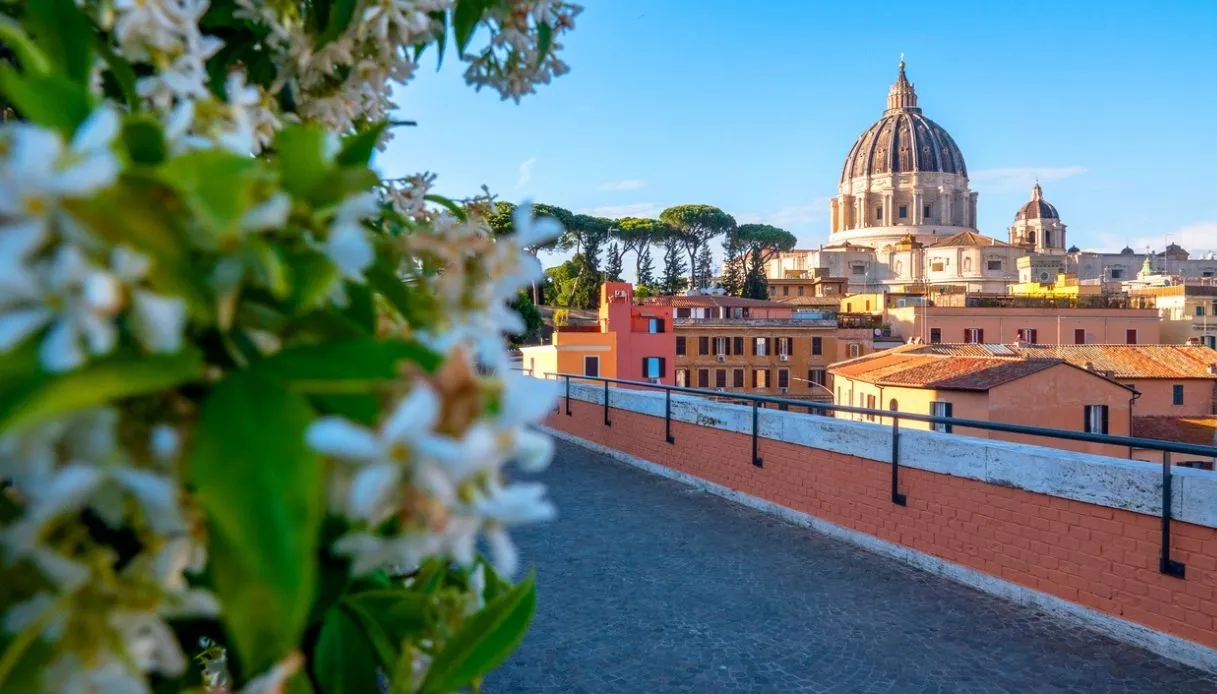
There is a way to take a romantic stroll once you arrive at the St. Peter’s station. An unseen corner of the Vatican that very few people know about and that, especially during bloom, shows its best. Thanks to the elevated street, it allows you to traverse a secret slice of Rome that many miss, creating unforgettable photos with the Cupola dominating the frame. To reach it, enter the St. Peter’s station, follow Platform 1 and turn right immediately, following the signs. Alternatively, you can access from the Aurelia ramp area.
The Condominium Museum of Tor Marancia
We close this voyage into unusual Rome with an explosion of creativity tied to street art: in the Tor Marancia district, away from the monumental atmosphere of the center, awaits a truly offbeat museum. The Tor Marancia Condominium Museum is a street-art project born in 2015, which transformed the façades of several residential buildings into gigantic works of art. Colorful murals, monumental portraits, and visionary images tell stories, emotions, and the neighborhood’s identity. The result? An open-air gallery where art converses with daily life. Reach Viale di Tor Marancia 63, in the city’s southern area. Access is free: stroll between the buildings with respect for those who live there and let yourself be surprised by every wall.
