
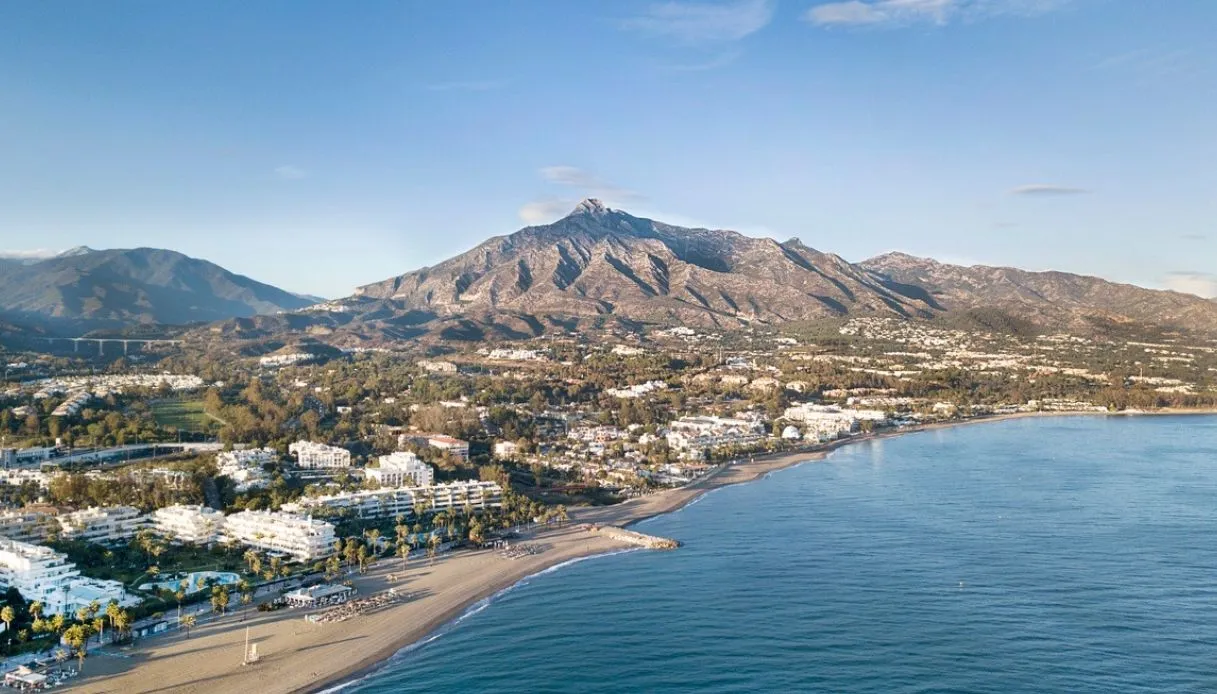
The Spanish coast is making headlines again, and this time the surprise isn’t the dramatic seaside villages along the shore or the beaches, but a discovery. Off the coast of Marbella, the famous resort emblematic of Andalusia, what could be the Garigliano has been found. The ancient merchant ship, submerged for more than a century, is increasingly intriguing archaeologists, revealing secrets that would point to the sunken sailing ship from 1887. Although doubts linger about the vessel’s true identity, the latest archaeological investigations have unveiled some news that could lead scholars toward the truth. But is it really the legendary Garigliano that has been found?
The discovery of the missing Italian sailing ship
The wreck currently lies in the waters of Capobino, not far from Marbella’s coastline. The seaside resort symbol of the Costa del Sol, today cherished for its beaches and tourist offerings, seems to guard the remains of the legendary Garigliano. The discovery, made in September, involved specialists from the Andalusian Institute of Historical Heritage who conducted a research campaign with the University of Granada, allowing examination of a substantial portion of the vessel. Archaeologists documented 34 meters of preserved naval structure, recognizing features compatible with those of large commercial sailing ships used in the latter half of the nineteenth century.
The hypothesis currently receiving the strongest support points to the Garigliano, an Italian brigantine that departed from Marseille in 1887 and was bound for Buenos Aires. A journey never completed. From the research emerge also some details about the ship’s final moments. The brigantine would have ended on the seabed with the bow facing the coast, then lying on its side, on the left, with a strong list.
The weight of the cargo may have contributed to the hull walls giving way. But what draws archaeologists’ attention are especially the objects recovered from the wreck. Among the remains were decorative tiles, roof tiles, and numerous containers with references to Marseille and Aubagne. Traces that seem to confirm the link with the port from which the Garigliano had set sail.
Why the discovery is so important
We go beyond a chapter of underwater archaeology; the possible finding of the Garigliano offers the opportunity to reconstruct the commercial networks that, in the nineteenth century, linked the Mediterranean ports to the rapidly expanding cities of South America. The recovered goods tell a story of an economy built on construction materials, artisanal products, and long oceanic voyages. Elements that seem ordinary, such as a tile or a barrel, thus become valuable testimonies of the era’s international exchanges.
The archaeologists’ enthusiasm does not erase the uncertainties. The wreck’s identity remains to be confirmed and fresh verifications will be needed. Researchers will return to the Cabopino seabed in 2027, hoping to find elements useful to confirm the hypothesis. If indeed it was the Garigliano, the discovery would add an important chapter to the history of Italian seafaring in the Mediterranean. A tale that has remained silent for almost 140 years, capable of symbolically connecting the coasts of Andalusia, French ports, and the routes to Argentina. For those who love traveling to uncover the history of places, this event also offers a different perspective on the Costa del Sol. Behind the image of seaside resorts and strolls by the sea lies a maritime heritage still partly unexplored.
