
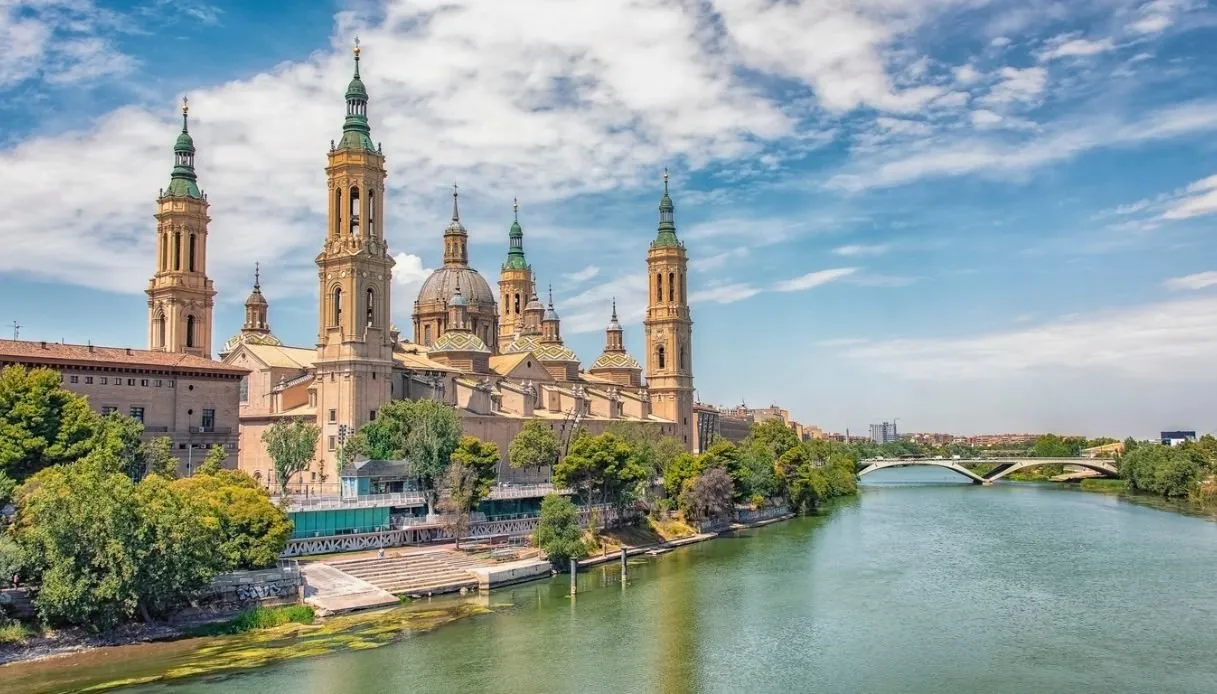
There is a distinctive atmosphere in Zaragoza, shaped by the Aljafería palace with its Moorish style reminiscent of the Alhambra in Granada, but about two to three centuries older, and by the sleek domes of the Basilica of Our Lady of the Pillar. Yet not many travelers include it in their itineraries, preferring more classical destinations such as the capital Madrid.
Away from the spotlight, Zaragoza has quietly worked on a deep green transformation and now receives recognition: it has just been named the European Green Capital 2028. The announcement came during the Guimarães ceremony in Portugal, which holds the title for 2026, while for 2027 the choice had already fallen on the German city of Heilbronn.
The prize is reserved for cities with at least 100,000 inhabitants, selected by an independent jury of experts who evaluate them based on criteria such as air and water quality, protection of green spaces, management of noise and waste, reduction of emissions, and the ability to cope with heat waves and floods.
Why Zaragoza is the New European Green Capital
In addition to being one of the most populous cities in Spain (fourth after Madrid, Barcelona, and Valencia), Zaragoza is also among the most exposed to the damages caused by the climate crisis. Located in a semi-arid region, it must contend with issues such as drought, fires, floods, and extreme heat. A situation far from ideal, but one that the city has decided to confront by turning these challenges into an opportunity to rethink its future.
The core of the strategy is the Green Infrastructure Master Plan, which aims to create natural corridors connected to the Ebro and the watercourses that surround it, thereby bringing nature closer to neighborhoods and boosting urban biodiversity. This is complemented by investments in water savings, renewable energy, sustainable mobility, and smart technologies.
There is also an aspect that makes the project even more interesting: a focus on people. The chosen motto, “a city that cares for people and the environment, in a natural way,” succinctly captures the idea that the ecological transition must proceed hand in hand with social inclusion, engaging residents through neighborhood campaigns and initiatives.
How to discover Zaragoza’s green side
To experience the city’s sustainable face firsthand, follow the course of the Ebro river. Its banks have been refurbished with promenades and bike lanes, to be explored using the city’s bike-sharing service. Arrive at the Parque del Agua Luis Buñuel, born from the 2008 Expo area, a large green lung with trails, water features, and spaces for sport, located just steps from the futuristic Pabellón Puente designed by Zaha Hadid.
Those seeking a deeper immersion in nature can venture to the Galachos de Juslibol, a nature reserve on the city’s outskirts formed by ancient meanders of the Ebro, perfect for a stroll among reed beds and birdwatching. For those who prefer not to stray far from the city center, there is Parque Grande José Antonio Labordeta, Zaragoza’s historic park.
Naturally, don’t miss the classic stops, easily reachable by tram or on foot: the Basilica of Our Lady of the Pillar, a city emblem overlooking the Ebro, and the Aljafería Palace, a splendid testament to the Islamic past. The city’s museums, meanwhile, showcase the works of painter Francisco de Goya. In the evening, finally, treat yourself to a tapas crawl through the alleys of the historic center known as El Tubo.
The right moment to discover it is now. Until 2028 the city will be in the European spotlight, and the prize will bring new projects and international attention: today you can still enjoy it at a relaxed pace.
