
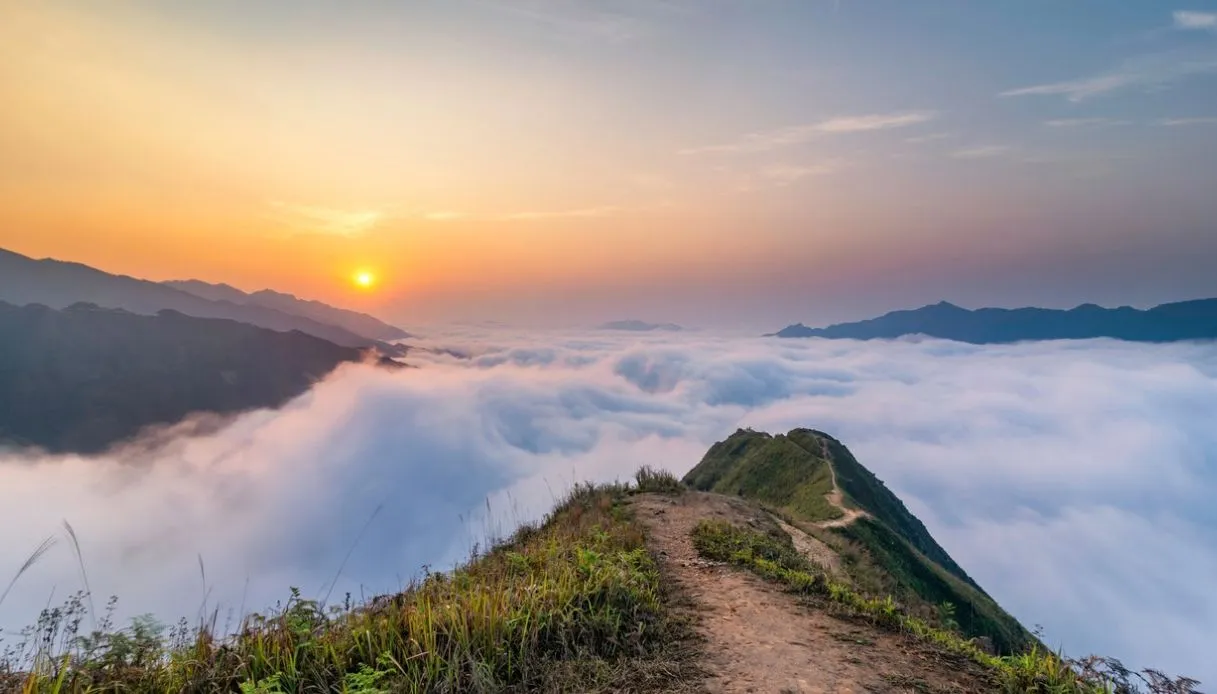
Between cloud-wrapped peaks, suspended ridgelines, and ancient tea plantations, Tà Xùa is emerging as one of the most intriguing destinations for travelers seeking a journey in close contact with nature and local traditions: a mountainous locality in northern Vietnam, in the province of Sơn La, it has earned the title of the leading emerging tourism destination in Asia for 2026 at the World Travel Awards, bringing into the spotlight a territory still little known to the international audience.
Known as the “cloud paradise”, it boasts high-altitude landscapes, trekking opportunities, and encounters with the culture of the ethnic Hmong community, experiences distant from images of large cities and tropical beaches, a chance to discover the cultural heritage and traditional activities of the Vietnamese mountainous communities.
Ta Xua Wins the World Travel Awards 2026
The recognition arrived during the World Travel Awards ceremony dedicated to Asia, Oceania and the Indian Ocean: for Ta Xua it marked the first nomination in the category for emerging destinations and, at the same time, the first victory.
The other finalist was Ninh Bình, known for its karst landscapes and waterways that thread through valleys and rock formations, and contesting the prize alongside Ta Xùa were Koh Kood, in Thailand, Melaka, in Malaysia, Morioka, in Japan, the island of Sumba, in Indonesia, and Taipei, in Taiwan (China).
In recent years, Ta Xùa has attracted mainly young travelers interested in adventure, natural scenery, and trekking. Its charm is closely tied to the phenomenon of the sea of clouds, which covers the valleys in white, soft expanses and makes the mountaintops appear as islands suspended above a sea of mist.
The Sea of Clouds and Trekking Across the Mountains
At over 1,500 meters above sea level, with some areas exceeding 2,000 meters, Ta Xùa stands out for its cool climate and the highland panoramas typical of high plateaus: the altitudes and the terrain’s configuration create settings where mountains alternate with deep valleys, forests, and exposed ridges.
The sea of clouds is one of the most iconic images: when weather conditions are favorable, the clouds envelop the reliefs and fill the depressions between the mountains, delivering spectacular views especially from the highest viewpoints.
Among the most appreciated stops is the Dinosaur Spine, a narrow mountain ridge whose profile resembles a backbone. The trail runs above a deep valley and offers expansive views of the surrounding mountains. When the clouds gather lower, the ridge seems to float above a white sea, one of the scenes most sought after by photography and trekking enthusiasts. The area also includes Windy Peak, Ta Xùa Prairie and various hiking routes through the forests.
The Hmong Culture Among Craft and Daily Life
One of the aspects that best define Ta Xùa’s identity is the cultural heritage of the Hmong ethnic community, present in the northern Vietnamese highlands: traditions reflect in the architecture of homes, in traditional clothing, in crafts, in cuisine, and in the customs that accompany daily life.
Visiting the villages allows a closer approach to a way of living connected to the land and the discovery of manual activities handed down through time, including linen weaving, indigo dyeing, and decorative techniques that use beeswax, such as batik.
The Ancient Shan Tuyet Tea Plantations
What makes the Ta Xùa region so captivating are also the ancient Shan Tuyet tea plantations.
Tea cultivation can become the starting point for experiences tied to the culture of the beverage, to traditional agricultural practices, and to activities that sustain the livelihoods of the population. The plantations tell another aspect of the mountainous territory, that of a lived-and-worked landscape, where natural resources are an integral part of the economy and local traditions.
