
A document can bring to light a political episode, a letter can tell the story of a family, while a map can show how a territory has changed over the centuries: it is from this perspective that Domenica di Carta was born, the initiative promoted by the Ministry of Culture that on October 4 invites the public to step into State Archives and public state libraries to get a close look at the original sources of Italian history.
For the occasion there are planned exhibitions, guided tours, meetings and workshops, with a program that spans several Italian cities and allows visitors to discover documents, manuscripts, books and testimonies preserved within cultural institutions.
October 4 among archives, libraries and historical documents
The day takes the public to places where history can be read from its sources: administrative papers, correspondence, maps, photographs and manuscripts thus become tools for reconstructing political and social events, urban transformations, family histories, and cultural trajectories.
In Rome, the Central State Archive presents “Prima Repubblica,” a series devoted to the parliamentarians who played leading roles in Italian political and institutional history. The State Archive of Rome, at the Sant’Ivo alla Sapienza venue, offers visits to the exhibition “Come Sole frà le stelle. Cristina di Svezia nelle carte dell’Archivio di Stato di Roma,” with the opportunity to also explore the Sala Alessandrina and the monumental complex.
In Turin, the event leads to the Archivi di Corte, housed in the building designed by Filippo Juvarra and completed in the eighteenth century to safeguard the papers essential to the government of the State; in Siena, instead, documents and objects allow visitors to retrace the military and political saga tied to the Battle of Camollia of 1526, on the occasion of its five-hundredth anniversary.
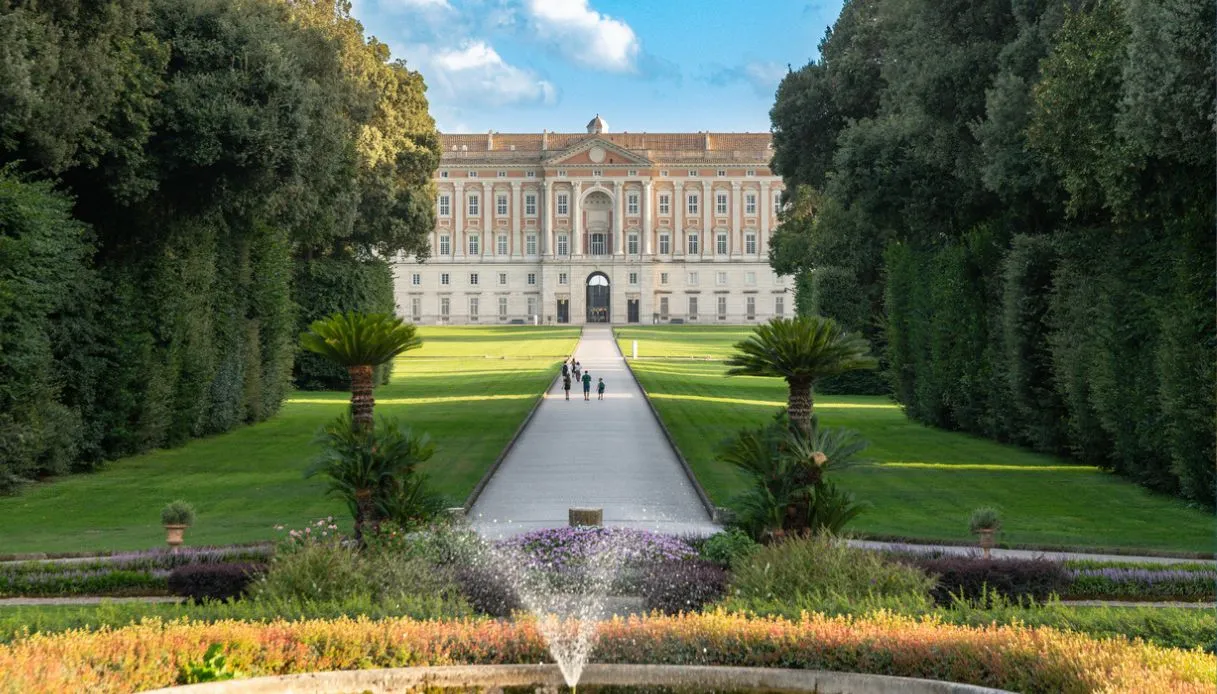
Among the scheduled events, in Caserta the papers of the historic archive of the Royal Palace allow tracing the passage from the Palazzo Vecchio to the construction of the new Royal Palace of Caserta. Projects, maps, floor plans, inventories and correspondence reveal the different stages of a transformation destined to change the face of the city.
In Naples, a multimedia installation reconstructs the plague of 1656 with the chronicle by Antonio Mena and the famous painting by Micco Spadaro, “Piazza Mercatello during the plague of 1656.”
Pinocchio, Collodi and the Franciscan manuscripts in the libraries
State public libraries also participate in the day with initiatives dedicated to books, manuscripts and cultural figures.
In the Antonio Baldini State Library in Rome, the centerpiece is Pinocchio, told through international editions and artists’ books. In the Marucelliana Library of Florence, instead, an exhibition is dedicated to Carlo Lorenzini, known as Collodi, the author of the famous character.
In Naples, the National Library presents the exhibition “Francesco e i suoi,” dedicated to precious Franciscan manuscripts on the eighth centenary of the death of Saint Francis of Assisi. In Genoa, the University Library hosts instead a concert devoted to the lauds and to the medieval Franciscan musical tradition.
Laboratories and activities to discover how memory is preserved
Domenica di Carta also looks to the younger generations and makes the discovery of the documentary heritage a hands-on experience.
At the Cremona State Library, “The Court of Paper” transforms the Children’s Room into a medieval workshop where it will be possible to learn the ancient techniques used by master papermakers to fashion a sheet.
In Lucca, the University Library offers a session dedicated to book conservation, tracing the journey from ancient repairs to modern restoration techniques.
The program also includes openings and visits to the monumental halls of some of the most important historic libraries, from Rome to Florence and Cagliari.