
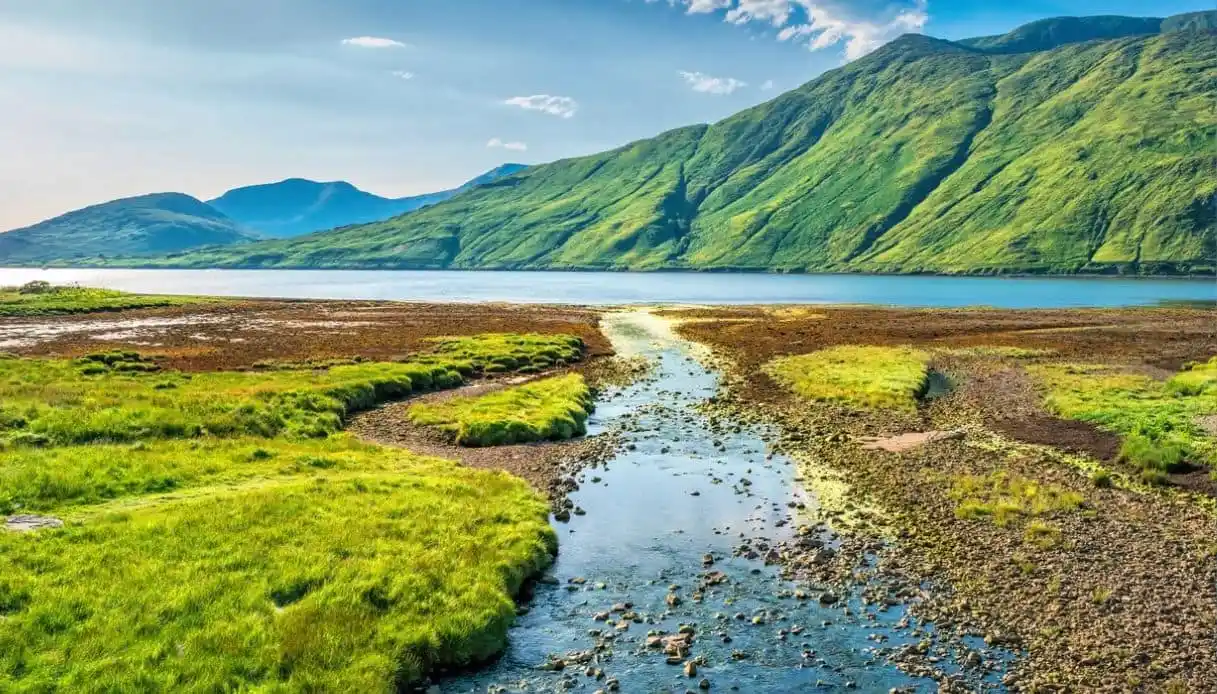
Mountains rise steeply from the water, pastures dotted with sheep, small mussel farms, and a long inlet that winds into the heart of Connemara: the Killary Fjord, along the Wild Atlantic Way in western Ireland, is one of those landscapes where you pause and let nature set the pace.
In 2026 it also earned a notable recognition: Lonely Planet included it in Best in Travel 2027, the annual selection of destinations and experiences to be enjoyed in the coming year, naming it as one of Ireland’s essential stops and describing it as a place capable of contending for the title of the country’s most spectacular scenery.
The fjord stretches for about 16 kilometers between the counties of Galway and Mayo, up to the small village of Leenaun, and is watched over by some of the region’s most dramatic peaks: on one side towers Mweelrea, the highest mountain in Connacht, while on the other follow the profiles of the Maamturks and the other Connemara peaks.
What to See and Do at Killary Fjord: Cruises and Trails
The quickest way to grasp the grandeur of Killary is to take in its view from the water: the cruises that traverse the fjord let you sail between mountains and mussel farms, while on the surface seals, otters and, with a little luck, dolphins may appear. The panoramic tour lasts about 90 minutes and offers a perspective unlike the one seen from the road.
If you prefer to experience the landscape more actively, you can opt for kayak or stand-up paddle, or take on activities like coasteering and canyoning (light).
On land, however, one of the most meaningful experiences is the Famine Walk, the historic route that traces the fjord’s coastline along a road laid out in the 19th century as part of Great Famine relief programs. Walking, you’ll encounter old homes, abandoned fields, and traces of a difficult past, while the surroundings continue to open onto the water and the mountains.
It is precisely such a contrast that makes the walk so intense: on one side, one of Ireland’s most beautiful landscapes, and on the other, the memory of the communities who lived and worked on these lands during one of the most dramatic periods in Irish history.
At the end of the fjord awaits Leenaun, a small village nestled between water and mountains, perfect for a pause before continuing to explore the Connemara. From here you can easily reach other regionally renowned destinations, including Kylemore Abbey, the Connemara National Park, and the Diamond Hill scenic path.
Just a little further north, a detour is also worth it to visit the Aasleagh Falls, waterfalls on the Erriff River just before its waters reach Killary Harbour: the area is ideal for a riverside stroll and to observe another, greener and more impetuous, facet of the local landscape.
If you’re after open sea, you can head for beaches like Glassilaun and Silver Strand, where the landscape changes again and the mountains give way to the Atlantic.
Mussels, Music and Gaelic Culture in the Heart of Connemara
The fjord is famous also for its mussels, raised in the sheltered waters of the cove and having become one of the region’s most distinctive gastronomic specialties. All around, local seafood producers and the small pubs invite you to discover a cuisine tied to the Atlantic.
Continuing through the region you’ll enter the Gaeltacht areas, where the Irish language remains a part of daily life. Sessions of traditional music, rural communities, and small villages make the journey unforgettable beyond the scenery.
Where Is Killary Fjord and How to Get There
Killary Fjord stands in western Ireland along the Wild Atlantic Way, between the counties of Galway and Mayo.
The village of Leenaun is one of the most convenient reference points to start exploring the area.
You can reach it from Galway City by crossing the Connemara scenery, or arrive from the Ireland West Airport Knock; Shannon Airport is also a useful entry point for those arriving from abroad.