
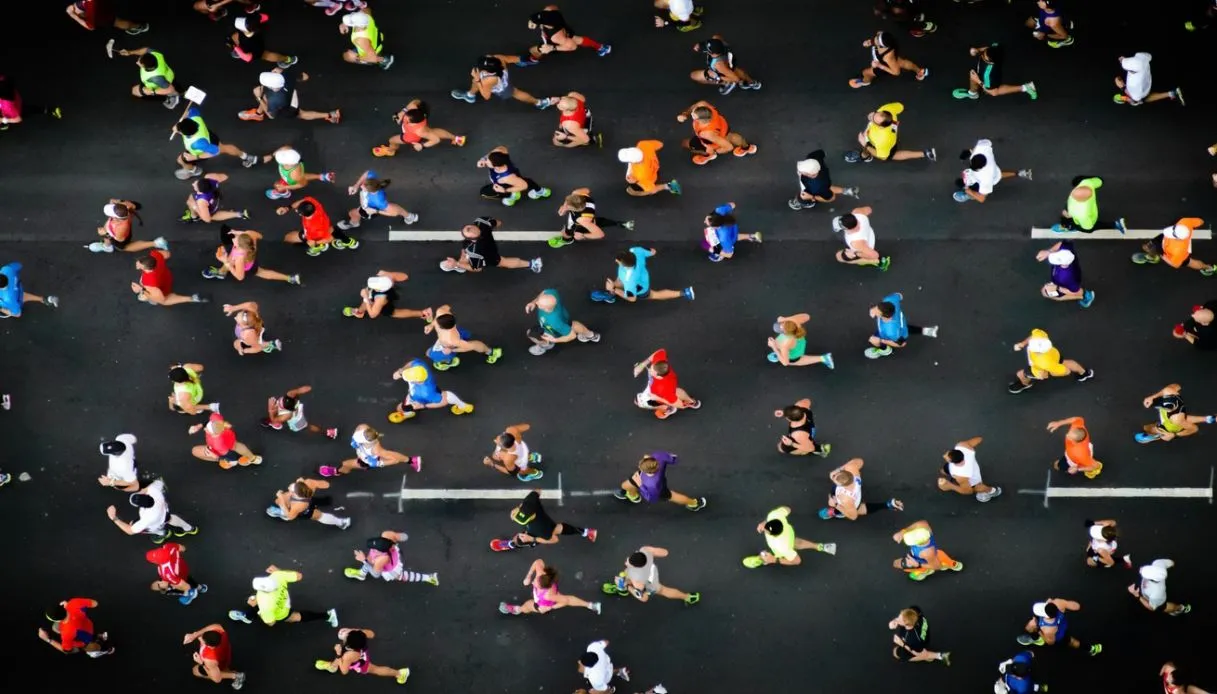
Running a marathon and, right after crossing the finish line, discovering the city that hosted it: this is the idea behind race-cation, a trend that is gaining ever more space in the travel world and that unites sport, tourism and short stays.
According to data analyzed by Bókun, a Tripadvisor-owned company, in 2026 online searches related to “marathons abroad” increased by about 1,255% compared to the previous year and reached the highest level ever recorded. Travelers are already thinking about what to see, where to eat, and which experiences to have once the competition is over.
What is a race-cation
The term stems from the combination of “race” and “vacation”: the race-cation describes a way of traveling in which taking part in a sporting event becomes an opportunity to visit a new destination.
It is a format well suited for those who pay attention to fitness and an active lifestyle, but do not want to miss the chance to explore a city. The competition is the core of the trip, while everything surrounding it (from neighborhood discovery to culinary experiences) helps to complete it.
One of the most interesting aspects of the trend is the growth of 24-hour quick getaways, designed to pack sport and tourism into very little time.
From marathons to 24-hour getaways
Bókun analyzed Google Trends data from the last 30 days related to destinations hosting some of the major marathons and fitness events this fall, and discovered how much searches for one-day itineraries have shifted.
Hamburg records the most significant jump, with a 500% rise in Google searches for “what to do in Hamburg” in the last month. Following are Lisbon, where searches for “what to do in Lisbon in a day” rose 400%, and Munich, with a 250% growth for “what to do in Munich in a day.”
Searches for “what to do in Berlin in a day” also grew by 119%, those for “24 hours in Budapest” by 84%, while tips for a one-day trip to Amsterdam rose by 70%.
The European autumn of race-cations
The sports calendar helps explain this interest. Among the major European autumn events are HYROX Rome and the Berlin Marathon, both in September, while October features the Amsterdam, Munich, Lisbon and Budapest Marathons and HYROX Valencia. HYROX Hamburg, on the other hand, will take place from October 28 to November 1.
The presence of so many events concentrated over a few weeks thus provides an exceptionally favorable ground for the growth of race-cations.
But the phenomenon isn’t limited to runners: Bókun has also observed conversations and content spread on social media. On platforms like TikTok, videos dedicated to the best cities to take part in a HYROX competition or to the itineraries to follow during a marathon-related vacation are attracting thousands of views.
The race-cation meets the micro-vacation
Getaways tied to races seem to fit into a broader phenomenon: micro-adventures and micro-vacations.
The goal is to experience a destination in depth even when the time available is only one day. For travelers choosing this format, planning in advance what to see and which activities to undertake becomes essential.
In this context, guided tours and organized experiences can represent a way to quickly get to know a city, without giving up the possibility of engaging with the local culture.
Also on this front, Bókun’s data indicate growth: in the last year, searches for “Budapest day tours” increased by over 400%, those for “Amsterdam day tours” by over 100%, while searches for “day tours in Lisbon” grew by over 70%.
After the finish line, there’s also the table
However, the race-cation does not seem to be limited to visiting the most well-known monuments. For those traveling this way, gastronomy can become an integral part of the experience.
The searches suggest, in fact, a growing interest in activities capable of introducing a destination through food: searches for “Lisbon cooking class” increased by 488%, while those for “Rome food tour” rose by 94%.