
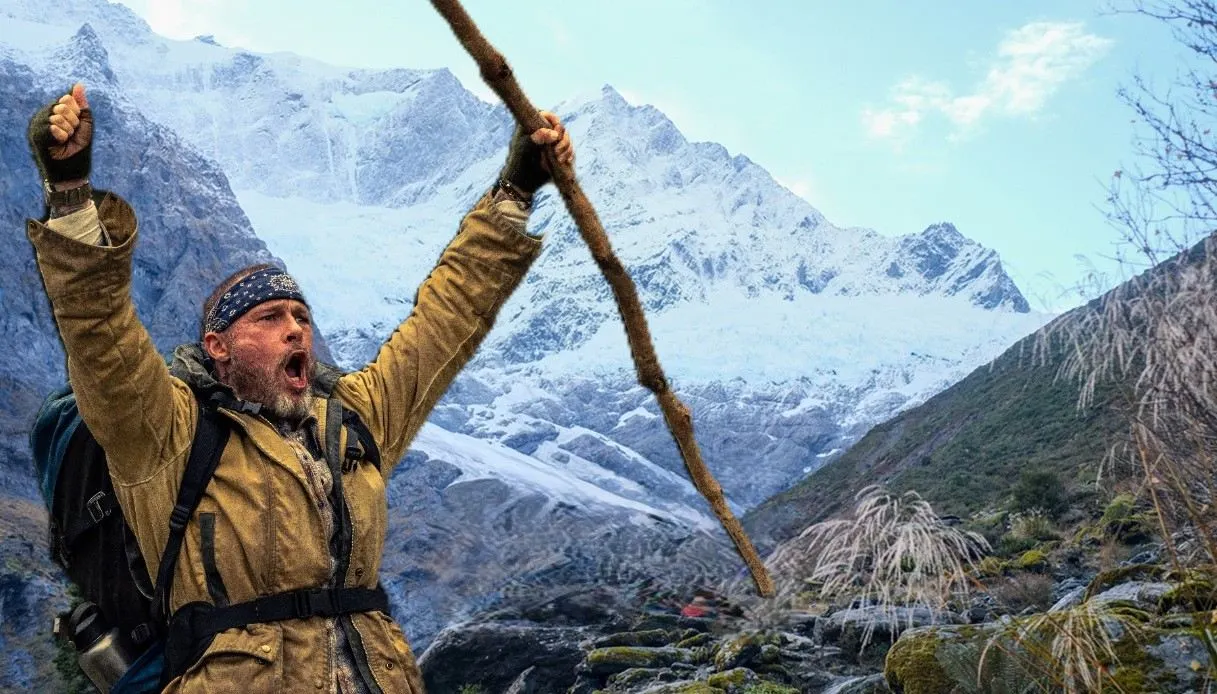
The filming locations of Heart of the Beast – Nel profondo selvaggio, David Ayer’s survival thriller that arrived in Italian theaters on September 24, 2026, play a fundamental role in conveying to viewers on this side of the screen the same sense of solitude, unease, and being at the mercy of nature that the film’s lead character, portrayed by Brad Pitt, experiences for much of the movie.
Set among glaciers, lakes, mountains, and other rugged, unforgiving corners of Alaska, the movie was actually shot in quite different places: here’s where.
What the story is about
James Belmont is an officer in the American Special Forces who, after a tragic plane crash, becomes stranded in Alaska. He is accompanied only by Odin, the military dog who has stood by him throughout his career on missions at the limit. This time, the impossible mission for the two of them is to survive the hostile nature surrounding them: all around are lakes, glaciers, mountains, and ravines that shelter every kind of predator. On the journey back to civilization, man and dog must rely solely on one another, and it is precisely this bond of mutual loyalty between human and animal that David Ayer centers his directing on.
Where the film was shot
Beyond telling the story of nature’s power through visuals, the filming locations of Heart of the Beast – Nel profondo selvaggio also play a secondary, yet crucial, role by shaping not just the landscape but also the psychological frame of the protagonists’ journey. The Alaska where James and Odin are left alone and lost after the plane crash is, in reality, New Zealand: more precisely the South Island, the largest – but least populated – island of the country in the Pacific Ocean.
The South Island
Commenting to GQ about where the Brad Pitt film was shot, the director stated that the audience will feel as if they are truly looking at images of Alaska, so similar are the landscapes of this remote New Zealand island to those of the American state.
Ayer did not deny the difficulties of filming on an island “where there is mud everywhere and the constant risk of sliding to the other side of the mountain” and explained that some shoots required the intervention of helicopters to transport equipment and actors. To shoot a sequence in which they walk alone amidst the boundless mountain landscape, for example, Brad Pitt and the real New Zealand search-and-rescue dog who plays Odin in the film were flown in by helicopter to a mountaintop ridge.
Organizing the shoots also demanded ongoing collaboration with local authorities, cultural consultants, and representatives of the Māori communities: among the locations of Heart of the Beast – Nel profondo selvaggio there are several that carry deep significance for this indigenous population.
Lake Wakatipu
Take Lake Wakatipu, for instance. Located in the heart of the Otago region, this lake is the third-largest and the second-deepest in New Zealand. For centuries, well before European colonizers arrived, it was a crucial site for the Māori civilization, as evidenced by the remains of settlements, places of worship, and tools used for daily life. In David Ayer’s survival thriller with Brad Pitt, it is the deep blue waters from which James emerges, gasping, after the plane crash, in a scene visible in the trailer as well.
Queenstown
On the shores of Wakatipu lies Queenstown: another location for Heart of the Beast – Nel profondo selvaggio, likely chosen by the production for the surrounding peaks, the Remarkables, perfectly suited to recreating on screen the Alaska panoramas. Today Queenstown is frequented especially by outdoor enthusiasts for activities like bungee jumping, rafting, skiing, and paragliding, earning it the title of the world capital of adventure.
Glenorchy
Moving toward the northern end of the lake is Glenorchy, another of the places where Heart of the Beast – Nel profondo selvaggio was shot, and where the crew’s base camp was established for most of the production days. This tranquil New Zealand town, nestled among lakes, meadows, and red beech forests, is widely remembered as a filming hotspot for The Lord of the Rings and has since become a hub for international film production. In a scene from David Ayer’s new film, Brad Pitt casts a solitary line from one of Glenorchy’s old stone piers.
Mount Aspiring National Park
Glenorchy is also one of the most convenient and popular entry points to Mount Aspiring National Park. Named after one of its most imposing peaks—the Aspiring Mountain, standing above 3,000 meters—it is a vast protected area that forms part of the UNESCO World Heritage and is beloved by climbers and trekking enthusiasts alike.
With its rugged heights, especially along the western ridge, it seems to have been the perfect stand-in for Alaska on screen: various sources report seeing Brad Pitt roaming the valley carved by glaciers and flowing waters in the region.
Milford Sound
Among the locations for Heart of the Beast – Nel profondo selvaggio, chosen for reasons similar to the ones described so far, namely the resemblance of its landscapes to the end-of-the-world imagery of Alaska, is Milford Sound: one of New Zealand’s most famous fiords, located within Fiordland National Park.
Contrary to what one might imagine and despite its challenging accessibility, Milford Sound is a very popular tourist destination and one of the most crowded spots in New Zealand, repeatedly voted as a top travel destination.
Yet it manages to convey a sense of solitude and remoteness that fits the atmosphere of David Ayer’s survival thriller with Brad Pitt: perhaps due to the sheer, imposing cliff faces, the peaks that rise from the water, and the numerous, lush waterfalls that give the impression of stepping into a place where nature is the absolute and uncontested master. In short, nothing could be more fitting for a film that hinges on the psychological tension of finding oneself alone and lost after a cataclysmic event, in the midst of a landscape that feels hostile.