
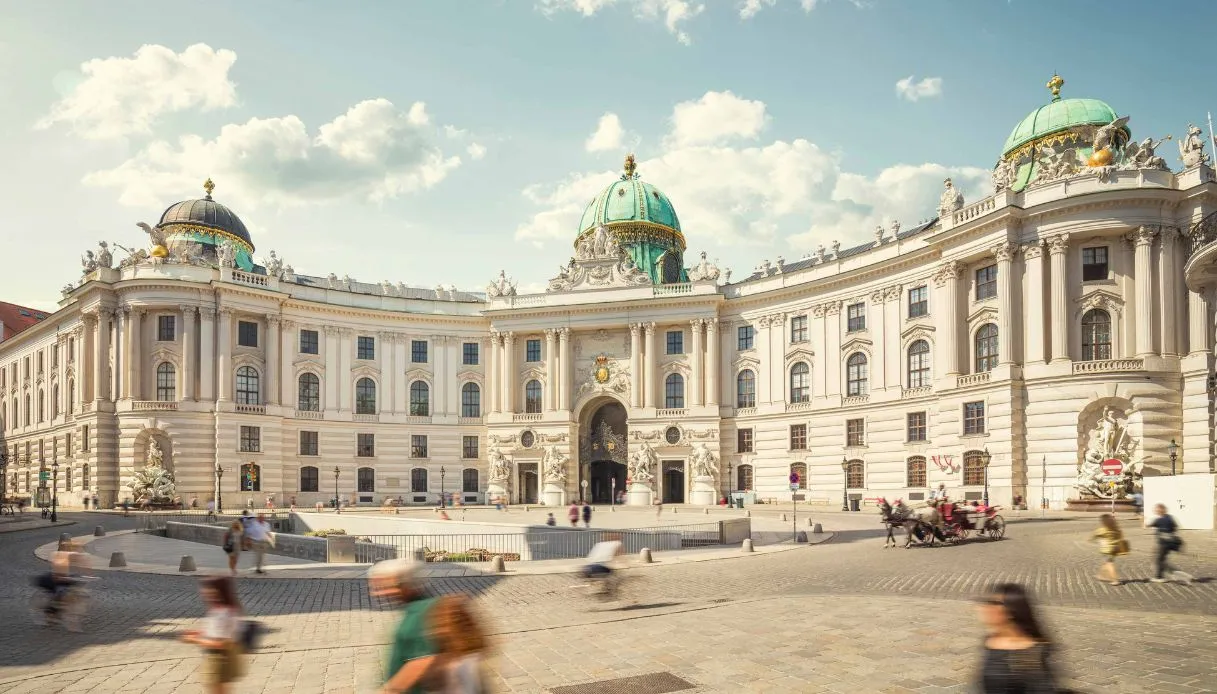
The The Sissi Museum in Vienna will reopen on November 19, 2026 with a completely renewed visiting route, refreshed spaces and updated content. The project concerns three areas of the Hofburg and will grant access, for the first time, to a a complete museum offering designed to tell the figure of Empress Elisabeth through the environments in which she lived and the objects that belonged to her.
The reopening represents an important enhancement of one of the sites linked to the memory of Sissi, one of the most celebrated figures in Austrian history. The new itinerary goes beyond merely presenting a sequence of rooms and collections; it builds a narrative in which the Hofburg’s spaces, the personal objects, and the courtly surroundings render a more concrete view of the empress’s life.
A New Route Across Three Areas of the Hofburg
The renewal project has focused particularly on the The Sissi Museum, the Imperial Apartments, and the The Silver Room, now brought together in a broader and more complex itinerary.
The new museum has been expanded by about 700 square meters and 12 rooms, while the restoration of the protected areas required a substantial intervention to reconcile the preservation of historic environments with a broader and more accessible use.
Among the novelties is also the new staircase in the Marschall Courtyard, accompanied by improved infrastructure and a simpler orientation within the complex. The new route will also be accessible without architectural barriers, allowing a greater number of people to visit the spaces involved in the project.
Sissi Told Through Her Objects and Court Life
The renovated Sissi Museum places at its center the link between Elisabeth’s biography and the objects personally owned by the empress. Almost no Austrian historical figure is as well known as Sissi, but the museum project aims to present her first and foremost as a person, through the tangible traces of her life.
Completing the story are the living spaces and those intended for representation, which also allow visitors to understand the organization of the court that surrounded her life. The Hofburg The Imperial Apartments were, in fact, official spaces for the residence and reception of the imperial family.
The complex includes bedrooms, private sitting rooms, representative halls and auxiliary rooms. As visitors move through them, they can approach the daily life of the court’s elite and observe how furniture, decorations and the arrangement of spaces reflected protocols, privacy needs and strict etiquette rules. The expansion also makes accessible the rooms furnished in white gold of the imperial family, characterized by luminous decorations and richly ornate interiors.
The Silver Room and the Culture of the Imperial Table
Another fundamental part of the route is the Silver Room, dedicated to the culture of the court’s table: the collection includes porcelain, silverware, crystal, and centerpieces used on representative banquets and ceremonies.
Even in this case, the objects tell a story that goes beyond their artistic value: the collection allows us to observe the logistical aspects involved in organizing court life and shows how intricate the management of receptions and official occasions was.
The quality of the porcelain, the silverware and the crystal thus becomes part of a broader narrative on imperial representation and the customs that governed the imperial family’s table.
An Investment of Around €14 Million
The scale of the project is evident also in the investment made so far, which amounts to about €14 million; however, this figure is indicative, as total costs could still rise.
Interventions within historic buildings that are protected require substantial resources, especially when it is necessary to reconcile restoration with conservation norms and with the aim of making the spaces more accessible and usable.
The Schönbrunn Group autonomously covers the costs, contributing to the heritage project that ties Hofburg’s history to the figure of Sissi.