
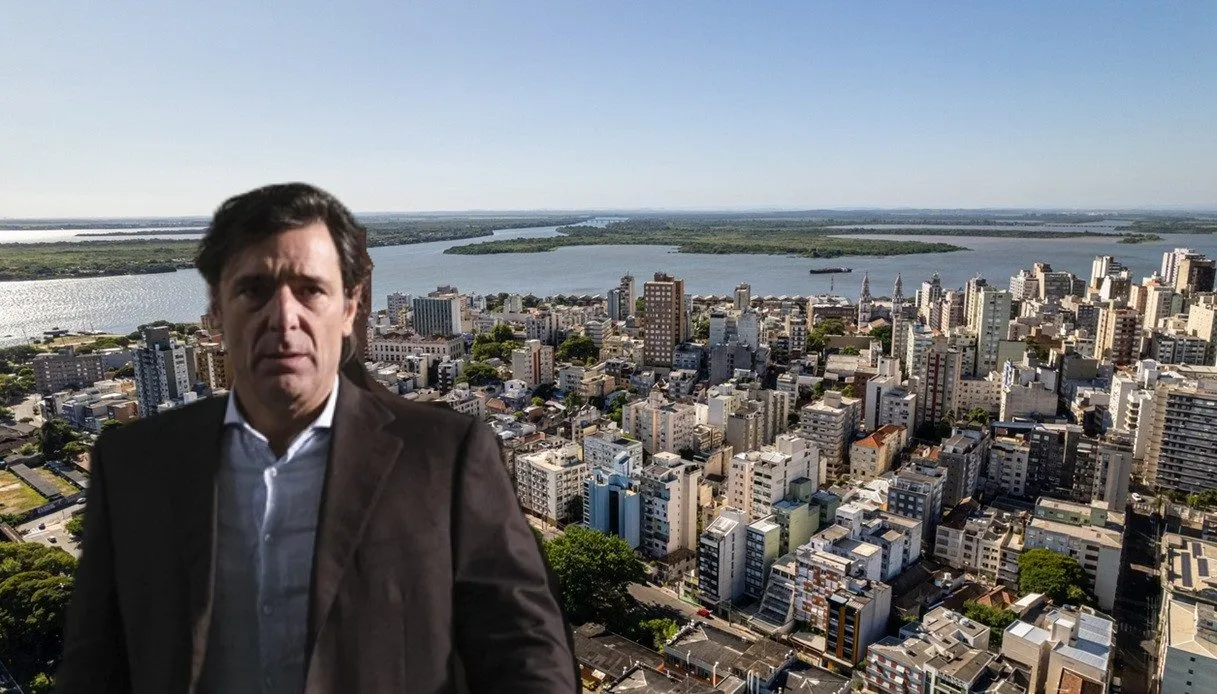
There is a man with all the shadowed corners he can bring to the heart of Marco Bechis’s new film, in competition at Venice 83 and in Italian cinemas from September 17 2026, and not the violence as one would expect from a movie that tells of dictatorship and repression. The locations of Ritorno a Buenos Aires also seem to explore this dimension: the dominance of enclosed, at times claustrophobic settings suggests a search for a truth — and for justice — that is, above all, interior.
What it’s about
It’s 2008 and Mariano Guerra — a fictional character like the director, who has personally lived through the experience of kidnapping during the Argentine dictatorship, has repeatedly stressed — returns to Argentina after thirty-three years to testify against the soldiers who abducted him, tortured him and kept him in a state of servitude. While awaiting his deposition, he spends entire days with other witnesses and the comrades of that time: enough to bring painful memories to the surface, memories that no sentence can ease. The return to Buenos Aires thus becomes above all an inner journey, a chance to come to terms with what it means to have survived.
Where was the film shot
Marco Bechis’s film with Adriano Giannini is an international production: the feature was shot between Italy and Brazil, between Turin and Porto Alegre, to be precise.
Turin
The accommodations of the Argentine Ministry of Justice where, together with the other witnesses, Mario waits to give his testimony are, in fact, the premises of the Aula Bunker of the Vallette prison in Turin: built in the 1980s to host the maxi-trials of the Red Brigades and Prima Linea and later the stage for numerous other trials that shaped the Republic’s history (No Tav, the ‘ndrangheta, etc.), it has already been the setting for famous films such as Paolo Sorrentino’s The Divo and for high-profile Rai fiction like The Wrong Man.
Filming, carried out with the support of the Film Commission Torino Piemonte, also focused more broadly on the outskirts of San Salvario. Undergoing a substantial redevelopment, today the neighborhood is lively with trendy spots to have a drink, artisan shops and other addresses of strong cultural and artistic interest (the Cesare Lombroso museum is, staying with the crime-and-justice theme, one to note).
San Salvario is also the most multicultural district in Turin: here it’s not hard to meet people like Mariano who, for different reasons, left their homeland and have been living in Italy for decades. To notice this contamination, one only needs to listen to the voices, look at the storefronts of the neighborhood, and breathe in the mix of scents that emanate from the bustling market of Piazza Madama Cristina.
Porto Alegre
Outside Italy, the film’s other location is Porto Alegre in Brazil: the capital of the Rio Grande do Sul was chosen to evoke, especially with panoramic views and exterior shots, the South American setting that comprises much of the film.
Like many in the area, Porto Alegre is a city where the old and the new continue to coexist, the history (for example Solar dos Camara, which also hosted Emperor Dom Pedro II) and the future (the numerous experimental art centers, modern structures and design like Ponte dos Açorianos, and districts such as Soho frequented mainly by young people and tourists seeking trendy experiences).