
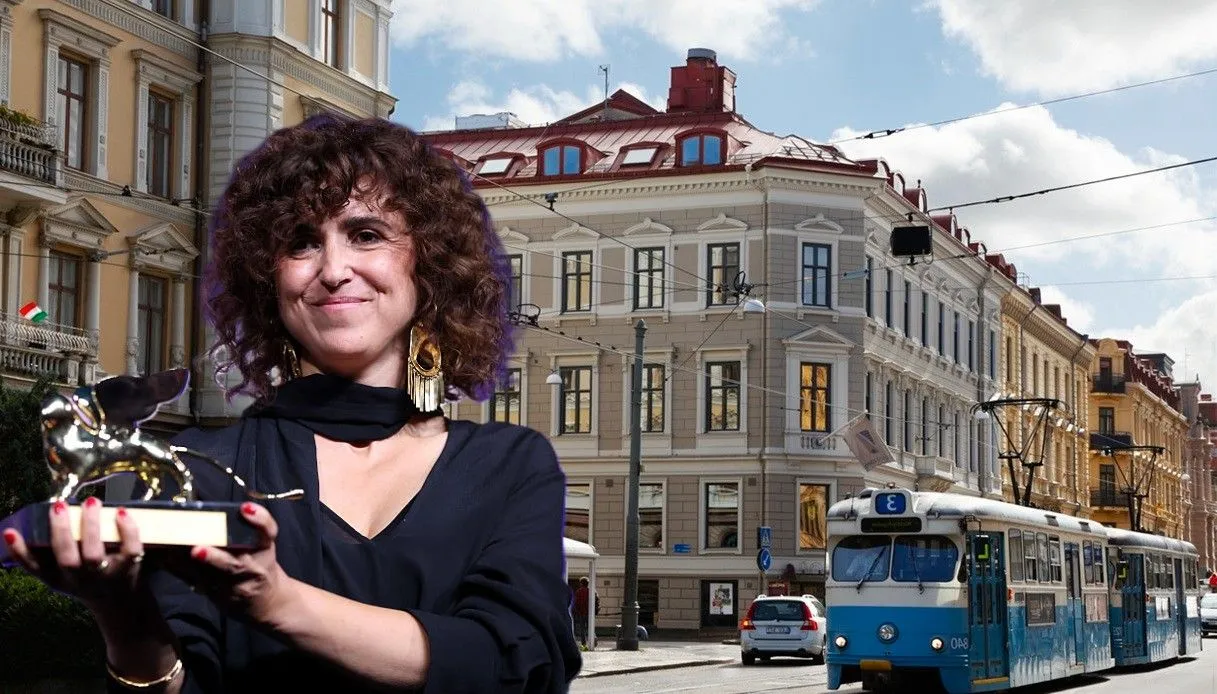
The Golden Lion at Venice 83 goes to Woman Unknown (Kvinde ukendt): a film by Danish director May el-Toukhy, the sole woman in competition in the lagoon alongside Rachel Szor (director of Naza), which speaks of war, but above all about how the female body continues in many circumstances to be a true battlefield.
Here is where the winning film of the Venice Festival 2026 was shot, arriving in Italian theaters thanks to . The locations used fully convey the suspended atmosphere of a country trying to leave war behind, yet still unable to forget it.
What it’s about
It is 1945. Marie, a character inspired by a number of real women who lived in the postwar era and for whom Mathilde Arcel earned the Volpi Cup for Best Actress, is about to marry the wealthy widower for whom she has long worked as a housemaid and nanny. The marriage holds primarily symbolic value: it will allow her to change status and finally become mistress of the house. A confessable secret, however, threatens to ruin everything: during the war she had a relationship with a German soldier and, now, the past returns to demand its reckoning. Marie thus finds herself deploying all the resources at her disposal in order to defend the future she has patiently and stubbornly built for herself.
Where the film was shot
Set in the postwar era in Denmark, the film crowned Best Picture at the 83rd Venice International Film Festival is an international co-production of Denmark, Sweden and Latvia.
In all three countries, the locations used for Woman Unknown were chosen in an effort to reproduce on screen, as realistically and as unromanticized as possible, the atmosphere to be experienced in Copenhagen at the end of World War II.
Marie’s story unfolds against the backdrop of imposing buildings where power was exercised daily, contrasted with other environments, often enclosed, that evoke a sense of control and domination.
Riga
In Riga, according to the National Film Centre, 25 days of shooting took place out of 28. The historic center of the Latvian capital, still dotted with Art Nouveau buildings, perfectly embodies on screen the European capital grappling with the postwar revival.
Göteborg
Among the locations where the film was shot, the only one officially listed by the production (Nordisk Film Production A/S with Nafta Films) is Göteborg.
The Swedish city appears to have been chosen mainly for its strong industrial identity, rich in references to the historical period at the heart of the film: Göteborg is, after all, the birthplace of Volvo, and visiting the site where the car company was founded (the World of Volvo) remains one of the experiences most visited by tourists in the city.
An iconic symbol of the city are the blue trams that connect elegant neighborhoods such as Avenyn, where you find restaurants, shops and nightlife venues among the most exclusive, with the Göteborg waterfront where you can explore above all the bond—past and present—between the city and the sea and nautical activities.
In the Haga district, strolling among wooden houses, cobbled alleys and small cafés one might get the impression that time has stood still: the setting is, in short, perfect to go back, as May el-Toukhy’s Venice 83 Golden Lion-winning film does, to the mid-twentieth century.
Copenhagen
In Denmark, filming took place mainly in Copenhagen, the city where Marie tries to build her own future and where the production moved between interior sets and urban settings. The energy of this city seems quite fitting for a film that is also and above all a psychological and emotional journey into the interior life of the character Mathilde Arcel.