
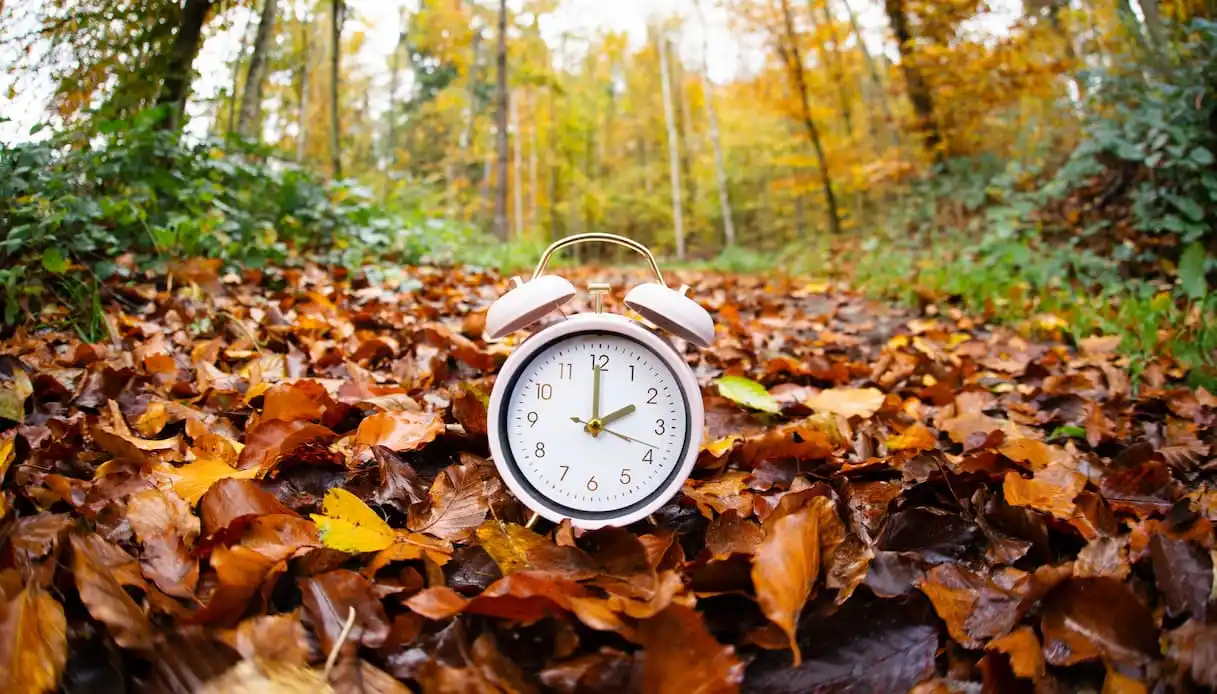
Summer is now behind us, and with the arrival of autumn, alongside the return to school and work, one of the year’s fixed events also comes back: the time change. After months spent with daylight saving time, the hands will indeed move back by one hour and the days will progressively begin to lose light in the evening. In 2026 the transition to standard time will take place on Sunday, October 25, as provided by the current European calendar.
For years, however, the time change has been at the center of a debate: there are those who would like to abolish the switch between standard time and daylight saving time to avoid the hands moving twice a year. The topic has also been discussed at the European level, but at present the change remains in force and even in 2026 the hands will move back in October.
The change will affect clocks in the night between Saturday, October 24 and Sunday, October 25 (and for those wondering, yes, we will gain an extra hour of sleep on that occasion). For smartphones, tablets, computers and smartwatches the update will occur automatically, while manual adjustments will be necessary on analog devices and on clocks not connected to the network.
When Standard Time Returns in 2026
As already noted, in 2026 the standard time returns on Sunday, October 25. The transition will take place at 3:00 a.m., when the hands must be moved back to 2:00 a.m.. A gain of one hour of sleep is therefore possible, at least theoretically, on the night of the change. The return to standard time coincides with the end of daylight saving time, which came into effect on March 29, 2026. The system currently adopted in the European Union thus provides the switch to daylight saving time on the last Sunday of March and the return to standard time on the last Sunday of October.
The most noticeable consequence, however, will be on natural light. With the hands moved back, it will be light earlier in the morning, while sunset will arrive about an hour earlier than before. The days will therefore appear shorter, especially in the afternoon and in the evening.
What changes and when daylight saving time will return
The clock change does not modify the actual length of the days, but it changes the way daylight hours are distributed over the course of the day and our perception. After October 25 it will be easier to have natural light in the early morning hours, while in the afternoon darkness will arrive earlier.
For many people the transition may require a few days of adjustment, especially regarding sleep and daily routines. The impact is mainly linked to the shifting times of daylight and the need to re-acclimate to the new rhythm. Regarding electronic devices, in most cases nothing will be necessary: smartphones, computers, tablets and smartwatches automatically adjust the time. However, you should check analog clocks, as well as any digital devices lacking automatic updates.
Standard time will then remain in effect during the winter months, until the last weekend of March 2027, when the next transition to daylight saving time is planned.