
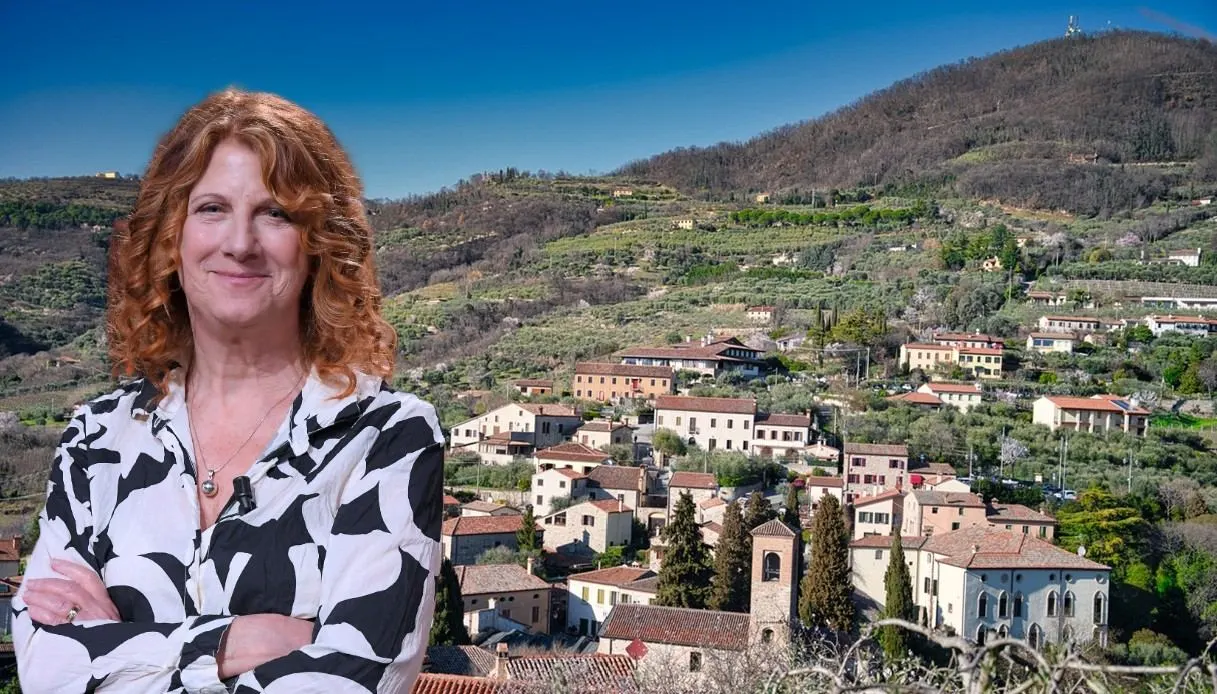
The new film by Giorgio Amato, in theaters from July 9, 2026, is a witty political satire capable of exposing how personal interests and power games influence more often than one might imagine the management of public affairs. The cast is exceptional, including Angela Finocchiaro and Giorgio Tirabassi, as well as the setting, which reveals corners of Italy that deserve a trip: here are the locations where Election Day was shot.
What it’s about
Renata Innocenti is a progressive deputy, the favorite to assume the post of Minister of Public Education if the coalition she is running with wins the elections. Precisely during the Election Day – from which the film’s title draws its name – while she follows the vote count with her team, a major media scandal involving her husband, the sports journalist Carlo De Santis, emerges: during a field-side broadcast he uttered a racist comment toward a Black player. Will this affect Renata’s electoral result, precariously balanced by only a few votes?
Where the film was shot
The main filming locations for Election Day, as the local press revealed even during the shoot, are in Montegrotto Terme: a characteristic spa town in Veneto, not far from the better-known Abano Terme but no less beloved by fans of thermal cures and relaxing holidays.
Montegrotto Terme: between wellness and history
Booking a package or individual spa treatments at one of the many hotels with private springs is, after all, one of the main activities to do in Montegrotto Terme.
The benefits and healing power of the area’s waters have been known at least since Roman times: the modern name itself, derived from the Latin “Mons Aegrottorum” meaning “Mountain of the sick,” hints at how the place was frequented by people suffering from conditions that could be cured—or at least alleviated in their symptoms—thanks to the thermal treatments.
The archaeological remains of a first-century thermal complex are among the city’s most interesting cultural attractions: you can still clearly identify the three baths connected by an ingenious hydraulic system, the ninfei, a theater, and a relaxation area.
The historic center of Montegrotto Terme revolves around the complex of the Church of Saint Peter and Elijah (San Pietro ed Eliseo) and the Oratory of the Black Madonna (Oratorio della Madonna Nera): here the medieval style of the old town fortifications, still visible, blends with the Romanesque style of the bell tower and with the modern one of the church rebuilt in the 1950s.
Strolling through the main streets and squares, such as Piazza Roma and Piazza Carmignoto where some of the film’s key scenes of Election Day were shot, one comes across elegant boutiques, gardens and public parks, contemporary monuments (one of the locals’ favorites is the glass sculpture “Metal Trees”) and fountains with intricate water plays (inside Parco Papa Giovanni Paolo II there is the fountain much loved in the city that celebrates the twinning with the Bosnian town of Mostar).
In many corners of the city, especially for visitors from outside, one might feel that time has stood still. In Piazza Mercato, for example, on Thursdays the sale of olive oil, honey, wine among other Euganean gastronomic specialties continues: the tradition has also been captured in some scenes of Election Day, which, by the way, features the current mayor of Montegrotto Terme, Riccardo Mortandello, playing himself.
Not to be missed, finally, is Butterfly Arc: a show, the first of its kind in Italy, of live butterflies—free to fly among the plants and flowers of the three on-site tropical gardens.
The Euganean Hills
Some glimpses recall the landscapes in which Montegrotto Terme is set, namely the Euganean Hills. Just outside the town, one can begin a journey to discover Veneto’s most beautiful villas, starting with Villa Draghi, an eighteenth-century villa that passed from one noble family to another in the area.
From the Villa Draghi and Monte Ceva trail you can set out especially on foot or by bike to discover the Euganean Hills: a regional park at about 600 meters above sea level where woods, lake zones, abbeys, ancient monasteries, archaeological excavations, and remnants of old aristocratic residences alternate.
Nestled in the green of the hillside lies, for example, the Catajo Castle: a 18th-century stronghold with more than 350 rooms, once a summer residence of the Habsburgs.