
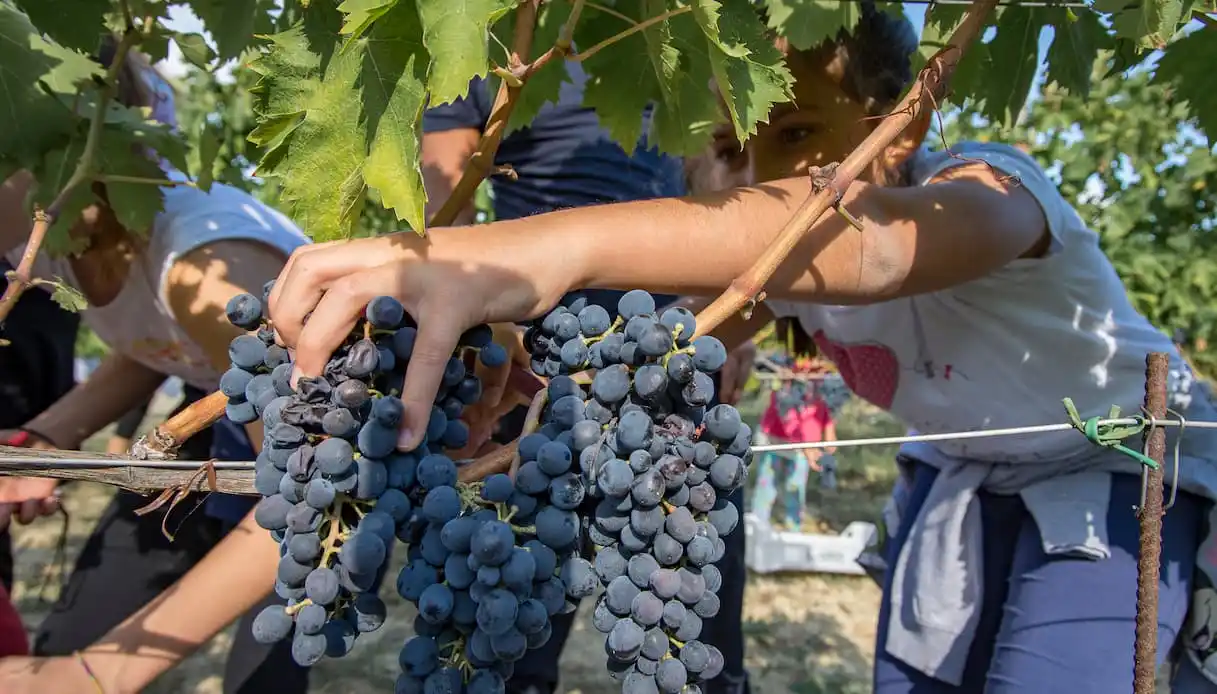
Wine lovers, take out your calendars and mark this event! Starting today, August 24, Wineries Open in Harvest kicks off, the appointment that through October 25 brings Italian and international visitors to the wineries of the Movimento Turismo del Vino, right as the work in the vineyards enters its most intensive phase. For two months it will be possible to closely follow the journey from grape to wine, through harvest, crushing, fermentation, tastings and encounters with the producers.
From the first grapes harvested for whites and sparkling wines in the northern areas to the later harvests in the South and the Vulture, the event is a special opportunity to discover regions, gastronomic traditions and various ways of experiencing wine tourism.
Open Wineries in Harvest: What to Know About the Event
The harvest? It does not end with the picking of the grape clusters; indeed, it is precisely when the grapes arrive at the winery that a new phase begins, with the aromas of the must, the crushing, the start of fermentations, the work of the oenologist and tastings at the different stages of winemaking. And this is the moment that Wineries Open in Harvest allows visitors to observe up close, guiding them from the vineyard to the winery.
The program runs from August 24 to October 25, 2026 and involves territories very different from one another. In the South of Italy there emerges a greater vocation for events and entertainment, with tastings paired with typical products and a strong emphasis on digital presence. In the Central Italy, instead, wine is linked above all to the landscape, with picnics in the vineyard, outdoor activities and premium offerings. In the Northwest there is notable flexibility in hospitality: 56% of the wineries surveyed also open on Sundays.
The Experiences to Enjoy at the Winery
Among the most interesting offerings are educational harvests, present in several Italian regions, from Piedmont to Friuli, from Veneto to Umbria and Lazio up to Tuscany. The modalities vary by territory: in Asti’s area, for example, the experience may include explanations in the vineyard, harvesting the grapes, the handover of the grapes and traditional foot-stomping, before a snack featuring typical Piedmontese products and a visit to the winery.
Gastronomy also becomes an integral part of the experience, with picnics and zero-kilometer snacks, local products and regional specialties. In Tuscany, among the proposed options, there are Tuscan prosciutto, schiaccia all’uva (grape-must flatbread), bruschette with IGP Tuscan Extra Virgin Olive Oil and grape juice for children. In Campania, the harvest can instead become an opportunity to stroll among the vines, learn about the territory and discover typical productions.
There are also more exclusive experiences, such as scenic dinners among the rows, tastings of great vintages or wines unveiled in advance and meetings with the oenologist or directly with the producer. Alongside these proposals, there is room for music, harvest festivals, walks, treks, games and activities for families.
Particular attention this year is also given to the youngest visitors: according to CESEO 2025 data, 38% of the wineries in the sample organize educational experiences, including activities for children, play areas and visits to educational farms. In some Tuscan realities, children can participate in the harvest and the stomping, bottle the juice and create their own label, even earning a diploma of “Winegrower for a Day.”
The event, in the end, also looks to the international audience: foreigners account for between 35% and 40% of visitors to Italian wineries, but they are still around 7–8 million compared to the 104 million international tourists who visit Italy each year.