
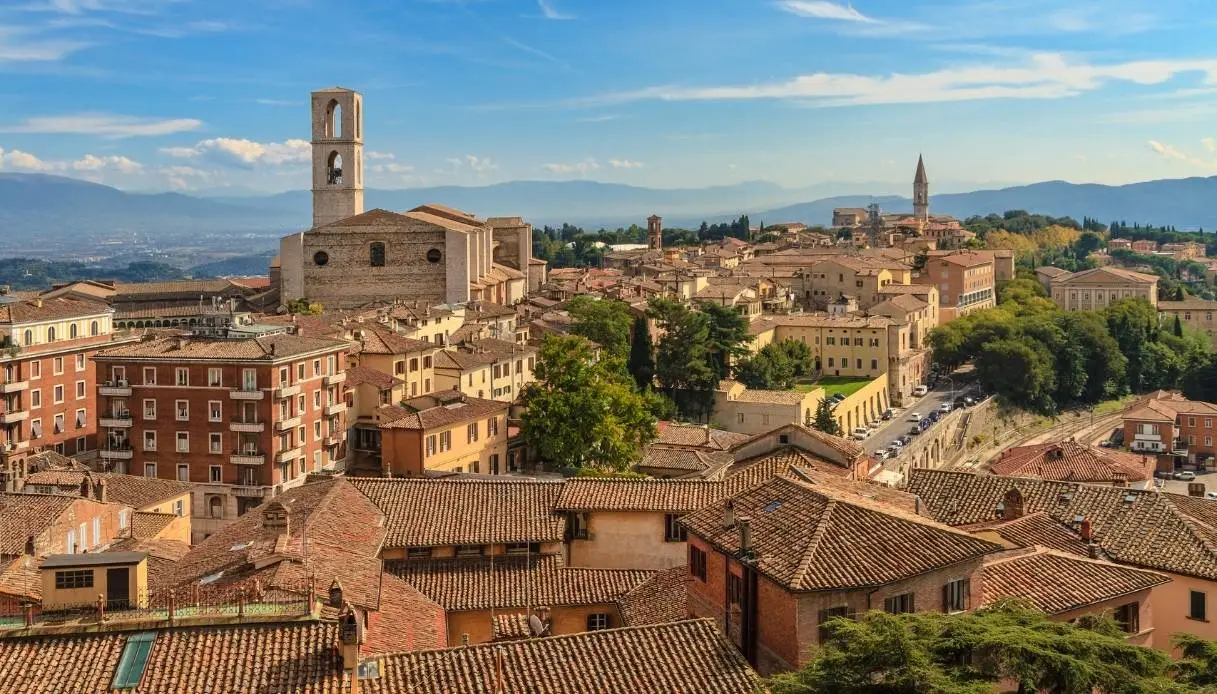
Another Italian jewel captures the British press, this time it’s a pearl less known abroad but beloved by compatriots: Perugia, the chocolate city, has made its way around the globe. It is celebrated by The Times, which describes the Umbrian capital as a relaxed and creative city relatively distant from the major tourist flows that attract the Tuscan towns. Perched on a hill and surrounded by lush, verdant scenery, it is recommended as a place to discover history and gastronomic culture… and according to the magazine, 48 hours are enough to explore it.
L’elogio del Times a Perugia
In the account published by the British daily, Perugia stands out for its ability to surprise, despite often being overlooked by foreign tourists who head to Tuscany and Lazio. The Times wants to underscore the territory’s creative, historical, and artistic identity with events of international prominence such as Umbria Jazz. In addition to music, the city impresses with traces of the Etruscan civilization that predate the Roman era and now coexist with medieval architectures and museums dedicated to them, along with the inevitable contemporary street art. With a compact historic center easy to explore on foot, it is perfect for a weekend: the itinerary crafted by the British magazine proposes a 48-hour circuit to traverse slopes, stairways, and narrow passages that lead to viewpoints and monumental squares. The paper suggests autumn in particular as one of the best times to visit Perugia, when the “green heart of Italy” changes color, temperatures become more pleasant, and the landscape takes on golden and reddish hues.
And what about the gastronomy? The bond with chocolate is now well established; right here lies the world’s largest chocolate museum, but attention should also be directed toward truffles and rustic cuisine where local ingredients reveal simple yet intense recipes.
Cosa vedere assolutamente a Perugia
The British newspaper has devised a 48-hour itinerary to visit Perugia, touching art, history, and of course good food. It starts from the center at Piazza IV Novembre, where the Cathedral of San Lorenzo and the Fontana Maggiore rise. One then proceeds toward Corso Vannucci, the Carducci Gardens, and observes the historic districts. One of the unmissable experiences is the descent into the Etruscan well from the 3rd century BCE, which at almost 10 meters deep allows entry into the intricate underground structure that reveals the Etruscans’ engineering prowess.
For art enthusiasts, the unmissable is the National Gallery of Umbria housed inside the Palazzo dei Priori; its halls contain medieval and Renaissance works from the region. Moving toward Via della Viola and Via Cartolari, the scenery changes: murals, studios, independent cinemas, and small cultural spaces tell the city’s more contemporary and bohemian face. The link with music is just as important, and although the event season is somewhat limited, Umbria Jazz continues to resonate in the air throughout the year with concerts and initiatives.
Undoubtedly the gastronomic aspect is crucial: among the dishes to try fresh pasta with local truffles, tagliatelle seasoned with forest aromas, and of course wines such as the Sagrantino and reds derived from Sangiovese grapes. And to end on a sweet note, chocolate remains inevitable: from famous hazelnut pralines to artisanal creations, Perugia confirms a tradition that has become part of its international identity.