
If you’ve ever wondered which is the world’s most visited country, know that the answer up to now has been “France.” Yet this primacy seems to have its hours numbered.
France, in fact, could lose the title by 2040 of the world’s most visited country, making room for Spain. A new study by Deloitte and Google predicts these data, analyzing the evolution of international tourism since the 1990s and attempting to outline how tourist flows will change over the next fifteen years.
Overtourism in Spain Is Already a Problem
In 2025 France maintained the top spot in the world ranking, recording 102 million international arrivals and 743 million overnight stays, while 76% of visitors came from other European countries. Spain, however, closed the gap with remarkable speed: in 2025 it welcomed 96.8 million foreign visitors, with a growth of 3.2% compared to 94 million in 2024.
According to the new forecasts, the overtaking could become a reality by 2040, when Spain could reach 110 million international visitors per year, against 105 million estimated for France. The tourism outlook for Spain appears therefore extremely positive from an economic perspective. In 2025 revenues generated by foreign visitors rose by 6.8%, reaching the €134.7 billion, up from €126 billion the previous year. But the record growth also brings with it an increasingly evident consequence: the problem of overtourism.
In recent years, residents’ protests have multiplied, concerned especially about rising rents, pressure on infrastructure and resource consumption. The Spanish government announced the elimination of about 53,000 tourist apartments from the Single Registry of tourist and seasonal rentals, with the aim of directing properties to permanent leases.
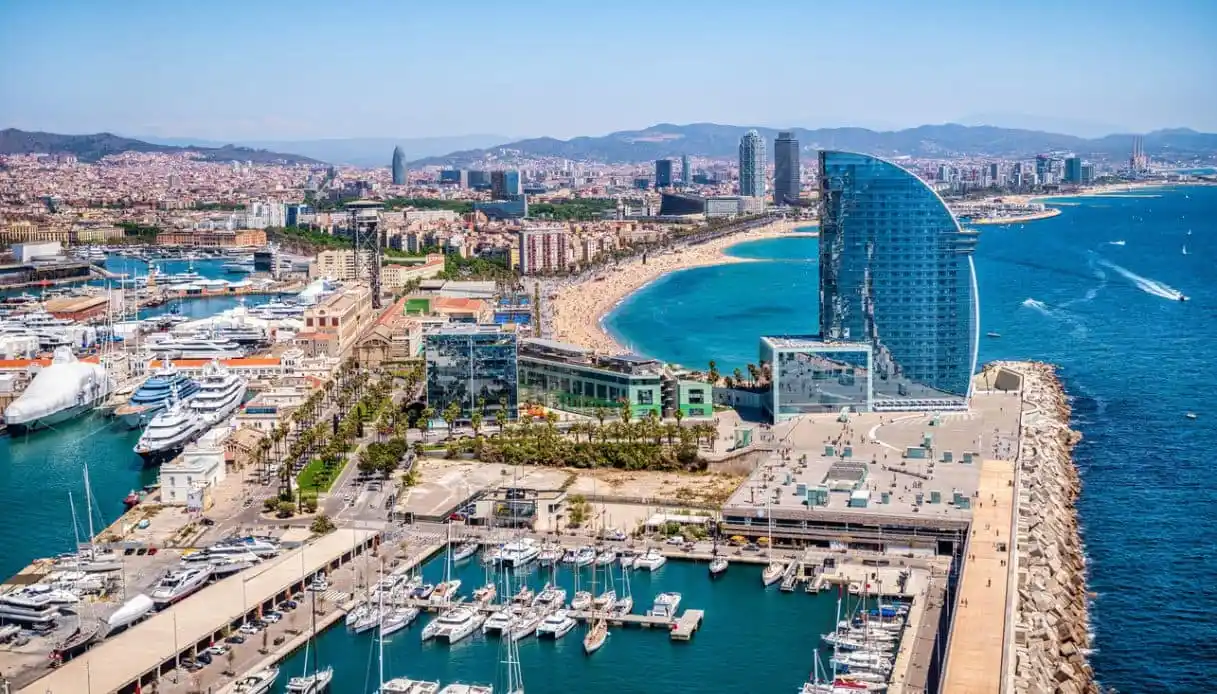
In Barcelona, moreover, a project was announced to eliminate completely short-term tourist apartments by 2028, bringing thousands of homes back onto the long-term rental market. Cruise tourism has also come under interventions: in 2023 the city reduced the daily arrivals of cruise ships at the central port, from 10 to 7.
In Málaga, one of the most popular Spanish destinations in summer, a campaign was launched to promote more respectful behavior from visitors. The ten rules spread via buses, billboards and social media invite, among other things, to avoid excessive noise in residential areas and to use bins and toilets properly. In the Balearic Islands controls on alcohol consumption and on so-called party boats were strengthened.
Global Tourism Is Growing
The Deloitte and Google study nonetheless portrays a tourism sector set to grow further worldwide in the coming years. The number of international trips could indeed reach 2.4 billion by 2040. Europe will continue to represent one of the planet’s major tourist regions, absorbing about 38% of international arrivals. Between 2019 and 2040 the continent could record over 362 million more tourists.
Behind Spain and France, the United States and China should remain, still firmly in the top 5. The novelty would concern Mexico, which could claim fifth place, while Italy would drop to sixth. Among the countries set to gain ground are also Saudi Arabia, Indonesia and the United Arab Emirates, which according to projections could enter the world’s top 15. The Asia-Pacific region will also continue to grow rapidly: between 2019 and 2040 international arrivals in the region could rise by more than 278 million tourists.