
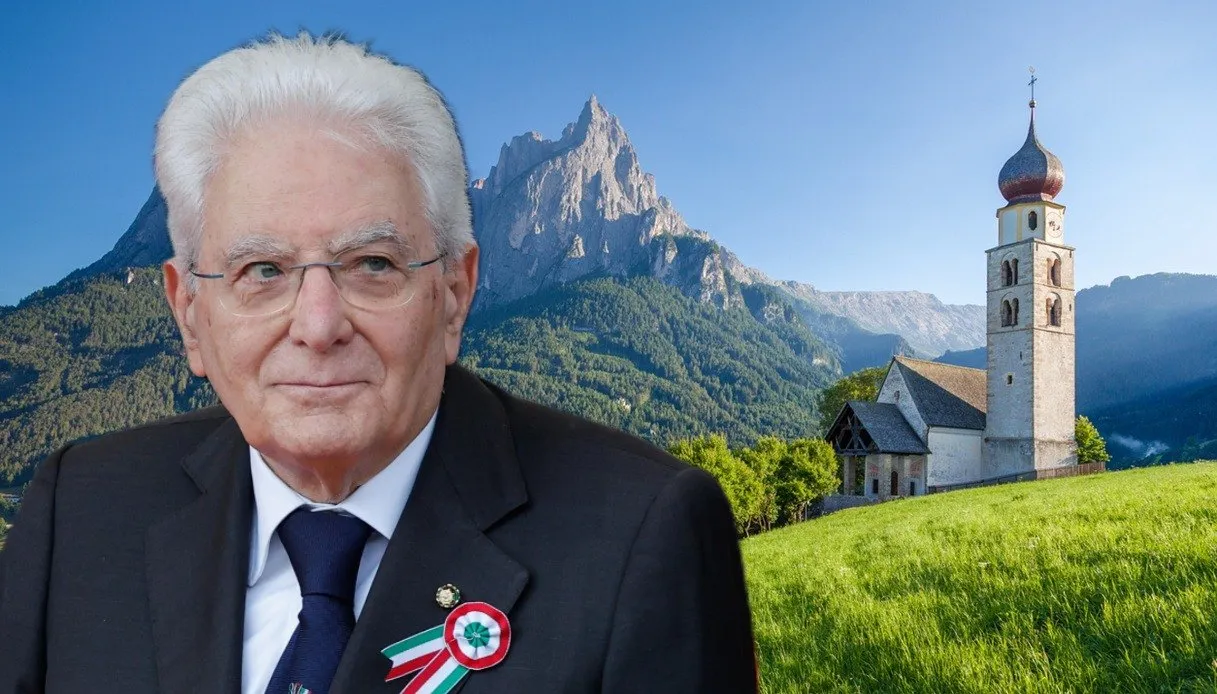
The President Sergio Mattarella, after a year of commitments, is preparing for a well-deserved rest and has chosen Italy for his summer holidays; a pause to slow down in contact with nature in one of the Dolomites’ most evocative locations. The Head of State will arrive on August 8 in Siusi together with his daughter Laura and grandchildren to stay in the South Tyrolean hamlet at the foot of the Sciliar. The area is close to his heart; he has spent his holidays here since 2023, and it is the second consecutive year in the same village.
Sign up and you’ll have full access to all our content.
Do you already have a SiViaggia profile?
Siusi, the President Mattarella’s vacation destination
He will stay at Villa Ausserer, the president Sergio Mattarella, a nineteenth-century residence outside the town center. A private residence that will provide the proper privacy; the Italian Army’s logistical base and site of a training center managed by the Alpine Troops Command will host him and his family, offering a bit of quiet with abundant greenery around. The destination had already captivated other heads of state, with Carlo Azeglio Ciampi having spent several summers there as well. The program foresees rest, time outdoors, and discretion with a few walks through the center of Castelrotto and a few public activities. Clearly work does not stop; the Head of State will continue to follow the dossiers that the government might submit to the Quirinale.
What to see in Siusi allo Sciliar and surroundings
The Alpe di Siusi is Europe’s largest high-altitude pasture, a sea of rolling meadows with the Sciliar and the Sassolungo in the background. In summer it can be explored on foot or by bike, on trails that are mostly easy, suitable even for those who walk little and simply want to look around. In the village, a stop at the San Valentino chapel, perched on a grassy hill, is well worth it: probably the most photographed image in the valley, especially at sunset. Not far away is Castel Presule, a medieval fortress open to visitors with a guide, among armory rooms and a tale of witch trials that alone justifies the visit. Those seeking water and shade can reach the Fiè lake, swimmable and surrounded by spruces. All around stretches the Sciliar-Catinaccio Nature Park, the oldest in South Tyrol. And then Castelrotto, a few kilometers away, with the bell tower dominating the square and the frescoed façades of the historic center. Nothing more is needed to understand the President’s choice.
What to see in Siusi allo Sciliar and surroundings
The Alpe di Siusi is Europe’s largest high-altitude pasture, a sea of undulating meadows with the Sciliar and the Sassolungo in the background. In summer one can hike or ride a bike along trails that are mostly easy, suited even for those who take a light stroll and simply want to observe. In the village, a stop at the San Valentino church, perched on a grassy knoll, is a highlight: probably the valley’s most photographed image, especially at sunset. Not far away lies Castel Presule, a medieval stronghold open for guided tours, with armory rooms and a history of witch trials that alone makes the visit worthwhile. Those seeking water and shade can reach the Fiè lake, swimmable and surrounded by fir trees. All around extends the Sciliar-Catinaccio Nature Park, the oldest in Alto Adige. And then Castelrotto, just a few kilometers away, with the bell tower that dominates the square and the frescoed façades of the historic center. This is enough to understand why the President chose this place.
Where Siusi is located and how to reach it
Siusi allo Sciliar is a hamlet of the municipality of Castelrotto, in the province of Bolzano, at about a thousand meters above sea level. It overlooks the Isarco Valley and takes its name from the Alpe di Siusi, the large high-altitude plateau that lies above it and that in winter becomes a ski area. By car you reach it from the Brenner A22 motorway, Bolzano Nord exit, then you go up along the road toward Val Gardena. Those traveling by train can get off in Bolzano or at the Ponte Gardena station: both are connected to the town by the South Tyrolean bus lines, frequent and punctual. The reference airports remain Verona, Innsbruck and Bolzano.