
In Italy, beside the most famous destinations, there are art-loving cities, villages, and landscapes capable of delivering equally memorable experiences. The Times identifies five places not to miss in Italy, through the personal selection of travel expert Julia Buckley.
The list spans the country from north to south and includes Genoa, Pienza and Mussomeli, Urbino, Valtiberina, and Pantelleria—five destinations that are very different from one another, yet united by history, art, and breathtaking scenery.
Genoa, between noble palaces and the sea
The first stop is Genoa, in Liguria, a city whose past is tied to the great economic prosperity of the 16th and 17th centuries. In those years the wealthiest families built sumptuous palaces, giving rise to a true monumental city. The heart of this heritage is Via Garibaldi, the ancient Strada Nuova, where the façades of the palaces still bear witness to the era’s wealth.
Genoa also boasts a rich artistic patrimony, particularly cherished by Rubens, and a special bond with the sea. A stroll along the promenade allows you to reach Boccadasse, an old fishing village with a captivating atmosphere.
Pienza and Mussomeli, two postcard-worthy landscapes
Among the must-see places according to The Times are Pienza, in Tuscany, and Mussomeli, in central Sicily—two destinations that are very different but share landscapes capable of leaving visitors speechless. Pienza sits in the heart of the Val d’Orcia, one of Tuscany’s most iconic backdrops, with rolling hills, rows of cypress trees, and the silhouette of Monte Amiata, an ancient volcano now dormant. The town, enclosed by its walls, is a Renaissance jewel.
The scenery changes completely in Mussomeli, in the heart of Sicily, where gentle hills give way to starker, more rugged elevations. In the surrounding area, the nearby Sutera also appears almost as a necklace laid across the rock.
Urbino, a Renaissance journey through the Marche
In the Marche, the cannot-miss destination is Urbino, a Renaissance city characterized by narrow, winding streets, churches, and historic palaces. The emblem is the Ducal Palace, a building with a fairy-tale appearance that originally served defensive purposes and today houses important works by masters such as Piero della Francesca, Titian, and Raphael.
Raphael was born in Urbino: his birthplace also preserves a fresco that, according to tradition, is believed to have been created by the artist during his youth.
Valtiberina, between Tuscany and Umbria
For those seeking villages and landscapes away from the crowds, The Times recommends Valtiberina, a border region between Tuscany and Umbria. The landscape is a mosaic of gentle hills, small historic centers, and artistic testimonies.
Among the towns to note are Anghiari, famed for its fairy-tale village atmosphere, Citerna, and Monterchi, linked to the works of Donatello and Piero della Francesca. In Sansepolcro, the artist’s birthplace, one can admire the celebrated Resurrection. Finally, on the Apennines lies the evocative Sanctuary of La Verna, the Franciscan monastery said to be built on the site where Saint Francis received the stigmata.
Pantelleria, the black island between Sicily and Tunisia
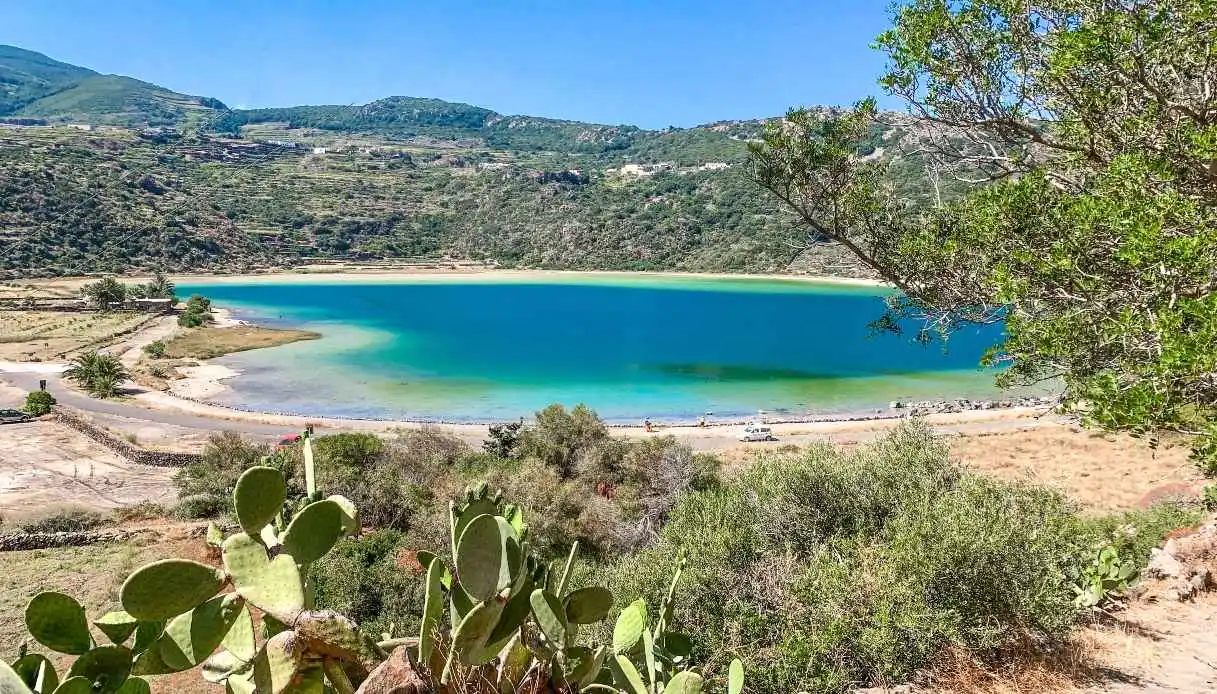
The final destination is Pantelleria, a volcanic island famous as the “black pearl.” Its dark, jagged coasts and the interior marked by numerous volcanic cones speak of a nature shaped by wind and fire.
The island’s charm is also found in the turquoise waters of a volcanic lake, in thermal springs, and in its landscapes. What makes Pantelleria even more distinctive is its renowned dessert wine, in a land that preserves a discreet, sophisticated, and almost mystical atmosphere.